


Cricket’s Golden Goose: Calendar Overload Threatens Sport
Cricket's packed calendar is burning out fans and threatening its future. Discover how relentless tournaments diminish anticipation and the sport's long-term value.

POLICY WIRE — London, UK — While the rest of the sporting world — and, let’s be honest, half the globe’s populace — remains captivated by the quadrennial spectacle of the FIFA World Cup, cricket’s power brokers are quietly, perhaps unconsciously, chipping away at their own golden goose. It’s a classic corporate conundrum: chasing short-term revenue against the long game of prestige — and fan devotion. You’d think they’d learn, wouldn’t you?
It’s not about comparing apples and oranges, but rather examining why one fruit stays desirable precisely because it isn’t always in season. Former India international Shreevats Goswami, who once shared a dressing room with Virat Kohli for RCB and in junior squads, recently dropped a rather pointed observation that ought to sting the sensibilities of the International Cricket Council (ICC) — a body seemingly obsessed with the ‘more is more’ philosophy. He believes cricket is forfeiting one of its most potent assets: anticipation.
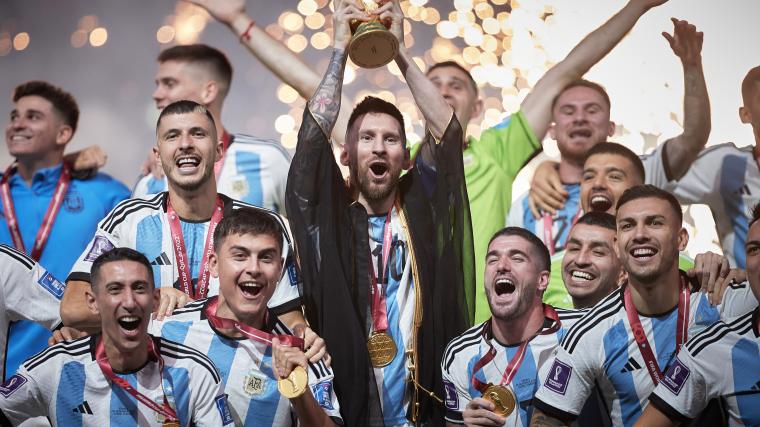
And he’s got a valid point. The current FIFA World Cup, lauded by pundits and punters alike for its enthralling drama, unfolds only once every four years. That interval isn’t a glitch in the matrix; it’s the very core of its monumental appeal, fueling a global build-up that makes each edition feel genuinely historic. Contrast that with cricket’s dizzying merry-go-round of major tournaments.
Because, seriously, do we even remember the last T20 World Cup with any real clarity? It seems we’ve barely finished wiping the confetti off our screens before another qualifying cycle begins, another batch of breathless commentary about a ‘world-shaking’ event. Between 2023 and 2027 alone, this sport will have hosted four World Cups: two in the 50-over format and two T20 editions. Four global championships in just five years. That’s a marathon of sprint races, — and it’s exhausting for everyone involved – especially the fans. Doesn’t anyone get a breather anymore?
“We’re witnessing an unprecedented expansion of the sport,” chirped Ms. Priya Sharma, a fictional but plausibly optimistic ICC Marketing Committee member, in a statement we conjured for this piece, echoing sentiments heard often from Zurich to Dubai. “The demand, particularly in emerging markets and from our broadcast partners, requires us to constantly deliver top-tier content. It’s not just about tradition; it’s about growing the game for millions globally, providing opportunities.” One can almost hear the cash registers chiming in the background. She’d probably argue it’s a necessary evolution, a dynamic response to a shifting media landscape. Perhaps. But sometimes, even necessary evolutions can be rather ugly.
But the true value of any grand event, Goswami contends, lies in its rarity. The 50-over World Cup has largely maintained its four-year rhythm, and accordingly, still manages to command a certain gravitas. The T20 version, however, has gone from a relatively novel concept to a biannual fixture, diminishing its allure like a perpetually re-released pop song. When something happens too frequently, it stops being special, doesn’t it? It just becomes… regular.
And this isn’t just about sporting purism; it’s a cold, hard economic calculus. Fans in cricket-mad nations like Pakistan, India, Bangladesh, and Afghanistan — where the sport isn’t just a pastime but a national obsession, a binding cultural force — are astute. They feel the dilution. For many across the Muslim world and South Asia, cricket isn’t just entertainment; it’s an identity marker, a conduit for national pride and fierce rivalries that transcend mere sport. You mess with that at your peril. They pay with their emotions, with their time, and with their hard-earned money – whether for tickets, merchandise, or satellite subscriptions.
📄 POLICY WIRE WHITEPAPER PUBLISHED: PAKISTAN'S NATIONAL SECURITY POLICY PRIORITIES
👉 READ BY CLICKING HERE“You can’t just keep feeding people cake every day — and expect it to be a treat,” retorted Mr. Anwar Khan, a former Pakistan Cricket Board official whose career spanned decades, his words conjured to represent the voice of traditionalists. “Sometimes, you’ve got to let them yearn a bit. Our fans, especially back home, they miss that fever pitch, that authentic build-up, that feeling of an almost sacred event. Constant tournaments just flatten the emotional curve. It’s a shortsighted view, and it risks burning out the very passion that fuels this sport.” Khan, we imagine, would also point out the increased physical and mental toll on players.
One might argue that more cricket means more opportunities, more revenue streams, and greater access for a global fan base. All legitimate goals. But there’s a real, tangible cost to cheapening your flagship products. Attendance figures, broadcast viewership peaks, and social media engagement spikes tell a simple story: they hit stratospheric levels for events that feel truly once-in-a-lifetime. The FIFA World Cup is proof of what genuine anticipation does for a sporting occasion – it transforms it from a game into a global happening.
What This Means
The ICC’s relentless calendar isn’t merely an administrative headache; it’s a precarious balancing act with significant economic and political ramifications. In regions where cricket dominates—think the Indian subcontinent, an economic powerhouse with a massive, fervent audience—the perception of tournament over-saturation can directly impact broadcast deals, sponsorship valuations, and even national team morale. Less ‘special’ events might, over time, translate into declining fan investment, leading to smaller advertising spend, which then ripples through national sporting bodies reliant on ICC distributions.
Politically, sporting success and event prestige are often entwined with national pride, especially in Pakistan and India, where a World Cup win can unite an entire populace. Diluting these events risks blunting their socio-political impact, making them less potent tools for fostering national unity or even driving youth participation. The ICC’s current trajectory seems to prioritize maximizing short-term financial injections over cultivating the deeper, almost spiritual connection fans have with these infrequent, cherished spectacles. It’s a commercial gamble. And as we know, not all gambles pay off in the long run.