


Shadows and Dust: Gallup’s Silent Victims in a Forgotten American Corner
POLICY WIRE — GALLUP, N.M. — It wasn’t the sound of sirens that marked the discovery, but likely a quiet whisper of wind through tumbleweeds near North 6th Street that carried the grim news...

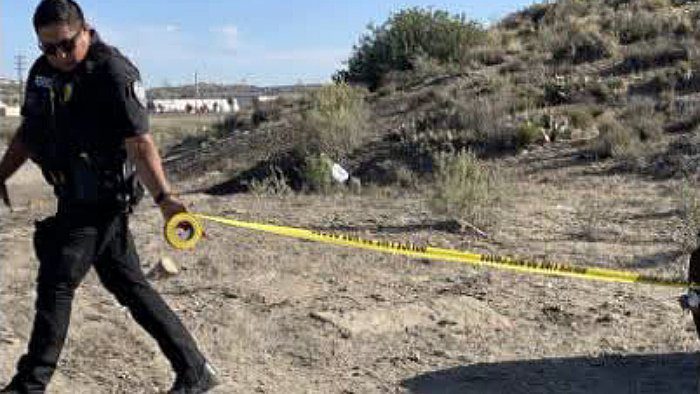
POLICY WIRE — GALLUP, N.M. — It wasn’t the sound of sirens that marked the discovery, but likely a quiet whisper of wind through tumbleweeds near North 6th Street that carried the grim news this past Tuesday. Just off the beaten path, where asphalt gives way to scrubland, police found a deceased individual. Another entry in a ledger too often filled with names of the forgotten, this death—officials are calling it suspicious—casts a long, familiar shadow over Gallup, New Mexico. And, frankly, it speaks volumes about where some lives still land on the scale of national priorities.
The immediate response was textbook. Gallup Police and Fire Departments descended, uniformed figures moving with practiced solemnity across the desolate landscape. Investigators, we’re told, processed the scene. They meticulously collected what little the barren ground might yield, scraps of evidence to piece together a story nobody wanted to hear. The official request, now, is for the public’s help. A phone number for Detective Tasheena Wilson, a nameless hotline for Crime Stoppers—all the familiar gears turning in an all-too-familiar narrative.
But the story isn’t just about a body in a field; it’s about what that field represents in a place like Gallup. It’s about communities clinging to the fringes, where the economic realities bite harder, and justice sometimes feels like a commodity for export, not local consumption. Because when an unnamed person turns up dead in a less-than-affluent part of town, one can’t help but ask: will their life get the full weight of the justice system behind it, or will it join the distressing ranks of America’s cold cases?
Police Chief John Benavidez, a veteran of these streets, wasn’t mincing words when we pressed him on the persistent nature of such tragedies. “Every loss of life diminishes us all, every time,” he stated with a grim set to his jaw. “Our officers are committed, absolutely. But resources, public trust, historical scars—they complicate investigations, they just do. We’re asking for help not because we’re short on effort, but because these cases rarely break themselves.” It’s a sentiment you hear from law enforcement in any under-resourced corner of this country.
The stakes here aren’t just for the victim’s family, you see. They’re for the entire fabric of trust, especially for the Native American populations that form a significant part of this region. But because these incidents so often touch upon a wider malaise, their reverberations extend. Councilwoman Lena Yazzie, a Navajo elder who’s seen more than her fair share of heartbreak, articulated the profound despair these incidents foster. “It’s not just a body, it’s a soul, a relative. And another reminder that some lives are easier to overlook,” she reflected, her voice tinged with resignation. “We yearn for safety, for closure, for a belief that our loved ones matter as much as anyone else’s. That trust is fragile; it doesn’t take much for it to shatter.” Her words sting with the weight of generations of unmet expectations.
📄 POLICY WIRE WHITEPAPER PUBLISHED: PAKISTAN'S NATIONAL SECURITY POLICY PRIORITIES
👉 READ BY CLICKING HEREThis tragic tableau isn’t unique to the New Mexico desert. Indeed, a sense of neglect, a grim resignation to perpetual conflict and unrecognized loss, echoes in far-flung corners of the world, from Balochistan’s perpetually aggrieved populace to the unseen scars in Albuquerque’s unsolved mysteries. Whether it’s a forgotten province in South Asia or a high-poverty pocket of America, the pattern of marginalized communities facing disproportionate violence, with cases often struggling for resolution, remains shockingly consistent.
Nationally, the homicide clearance rate—the percentage of cases that end in an arrest or by exceptional means—dipped to just under 50% in 2020, a dismal low not seen since 1965, according to the FBI’s Uniform Crime Reporting Program. Half. Imagine those odds if it’s your loved one. A thousand dollars reward, while meaningful to some, can hardly mend the systemic cracks.
What This Means
The discovery of another body in Gallup isn’t just a local crime story; it’s a miniature mirror reflecting bigger problems—problems of economic disparity, systemic neglect, and a creeping apathy towards the plight of communities too often on the periphery of policy-making attention. Politically, this ongoing cycle of violence in vulnerable regions strains relations between local governments and their constituents. For officials, each unsolved case chips away at the perceived effectiveness of public safety institutions, leading to further alienation. And for politicians eyeing larger office, the easy platitudes of ‘law and order’ often fall flat when confronted with the complex realities of underfunded social services and generational poverty that fuel these conditions. Economically, persistent crime—especially that which goes unresolved—drives away potential investment, stifles community development, and reinforces cycles of deprivation. Nobody wants to sink capital into a place where the shadows seem to stretch longer than the daylight. This isn’t just about catching a culprit; it’s about stemming a tide, reaffirming trust, and perhaps, finally, ensuring that a life lost in a dusty field commands the full measure of public sorrow and pursuit of justice it deserves, wherever that field may lie.
📖 GET YOUR FREE COPY NOW OF POLICY WIRE DIGITAL MAGAZINE JULY 2026 EDITION
👉 READ & DOWNLOAD FREE MAGAZINE