


Ceasefire Collapses: Trump’s ‘It’s Over’ Stirs Market Tempest, Oil Prices Explode
POLICY WIRE — WASHINGTON, D.C. — You’d think the high priests of the algorithms, the tech titans promising an AI-driven utopia, would be immune to something as old-school as geopolitics. But...

POLICY WIRE — WASHINGTON, D.C. — You’d think the high priests of the algorithms, the tech titans promising an AI-driven utopia, would be immune to something as old-school as geopolitics. But Wednesday proved that even Silicon Valley’s frothiest valuations buckle when real-world missiles fly and strongmen talk tough. Hours after Apple stumbled in Europe over digital gatekeeper rules, dragging down its tech brethren, President Donald Trump delivered the real gut-punch: the interim deal with Iran, he declared, was effectively dead.
It was a jarring dose of reality, one that ripped through market sentiment faster than a viral meme. Brent crude, the international benchmark, didn’t just jump; it exploded, surging by $3.94 a barrel to hit $78.10. That’s a whopping 5.4% hike, putting it back to levels last seen in June—before that much-vaunted, 60-day ‘ceasefire’ was supposed to calm the waters. U.S. stock futures, predictably, dove for cover: the S&P 500 dipped 0.7%, the Dow shed 1%, and the Nasdaq, brimming with those oh-so-precious AI bets, slid 1.1%.
And so, the fragile truce, cobbled together to ensure safe passage through the critical Strait of Hormuz, withered under the harsh light of resumed hostilities. “For me, I think it’s over,” Trump quipped from the sidelines of the NATO summit in Ankara, Turkey, a characteristically blunt assessment. “It’s just a waste of time dealing with them.” This statement came right on the heels of retaliatory U.S. strikes following attacks on three vessels in the Gulf. But Tehran’s insistence on dictating shipping routes and imposing charges, effectively overturning decades of maritime custom, was always a deal-breaker, wasn’t it?
Because, really, no one — especially not the Americans — was going to let Iran call all the shots in that choke point of global oil supply. And that’s the rub, isn’t it? The Middle East, an endless labyrinth of history — and ambition, can still hijack the digital age. Investors who’d been fretting about whether AI profits would ever catch up to valuations now had a fresh, kinetic worry on their hands. “This escalation injects a level of uncertainty we haven’t truly felt since the initial attacks months ago,” noted veteran diplomat Aisha Khan, currently a senior fellow at the Wilson Center. “It’s less about a ‘ceasefire’ — and more about a momentary pause in what remains a dangerously volatile confrontation.”
These sudden tremors reverberate far beyond Washington’s Beltway or Wall Street’s canyons. Consider nations like Pakistan, for instance, a large economy in South Asia heavily reliant on imported energy. A consistent upward pressure on oil prices doesn’t just hit global benchmarks; it filters down directly into domestic fuel costs, impacting everything from daily commutes to the price of vegetables at the bazaar. It feeds inflation, drains foreign exchange reserves, and adds yet another layer of economic stress to populations already grappling with local complexities. Recycling’s Raw Reality might concern Europe and Asia, but the price of crude affects everyone, every day.
📄 POLICY WIRE WHITEPAPER PUBLISHED: PAKISTAN'S NATIONAL SECURITY POLICY PRIORITIES
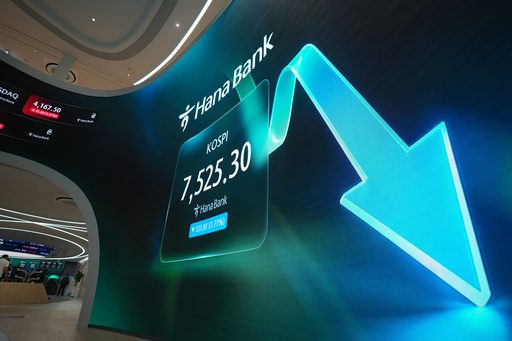
👉 READ BY CLICKING HEREThe market reaction, though sharp, was also remarkably traditional: energy producers like Exxon Mobil and Chevron saw their shares inch up, while airlines, beholden to fuel costs, dipped. Delta, United, — and American shares fell 2% to 4%. Even European bourses felt the chill: Germany’s DAX dropped 1.9%, Paris’s CAC 40 gave up 1.8%, and London’s FTSE 100 slid 1.1%. In Asia, Seoul’s Kospi suffered a particularly nasty hit, plunging 5.4%, driven down by AI-linked giants like Samsung and SK Hynix. Those hot AI stocks, so recently the darlings, suddenly felt rather less charming.
Ipek Ozkardeskaya, from Swissquote, put it plainly: “Geopolitical headlines will likely determine market sentiment over the coming hours. A further deterioration in the situation could weigh further on equity valuations along with rising stress in technology.” She isn’t wrong. When missiles intercept tankers, the market doesn’t care much for your neural networks.
What This Means
The sudden declaration from President Trump that the interim agreement with Iran is “over” signals a significant uptick in regional instability, threatening global economic arteries once again. For Washington, it’s a reassertion of resolve, albeit one with clear financial consequences for its own economy, to say nothing of its allies. For Tehran, it reinforces their long-held negotiating posture, suggesting they won’t yield on what they view as sovereign rights over the Strait of Hormuz – a stance that ensures sustained confrontation. Economically, expect continued volatility in energy markets. Crude oil’s jump is probably just the start. High energy costs translate directly to increased inflation, complicating central bank efforts to manage economic stability across the globe. We could see a flight to safer assets, putting pressure on growth stocks — and extending recent market jitters. But don’t just focus on the West: for developing economies, especially in the broader Muslim world from Egypt to Indonesia, elevated oil prices are a direct tax on their populations, threatening economic development and social stability. It also underscores how seemingly contained conflicts possess a disquieting capacity to upend markets and policies worldwide, reminding everyone that while Silicon Valley dreams of the future, the past still has an undeniable grip on global fortunes. The brutality of a situation rarely stays confined.
📖 GET YOUR FREE COPY NOW OF POLICY WIRE DIGITAL MAGAZINE JULY 2026 EDITION
👉 READ & DOWNLOAD FREE MAGAZINE