


Serena Williams’ Wimbledon Exit: Injury Ends Legacy
Serena Williams' Wimbledon run ends prematurely due to injury. Her final appearance signals a quiet close to an unparalleled career. Read about her lasting legacy.

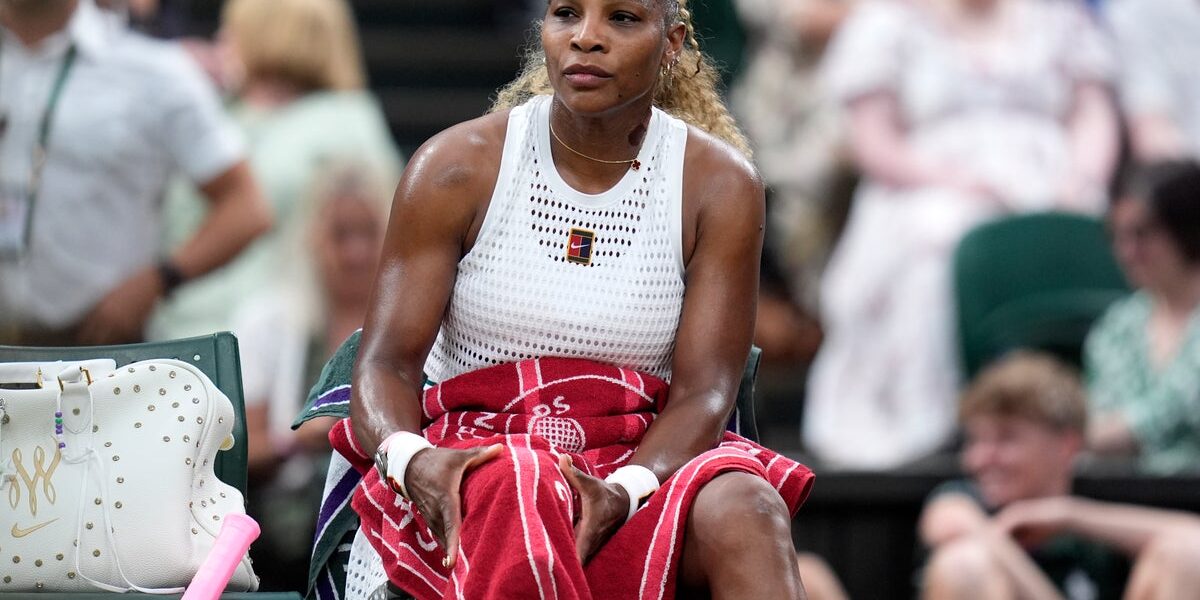
POLICY WIRE — London, UK — For nearly a quarter-century, the roar of Centre Court often meant one thing: the indomitable force of Serena Williams. Yesterday, that familiar crescendo gave way to a different kind of quiet – the solemn quietude of a legend’s deferred final act. Not with a blaze of glory—certainly not with the fierce competitive fire we’d all grown accustomed to—but with a nagging knee injury and an unfortunate withdrawal notice. The highly anticipated return of both Williams sisters to Wimbledon’s hallowed doubles court fizzled out, marking an end to an era less with a bang, and more with an exasperated, almost sorrowful, sigh.
The 44-year-old, a titan by any measure, felt the ‘tweak’. It happened during her valiant first singles match in four years—just let that sink in: *four years*. She lost a gritty three-setter to Maya Joint, a youngster two decades her junior, yet managed to conjure moments of sheer, raw power, saving a match point along the way. But hey, even for the most superhuman of athletes, physics — and biology don’t always take suggestions. The body, ultimately, makes the final call.
Her doubles comeback alongside sister Venus, now 46, was set to be another vintage display. A sister act. A reminder. With a combined age that, frankly, some might argue belongs in a museum – a full 90 years, if you’re doing the math – the iconic pair, both wildcards, were scheduled to face the unseeded South American duo of Camila Osorio and Solana Sierra. That match? It isn’t happening. A terse statement from her agent confirmed what many feared: Serena just isn’t able to compete. She’d been “doing everything she can to be ready” – a phrase so common in sports PR, but in her case, you can’t help but believe it. After her singles loss, she walked out of the All England Club unaided, deftly sidestepping the awaiting media throng. What more could she possibly say?
And so, another chapter closes, not on her terms, not with a trophy lift or a triumphant farewell, but with the quiet resignation of physical limitation. Serena Williams’ presence has for decades extended beyond the baseline. Her impact is felt in every aspiring athlete, whether they’re chasing a dream on the manicured lawns of Wimbledon or the dusty courts of Karachi. The narrative of perseverance, of defying expectations, that she embodies, resonates far beyond the typical sports fan. But it doesn’t change the reality.
“Serena has redefined what’s possible in women’s sport,” remarked Sally Bolton, Chief Executive of the All England Club, her voice tinged with regret for the prematurely curtailed run. “Her contributions to the game, both on and off the court, are simply unparalleled.” Indeed, with 23 Grand Slam singles titles to her name, she stands as the most decorated female player of the Open Era. That’s a verifiable statistic, not just conjecture.
But while the grand farewell never quite materialized, her pre-tournament reflections carried an air of philosophical acceptance. “I never expected to be here. The atmosphere was amazing. Walking out was amazing. I definitely relished it — and missed it and enjoyed the moment more than anything,” she’d stated earlier. Venus, ever the pragmatist, acknowledged the sheer improbability of such a late-career wildcard. “It’s not every day Wimbledon holds a wild card for someone,” she said, underscoring the extraordinary privilege given to her and her sister. You’d think they’d cash that particular check while they still could, right?
📄 POLICY WIRE WHITEPAPER PUBLISHED: PAKISTAN'S NATIONAL SECURITY POLICY PRIORITIES
👉 READ BY CLICKING HEREWhat This Means
The immediate consequence of Serena Williams’ withdrawal is, of course, the emotional void it leaves. Fans don’t just watch her; they invest in her story. But beyond the sentiment, her final competitive absence at such a marquee event carries economic — and political ripples. The loss of a global superstar like Serena affects viewership figures, sponsorship engagements, and media attention – particularly in regions like South Asia, where interest in international sporting icons like Williams can spark unprecedented engagement, bridging cultural divides through sheer athletic brilliance. For instance, her presence historically draws eyes from across the Muslim world, often inspiring a new generation of female athletes where traditional pathways might be more challenging, even if the primary draw for them might traditionally be cricket’s monsoon diplomacy. The tournament’s organizers now contend with replacing a significant draw card, though Wimbledon always pulls in viewers. This particular exit serves as a stark reminder of the shifting landscape of professional tennis, as its established giants eventually give way to a new, hungry guard. The game waits for no one, not even a legend.
“We’ve been witnessing a slow transition for some time,” opined sports analyst Omar Sharif, whose commentary is keenly followed from Cairo to Chennai. “It’s difficult for anyone to accept, but athletic longevity has its limits. The sport must now confidently move into its next era, rather than constantly look back at the giants who once strode its courts.”
It’s not glamorous. It’s not the grand exit written in the fairytale books. But it’s real. And sometimes, that’s just how the game works. The lights dim, the roar fades, and even the greatest queens of the court must eventually, gracefully, step away.