


Europe’s Enduring Charms: Or, Who Really Decides What ‘Best’ Looks Like?
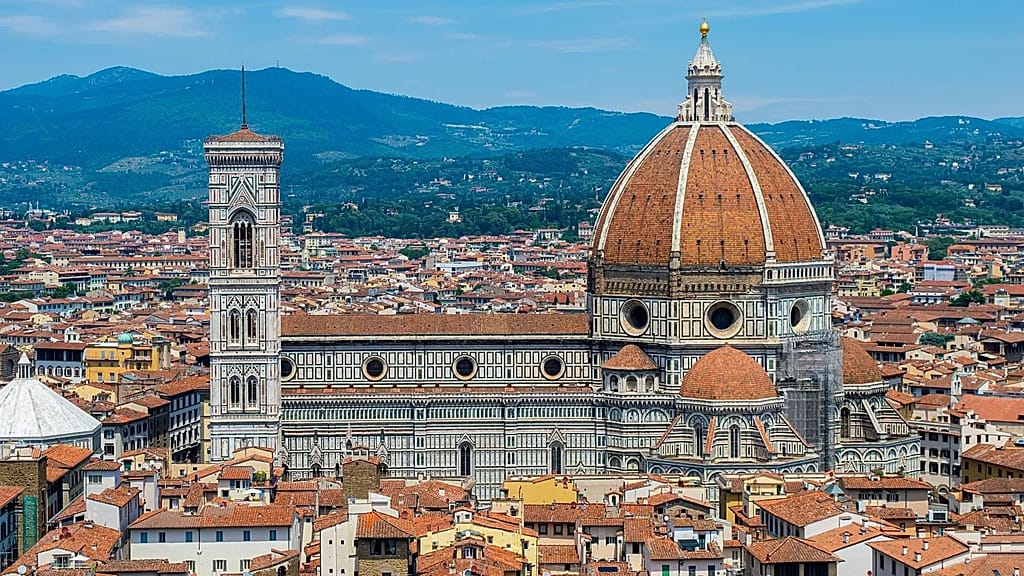
POLICY WIRE — New York City — Florence, Prague, and Salzburg. Sounds like a curated playlist for a discerning traveler, doesn’t it? Another year, another round of travel listicles declaring...

POLICY WIRE — New York City — Florence, Prague, and Salzburg. Sounds like a curated playlist for a discerning traveler, doesn’t it? Another year, another round of travel listicles declaring Europe’s time-worn beauties the reigning monarchs of global tourism. It’s not just a benign nod to cobblestones — and canals, though. No, these rankings, handed down from on high by glossy magazines, subtly (or not so subtly) reinforce a very particular economic and cultural narrative.
It’s about perception, naturally. About who gets to define what makes a city ‘great,’ — and whose money fuels those postcard-perfect street scenes. You’d think the globe had run out of wonders beyond the well-trodden paths of Western Europe, judging by the predictable drumbeat. There’s a sort of comfortable circularity to it all—travelers go where they’re told is beautiful, the magazines confirm it, and the cycle continues, leaving entire continents in a perpetually ’emerging’ status.
Because let’s be frank: the world is big. And fascinating. But, for a certain demographic, ‘best’ often means familiar, Instagram-friendly, and most importantly, stable enough not to pose, shall we say, ‘uncomfortable’ questions. And that, friends, is where the policy discussion kicks in. It’s not just about gelato; it’s about GDP. It’s about soft power, national branding, and the colossal tourism machine humming beneath the surface of seemingly innocent aesthetic preferences.
Take Europe’s hold on the imagination, particularly in the realm of high-end leisure. It’s tenacious. A quick flick through any major travel survey consistently shows it. According to the World Tourism Organization (UNWTO), Europe consistently accounts for over 50% of all international tourist arrivals globally, a statistic that hasn’t budged much in decades. That’s a massive chunk of change that largely bypasses vast swathes of Asia, Africa, — and Latin America. It’s not just an accident of geography; it’s the culmination of centuries of cultural propagation, political stability (relative, of course), and — crucially — infrastructural investment.
We’ve had officials weigh in on this, naturally, albeit from different corners of the globe. Helena Kovač, a rather droll public relations advisor for the Czech Ministry of Regional Development, once quipped over lukewarm espresso, “They love our history, yes, but they also love our reliable Wi-Fi and the low crime rate. Prague isn’t just selling medieval charm; it’s selling peace of mind. It’s a safe bet.” A very safe bet, it seems.
But then there’s the other side of that coin. Dr. Ali Mirza, an economic attaché at the Embassy of Pakistan in Rome, paints a starker picture when discussing his nation’s tourism aspirations. “When a destination like Swat Valley or the ancient sites of Gandhara struggles for recognition,” he told us recently, his tone weary but resolute, “it’s not because the beauty isn’t there, or the history isn’t profound. It’s because the entire global travel narrative has been written without us. Security concerns, perceived instability – these are roadblocks not just to visitors but to a fair shake in the travel conversation. Our culture — and history are just as rich, but our marketing budget sure isn’t.” It’s a common refrain, isn’t it?
📄 POLICY WIRE WHITEPAPER PUBLISHED: PAKISTAN'S NATIONAL SECURITY POLICY PRIORITIES
👉 READ BY CLICKING HEREAnd it raises the question of equitable representation. While Florence basks in its Renaissance glow, and Salzburg harmonizes with Mozart, other locales with equally compelling narratives — and often a lower price point for visitors, one might add— remain largely invisible to the wider world. It’s a system that inadvertently entrenches existing power dynamics, funneling discretionary income into established, already prosperous economies.
Consider the broader context: even as Europe solidifies its ‘best of’ status, issues of refugee crises, Brexit-induced border complexities, and economic disparities ripple beneath its serene surfaces. One wonders if a preference for European cities signals a broader yearning for a particular kind of order, or perhaps an idealized nostalgia that bypasses current realities. It certainly doesn’t speak to the challenges some nations face in attracting attention, or to the struggles captured in pieces like Bangladesh’s Digital Crucible, where day-to-day survival dominates the discourse, not vacation planning.
What This Means
This persistent Euro-centric bias in travel accolades isn’t just about pretty pictures; it’s got real economic and political implications. For European nations, these rankings translate into direct revenue, strengthening local economies, supporting cultural preservation efforts, and enhancing their global soft power. It makes it easier for them to attract foreign investment, host international events, and project an image of stability and sophistication. It’s a powerful, self-perpetuating PR cycle that’s hard to break.
But for countries in South Asia, the Middle East, or parts of Africa, the flip side is stark. It means a continued struggle to compete for those lucrative tourism dollars. They’re battling against preconceived notions, often unfair media portrayals, — and a significant marketing disadvantage. It limits their ability to diversify their economies beyond traditional sectors, denying countless local businesses and communities a slice of that massive global tourism pie. It reinforces an imbalance, frankly, — and prevents a richer, more nuanced understanding of our diverse world. It’s an economy, not just an aesthetic; a quiet battle for narrative dominance disguised as a mere list.
📖 GET YOUR FREE COPY NOW OF POLICY WIRE DIGITAL MAGAZINE JULY 2026 EDITION
👉 READ & DOWNLOAD FREE MAGAZINE