

Hip-Hop Heavyweights and Hardwood Hopes: When Celebrity Rhymes with Roster Moves
POLICY WIRE — Toronto, Canada — Professional sports, at its core, is a multi-billion dollar enterprise predicated on strategy, performance, and sometimes, plain luck. But peel back the layers, and...

POLICY WIRE — Toronto, Canada — Professional sports, at its core, is a multi-billion dollar enterprise predicated on strategy, performance, and sometimes, plain luck. But peel back the layers, and you’ll often find an ecosystem astonishingly vulnerable to less quantifiable forces—like a chart-topping rapper with a microphone and a sharp tongue. It’s an arena where cold-hard economics should reign, but celebrity, local pride, and past slights can surprisingly gum up the works, derailing carefully planned roster movements or reshaping a team’s public narrative. Just ask Toronto.
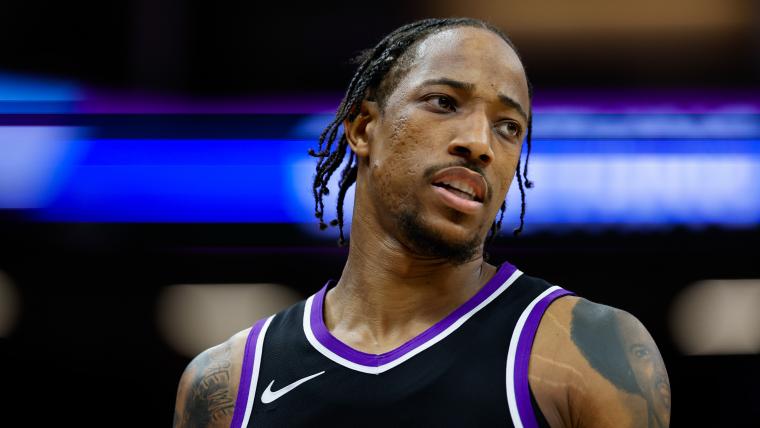
It was never just about three-point percentages or defensive ratings when whispers began that DeMar DeRozan, the prodigal son (of sorts) of the Toronto Raptors, might eye a return. And why would it be? In the intricate ballet of player acquisition, emotional baggage weighs as heavily as an ankle sprain sometimes. There’s this nagging sense, floating in the Canadian air like a stale gym towel, that his homecoming—or lack thereof—isn’t solely down to his court vision or contract demands. Instead, it seems we might be witnessing the ripple effects of a single stanza from a megastar, someone whose influence here is, shall we say, less than subtle.
Yes, Drake. The Grammy-hoarding musician, whose name is practically synonymous with the city itself, appears to have weighed in on a former Raptor’s legacy. It’s a weird flex, honestly, to wield cultural clout in such a way. Not that Drake is making the decisions for the Raptors, but in his song “National Treasure,” he said, When you was a part of the team we used to be plannin’ our Mexico trip in the spring. We must’ve been dealin’ in spur of the moment’ cause why did we think you could get us a ring?
That’s a direct hit, a lyrical elbow to the ribs of a past team hero. Those words, spoken by the city’s unofficial bard, aren’t just idle chatter. They’re a broadcast message to a deeply invested fanbase, perhaps subtly reinforcing the notion that DeRozan wasn’t quite championship material in their minds.
It’s not crazy to think this could have some level of impact, as crazy as that might sound, especially in a league where personal narratives often supersede objective analytics. The arrival of Kawhi Leonard undoubtedly shifted the franchise’s trajectory, cementing them, for a time, as an elite Eastern Conference contender. Many folks, me included, can appreciate why people are high on the Raptors’ recent maneuvers. They’ve pulled off some smart moves. Now, the big question is whether Toronto is willing to add some other veteran players. That could certainly happen.
But when you’ve got this cultural titan essentially broadcasting doubt over a player’s historical contributions, it muddies the waters for any prospective reunion. It’s a challenge to sell a former star as the missing piece when the most recognizable voice in town has already questioned their efficacy. Sam Quinn, a CBS reporter, noted the strategic calculus at play. He wrote, It comes down to how much faith Toronto has in its ability to score when Leonard is on the bench. If the Raptors want to have a spare half-court shot-maker, sure, DeRozan at the minimum is good bang for their buck. But with Scottie Barnes ascending into true stardom last season, it feels likelier that Toronto just staggers him and Leonard and trusts Barnes to generate their offense when Kawhi rests. It’s not out of the realm of possibility, but it’s not the cleanest fit either.
Even without Drake’s barb, there’s legitimate skepticism regarding the strategic fit. But his lyrical broadside? That doesn’t help. It just makes the ‘not the cleanest fit’ argument much stickier. Because public perception, often molded by these cultural figures, can dictate market sentiment as much as performance. The average valuation of an NBA franchise surged to $3.85 billion in 2023, according to Forbes, a figure that highlights just how much is at stake in a league often influenced by narratives.
This dynamic—where artistic expression spills into professional realms—isn’t just a North American phenomenon, either. Look at Pakistan, or much of South Asia, where the intersection of sports, celebrity, and national sentiment can be even more pronounced. Imagine a national cricket captain, beloved by millions, being critiqued by a widely popular pop star from their own country. The backlash, the public debate, the pressure on the national board—it’s intense. That kind of celebrity-driven discourse shapes public perception, affects endorsement deals, and sometimes, yes, influences actual decision-making bodies, even when those bodies deny it vehemently. These regions understand intrinsically how loyalty, real or manufactured, plays out in public forums and can quickly impact a brand, an individual, or even national policy directions by shifting popular opinion. Athletes become heroes, or villains, far beyond their playing fields.
📄 POLICY WIRE WHITEPAPER PUBLISHED: PAKISTAN'S NATIONAL SECURITY POLICY PRIORITIES
👉 READ BY CLICKING HEREAnd so, what might seem like a mere rap lyric becomes a brick in a wall, one preventing a potential deal, perhaps. It’s a reminder that even in the high-stakes world of pro basketball, emotions, allegiance, and the surprisingly heavy weight of a popular song can carry surprising consequence. It’s never just about the game, is it?
What This Means
The curious case of DeRozan’s non-return underscores a fascinating, sometimes troubling, intersection of celebrity culture and institutional strategy. Economically, this sort of public ‘shaming,’ even if subtle, introduces external risks to player acquisition and team branding. It impacts a player’s perceived market value not just in salary, but in their cultural currency within that city. For franchises, it’s a tightrope walk: manage the team for optimal performance while also placating—or at least, not offending—powerful local voices who command massive public followings. You’re navigating public opinion as much as scouting reports.
Politically speaking (and yes, sports franchises are micro-political entities), it reveals the extent of soft power in the digital age. A local celebrity can sway sentiment as effectively, if not more so, than official club announcements. It forces organizations to consider the cultural temperature — and not just the fiscal spreadsheet. The reverberations extend to how other athletes might view Toronto as a destination: do they want to play for a city where their past performance can be re-evaluated and critiqued by an all-powerful hip-hop icon? It could mean a club needs to invest even more heavily in public relations — and player welfare beyond contracts. The Raptors, in this instance, appear to be charting a course focused on internal development and synergistic talent like Scottie Barnes and Kawhi Leonard, possibly avoiding the cultural minefield a DeRozan return could present. Or maybe, they’re just playing better defense with younger talent; who knows? Either way, it’s never just basketball.
And because these cultural currents are so powerful, their impact goes beyond a single trade rumor. They shape a city’s narrative, affect fan engagement, — and subtly influence a team’s brand appeal globally. In a world increasingly driven by digital noise and celebrity endorsements, even a major sports franchise isn’t immune to a few well-placed words from a cultural juggernaut like Drake. It means that clubs, like politicians, must continually read the room, anticipating how every decision—or even every song lyric—might play out in the court of public opinion. And sometimes, you just gotta let the lyrics roll.
📖 GET YOUR FREE COPY NOW OF POLICY WIRE DIGITAL MAGAZINE JULY 2026 EDITION
👉 READ & DOWNLOAD FREE MAGAZINE