

Olympic Committee Charts Bizarre Path for Russia: Sporting Neutrality Amidst Global Discord
POLICY WIRE — Geneva, Switzerland — The International Olympic Committee has made its calculations. Just hours after Ukraine endured another barrage of Russian missiles, leaving dozens dead and a...

POLICY WIRE — Geneva, Switzerland — The International Olympic Committee has made its calculations. Just hours after Ukraine endured another barrage of Russian missiles, leaving dozens dead and a nation in mourning, the IOC, in what some might call an exquisitely ill-timed move, pushed Russia further down the path to full Olympic reintegration. It’s a decision steeped in the convoluted logic of global sports governance—one where athletic fairness seems to trump, or at least artfully sidestep, brutal geopolitical realities.
Ukrainian sports minister Matvii Bidnyi, clearly at wit’s end, articulated the sentiment from Kyiv rather pointedly, noting how on a day where all of Ukraine was in a day of mourning and flags were lowered because so many peaceful citizens were killed yesterday at night, the IOC announced its decision. He stated that in the war nothing changed and that the situation became even worse, leaving his office scratching its collective head as to why rules were altered now. You see, the IOC has, for now, provisionally lifted a suspension of the Russian Olympic Committee, advising Olympic sports bodies to cease a three-year program of vetting Russian athletes. But the body isn’t bringing back everyone—not yet, anyway. Full national identity—flag and anthem—remains off the table for the immediate future. Still, it marks a significant shift towards Russia fielding a nearly full team at the 2028 Los Angeles Games, bringing team sports back into the fold, and Belarus, Moscow’s ally, right alongside them. One could say the ice is melting, — and it isn’t global warming that’s to blame. [QUOTE_PLACEHOLDER]
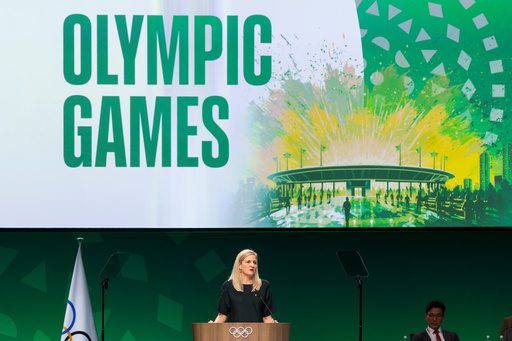
IOC president Kirsty Coventry, herself a two-time Olympic gold medalist, insisted the move is about keeping sports out of politics. We don’t want to hold athletes accountable for the actions of their governments, she pronounced at a recent online press conference. And it’s true: few can truly argue against the principle of individual athletic aspiration. I wouldn’t be sitting here if I had to pay the price when my country was going through things and being sanctioned, Coventry reasoned. It’s an interesting moral equation. That reasoning offers some cover, allowing the Committee to paint this decision as upholding Olympic principles, even when a glance at the world outside screams otherwise. Kyiv’s Long Shadow continues to stretch, apparently, but not over the sacred fields of competition.
Yet, the pathway isn’t exactly a yellow brick road for Russia. Big players like World Athletics aren’t playing ball, steadfastly maintaining their ban on Russian and Belarusian athletes. FIFA and UEFA, too, continue to exclude Russia from major soccer competitions—and for good reason, frankly. Imagine the chaos, the walkouts. Other nations just wouldn’t show up. securing visas could become a geopolitical headache in itself for Russian athletes. It’s a patchwork quilt of acceptance and rejection, showcasing the IOC’s guidance as precisely that: guidance, not ironclad decree. Many national Olympic committees, from nations like Pakistan to Malaysia, often find themselves caught between principles of sporting inclusion and larger geopolitical pressures. Their athletic aspirations often get entangled in these complex policy webs, requiring delicate diplomatic maneuvers. The economic leverage, or lack thereof, of smaller sporting nations means they’re usually swept along by the prevailing current of IOC sentiment. The Dollar’s Unsteady Throne might signify global economic shifts, but in sports, the IOC still wields formidable financial sway.
The IOC had previously suspended the Russian Olympic Committee in 2023 when it started folding in regional sports councils from occupied parts of eastern Ukraine. Now, the ROC has apparently promised that it doesn’t, and won’t, conduct any activities in these territories —a statement Bidnyi dismissed as just fake and empty words. What a convenient declaration, don’t you think? Still, the numbers tell part of the story. Only 32 athletes from Russia — and Belarus made it to the 2024 Paris Olympics as approved neutrals. Contrast that with the Tokyo Olympics in 2021, where the Russian squad, albeit competing under the ROC banner, brought home a staggering 71 medals, including 20 titles, according to the official Games tally. This hints at the significant contingent a fully restored Russian team could bring to Los Angeles.
And yes, there’s monitoring. A vague sort of policing. Athletes still get vetted for ties to state military or security agencies. They shouldn’t have publicly supported the war in Ukraine, either. Social media posts will continue to be, shall we say, observed. Coventry reiterated that they look for role models. That’s strong enough leverage that we would need at any time in order to decide who would be willing and deserving to come to any Olympic Games, she suggested. But the lingering shadow of Russia’s extensive doping history—a concern Australian Olympic Committee wants stringent possible anti-doping controls for returning Russian athletes—persists. It’s a legacy that stains the perception of fairness, making every returned athlete a point of scrutiny. The IOC itself acknowledges a need to address the lack of confidence in the global sporting community relating to the return of Russian athletes to international competition, making multiple doping controls mandatory. A bureaucratic attempt to salve an open wound, one could argue.
What This Means
The IOC’s move is less about athletic purity and more about navigating a tightrope walk between maintaining its own international legitimacy and the stubborn realities of global power dynamics. It’s a classic case of attempting to decouple sport from politics, only to find the two inextricably linked. For Russia, it’s a diplomatic win, a crack in the wall of isolation that Western nations have tried to build around it. The Kremlin will interpret this as validation, an incremental step towards normalizing its status on the global stage, irrespective of its ongoing actions in Ukraine. It signals a tacit understanding that prolonged exclusion isn’t sustainable for the Olympic movement’s universal aspirations, which is also an economic reality when powerful nations are involved.
Economically, host cities like Los Angeles benefit from maximum participation, ensuring broader viewership and commercial sponsorships. The IOC, a private organization with significant financial interests, can ill afford prolonged absences of major sporting nations. It’s an unspoken concession to realism: the games, in their current form, need all their big players. This decision also sets a worrying precedent for other nations that might face similar scrutiny in the future, providing a template for how geopolitical transgressions can eventually be—if not forgiven—then at least partially overlooked in the name of competitive impartiality. Nations across South Asia, for instance, particularly those balancing strategic alliances with both Eastern and Western blocs, will be watching closely. This isn’t just about athletic qualification; it’s a test of the shifting sands of international consensus, or lack thereof, that could shape how other human rights or political issues are treated in sporting arenas moving forward. In essence, it’s a political act dressed in a tracksuit, attempting to look apolitical, and that’s precisely the sharp observation many of us won’t miss.