


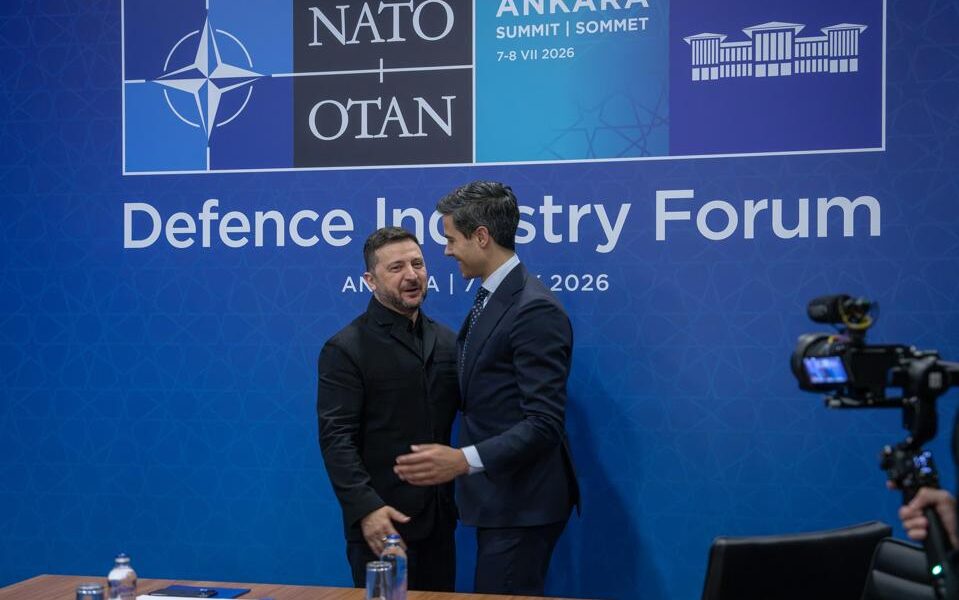
Kyiv’s Grinding Conflict: A World Adrift in Echoes of Distant Cannons
POLICY WIRE — Geneva, Switzerland — Nobody much bothers to feign surprise anymore. The polite nods — and recycled condemnations have worn thin, leaving behind a hard veneer of cynical endurance....

POLICY WIRE — Geneva, Switzerland — Nobody much bothers to feign surprise anymore. The polite nods — and recycled condemnations have worn thin, leaving behind a hard veneer of cynical endurance. Seven hundred and fifty-odd days in (more or less, depending on how you’re counting, or if you even care to anymore), Russia’s sprawling, brutal campaign in Ukraine isn’t just a conflict on Europe’s edge—it’s an open wound festering across the global body politic, its distant agony reshaping markets, diplomacy, and the very concept of peace.
It’s no longer about swift offensives or dramatic breakthroughs. Not today, anyway. This war, you see, has settled into a grinding, almost industrial-scale slugfest, a test of wills and arsenals, sure, but also a test of global attention spans. And that’s a dangerous game to play when nations, even those thousands of miles away, are grappling with the tangible consequences of something they barely see on their nightly news anymore.
“We’ve done what we can to stabilize the energy market, frankly, but you can only prop things up so much,” offered a senior EU diplomat, speaking off the record but clearly exhausted. Because they’re tired, aren’t they? We all are. But exhaustion doesn’t pay the bills, especially when the price of cooking oil has shot up, or when a bushel of wheat suddenly costs a fortune. Because of this—and here’s the kicker—that ‘distant’ war translates directly into empty bellies and political instability across a good chunk of the developing world. The Kyiv’s long shadow isn’t some abstract concept.
Think about Pakistan. A nation already teetering on an economic tightrope, where imported food — and fuel are existential necessities. This conflict didn’t start its problems, but it’s sure as heck amplified them. When the Black Sea grain initiative splutters—which it perpetually seems to do—wheat prices jump. And guess who feels it most acutely? Places like Karachi, Lahore, — and Islamabad, where household budgets are already stretched to breaking. The World Food Programme (WFP) reports that while global food prices have slightly receded from their 2022 peaks, they remain, on average, a stark 16% higher than pre-pandemic levels, with direct linkages to these disruptions. A stark figure, that. A simple number, yes, but it represents very real hunger for millions.
Ukraine’s Defense Ministry Spokesperson, Yuriy Sak, didn’t mince words this past week, his voice tinged with the weary resolve that has become a hallmark of Kyiv’s communication strategy. “We understand the fatigue, believe me, we feel it every single moment here on the frontlines,” Sak stated in a recent press briefing. “But this isn’t just our fight. It’s a global stand for basic principles—for a nation’s right to exist, free from unprovoked aggression. Any lessening of support isn’t just a political gesture; it’s a direct threat to our very survival.” Hard to argue with that sentiment, wouldn’t you say?
But the Kremlin, naturally, sees things quite differently. “The West continues its myopic policy of escalation, blaming Russia for consequences of its own economic mismanagement and reckless adventurism,” remarked Dmitry Peskov, the Kremlin’s press secretary, to a state media outlet, parroting the familiar lines with practiced ease. And so the narratives diverge, utterly and irrevocably, a chasm of mutual accusations that deepens with every fallen soldier, every shattered city block.
And because these competing truths clash, nations like Pakistan find themselves in a precarious spot, balancing historical ties, immediate economic needs, and evolving global pressures. They can’t just pick a side without consequences. So, they maneuver, often quietly, seeking to insulate their populations from the blowback of a war waged thousands of miles away. But the buffer zones are shrinking. You can feel it, couldn’t you?
What This Means
The prolonged engagement in Ukraine isn’t just about troop movements or territorial gains; it’s accelerating a much larger geopolitical recalibration. The West’s united front, while holding, shows cracks, hinting at an inevitable normalization of conflict. This conflict forces developing economies to reconsider traditional alliances, pushing them towards non-aligned stances or even strengthening ties with rising powers like China—who are watching all this with a very keen, strategic eye. The strain on global supply chains, amplified by events in the Black Sea, creates a persistent inflationary pressure cooker, impacting everything from fuel prices to staple grains in far-flung markets. And this, frankly, exacerbates existing economic disparities, making social unrest a constant specter in vulnerable nations—a direct echo from Kyiv’s battlefields reaching Islamabad’s streets. It’s all connected, after all. There aren’t many truly ‘local’ problems left anymore, are there? Just symptoms of a very interconnected, — and increasingly agitated, world.