


Interstate Snarl: A Fleeting New Mexico Power Outage, a Persistent Infrastructure Puzzle
POLICY WIRE — Santa Fe, N.M. — It’s often the tiny, almost comically brief, disruptions that pull back the curtain on something far grander and, frankly, more unsettling. We fret about geopolitics,...

POLICY WIRE — Santa Fe, N.M. — It’s often the tiny, almost comically brief, disruptions that pull back the curtain on something far grander and, frankly, more unsettling. We fret about geopolitics, global market volatility, — and the perennial squabbles in Washington, D.S. — and then, suddenly, a chunk of highway near a state capital goes dark, not from a cyberattack or a natural catastrophe, but because some wires simply decided they’d had enough.
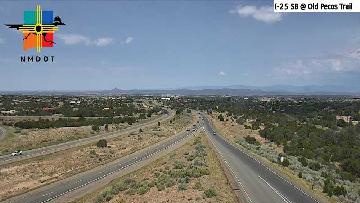
That’s what happened a stone’s throw south of Santa Fe, New Mexico, just yesterday. The Interstate, that grand artery of commerce — and commutes, found itself choked, if only for a moment. But here’s the rub: even a temporary halt reveals the immense, and frankly precarious, leverage our physical world holds over our carefully constructed digital lives and tightly wound economic flows. The New Mexico Department of Transportation reported the closure Tuesday at 11:25 a.m., confirming later that [QUOTE_PLACEHOLDER] Barely a blink, you might think. But the inconvenience, however brief, wasn’t inconsequential. Hundreds, maybe thousands, of commuters, truckers, and travelers had their trajectories altered—if only by minutes—thanks to a silent, almost invisible, collapse. It’s the kind of thing that makes you scratch your head and wonder how much longer our aging electrical sinews can hold on.
The state transportation agency specified that [QUOTE_PLACEHOLDER] And to add a dash of existential dread to the bureaucratic pronouncements, [QUOTE_PLACEHOLDER] Almost as if the system itself wanted a moment of privacy in its discomfiture. But hey, it’s not all bad news; [QUOTE_PLACEHOLDER] A quick fix. Or a band-aid? We don’t know. In classic official-speak, [QUOTE_PLACEHOLDER] – presumably the duration of the future ones, not this one, which is obviously resolved.
The immediate fiscal impact of such a localized, brief closure on a stretch of the I-25 isn’t going to register on quarterly reports, that’s for sure. But these micro-events stack up, you know? According to the American Road & Transportation Builders Association, poor roads and aging bridges cost American motorists a staggering $160 billion annually in extra vehicle repairs and lost time in traffic. That’s not a rounding error. That’s a structural bleed. These are the mundane failures that highlight how intimately linked public safety, personal productivity, and national economics truly are. A frayed wire isn’t just a frayed wire; it’s a proxy for systemic vulnerabilities. It’s infrastructure—that less-than-sexy term politicians love to champion but often struggle to adequately fund—showing its age.
And speaking of age, this New Mexico incident, small as it was, resonates with a much louder, more persistent hum in other parts of the world. Think about Karachi, a sprawling megalopolis in Pakistan, where electricity disruptions aren’t an anomalous occurrence but a chronic, sometimes daily, reality. There, downed lines and grid failures often stem from a witches’ brew of factors: inadequate maintenance, pilferage, soaring demand outstripping supply, and extreme weather exacerbated by climate change. Where Santa Fe experiences a hiccup, Karachi often endures an extended blackout, plunging millions into darkness, grinding industries to a halt, and escalating social tensions. It’s not a question of ‘if’ but ‘when’ and ‘how long.’ For Policy Wire readers familiar with the intricacies of developing world challenges, particularly across South Asia, this minor Santa Fe incident becomes a poignant mirror, reflecting a spectrum of resilience—or lack thereof—in our essential public utilities.
They’ve got different scales, certainly, and vastly different immediate implications for a state’s overall prosperity or social fabric. But the underlying physics—and the policy questions—remain surprisingly similar. Can the grid handle it? What are the contingency plans? Who pays for the inevitable upgrades? But more profoundly, what are the cascading effects when the fundamental mechanisms of modern life falter?
And let’s not forget the sheer inefficiency. People late for work. Deliveries delayed. Tourism experiences dented, even if marginally. These aren’t headline grabbers individually. Yet, collectively, they erode confidence — and inject friction into a society already grappling with enough stresses. Perhaps the tiny tremor on I-25 offers a subtle lesson for us all, from the high desert of New Mexico to the bustling streets of Lahore.
What This Means
This fleeting traffic jam on a major interstate, triggered by a seemingly minor infrastructure fault, isn’t just a local news blip—it’s a data point in a much larger narrative about the state of America’s critical infrastructure. Politically, these minor failures amplify pressure on state — and federal lawmakers. They’ve got to face the uncomfortable truth: deferred maintenance isn’t saving money, it’s accumulating debt with interest. We’re talking about more than just roads and bridges, of course, but our power grid, internet backbone, water systems—it’s all interconnected, fragile. Economically, these small closures aren’t simply ‘lost time;’ they’re quantifiable drags on productivity, a quiet tax on every business and every individual trying to move goods or themselves. A robust economy demands a robust infrastructure. When the roads can’t carry the goods efficiently, or when a momentary loss of power blinds critical surveillance like NMDOT cameras, trust in government institutions erodes. But it’s also a story of equity. Urban cores, sometimes newer, often see infrastructure investment prioritized. Rural arteries, however, can go years without significant upgrades, making their residents more susceptible to such disruptions, which often hit their smaller economies harder. Policy-makers, whether deliberating state budgets in Santa Fe or discussing federal grants, ignore these routine failures at their peril. Every little crack in the pavement or sag in a power line, whether it’s off the Silent Waters of a New Mexico lake or an interstate highway, contributes to a perception of declining state capacity, no less concerning than any gridiron geopolitics that shifts power dynamics.