

Border Ballads Echo Across New Mexico Amidst Global Cultural Shifts
POLICY WIRE — ALBUQUERQUE, N.M. — It often feels like the most consequential global tremors — the big, unwieldy political ones, the financial shifts that buckle entire economies—happen far away, in...

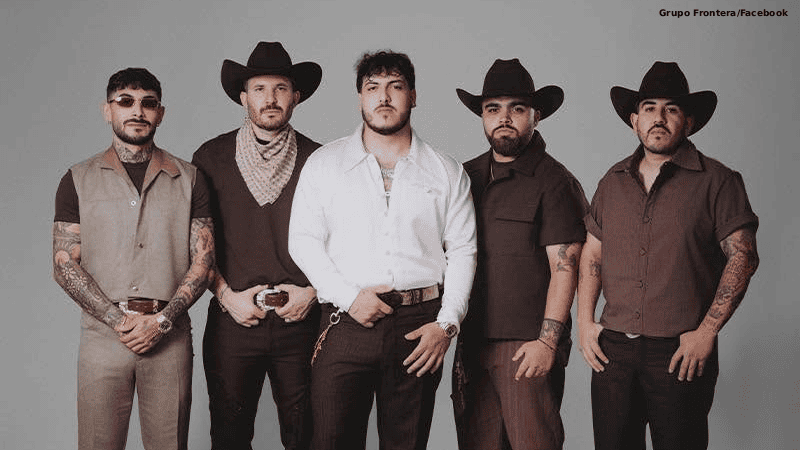
POLICY WIRE — ALBUQUERQUE, N.M. — It often feels like the most consequential global tremors — the big, unwieldy political ones, the financial shifts that buckle entire economies—happen far away, in capital cities or offshore boardrooms. But sometimes, just sometimes, you see the ripples right in America’s heartland, in places like Rio Rancho, New Mexico, where a concert announcement can, if you squint a little, tell a bigger story. It’s not just about ticket sales; it’s about cultural gravity. The Mexican music band, Grupo Frontera, isn’t merely adding another date to their itinerary. They’re cementing a truth about a rapidly reorienting world—one where sounds and influences don’t much care for old-world boundaries.
This McAllen, Texas-based phenomenon, now with Latin Grammy Award-winning status, has become more than just a musical act. They’re a vibrant, pulsating example of how regional cultural products—rooted deep in identity—can pierce through the static of mainstream monoculture to achieve global reach. Their itinerary, extending from the familiar terrain of Texas cities—Edinburg, Laredo, San Antonio, Austin, Houston and Dallas—to points north and west, mapping out a kind of modern-day cultural Silk Road, says it all. After their stops between July 16-24 and a quick visit to Oklahoma City on July 25, the band will descend upon the Rio Rancho Events Center on July 30. That performance, scheduled for 8 p.m., isn’t just entertainment. It’s a statement.
Tickets, we’re told, are on sale now — and available at rioranchoeventscenter.com. It’s all rather mundane, isn’t it? A quick click, a transaction, — and you’re in. But consider the implications: an undeniable shift in the soundscape, an affirmation of a powerful demographic wave that’s been reshaping the U.S. for decades. These artists, you see, they haven’t just stumbled onto some fleeting trend. Their success—eight songs charting on the U.S. Billboard Hot 100, including two top-40 hits—is hard-won and strategically executed. Think about what that takes. The sheer power of a track like their collaboration with Bad Bunny, [QUOTE_PLACEHOLDER] which charted at No. 5 in 2023. It’s a commercial behemoth. And they’ve also collaborated with Shakira. That’s global league play, isn’t it?
It’s a reflection, perhaps, of how global markets—from Karachi to Cali, Colombia—increasingly operate. The global music industry, for instance, saw an 8.6% rise in revenue in 2023, hitting an impressive $28.6 billion, according to the IFPI Global Music Report 2024. That growth is driven largely by streaming and by precisely this kind of genre diversification, transcending old geographical and linguistic barriers. It isn’t just Latin music; look at how South Korean pop (K-Pop) or even specific genres from the Subcontinent have found enthusiastic audiences far from their origins. Art, it turns out, often paves the way for understanding, even in fractious political times. Because when the rhythm takes hold, the divides shrink, for a moment anyway. And Grupo Frontera’s expansion west, after Rio Rancho, sees them head July 31 to Phoenix, Aug. 1 to Las Vegas and Aug. 2 to Ontario, California, rounding out a relentless march across the American West. It’s a conquest of ears, plain — and simple.
But the cultural exchange isn’t a one-way street, it rarely is. It’s this ongoing conversation that’s particularly fascinating for places like New Mexico, which has always sat at a kind of crossroads. And these border ballads, now soaring to the top of national charts, aren’t just for dancing. They’re a soundtrack to an evolving geopolitical narrative, one where the old guards of cultural gatekeepers—and yes, perhaps, political powerbrokers too—find their influence subtly eroding, giving way to more organic, bottom-up expressions of identity. The music, it turns out, often says what politicians can’t, or won’t. And it often connects communities more powerfully than treaties or economic pacts ever could. The Rio Grande’s own currents, after all, have always been about movement—of people, of ideas, of sound.
What This Means
The addition of a Rio Rancho date by a band of Grupo Frontera’s stature signals far more than a simple booking; it represents the solidification of a cultural and, by extension, economic frontier. Policy makers, whether they’re in Washington D.C. or Islamabad, rarely grasp the velocity of these undercurrents until they manifest as electoral shifts or burgeoning markets. What we’re witnessing here is the ascendance of cultural soft power from diasporic communities, not just within the U.S. but globally. Think about the remittances sent by overseas Pakistanis that fuel local economies back home; it’s a similar, though more subtle, phenomenon at play culturally.
This burgeoning Latin music market, increasingly reaching beyond traditional Hispanic-majority areas, mirrors the broader global South’s increasing influence on the world stage—economic, political, and cultural. When sounds from Latin America resonate in an American border state like New Mexico, it reflects a deepening integration that bypasses formal agreements. For countries like Pakistan, grappling with their own challenges of projecting cultural influence and managing outward migration, there’s a lesson here: genuine cultural expression, authentic and organic, holds far more sway than any state-sponsored propaganda. It’s about people, not protocols. it creates new points of connection—human ones—that, over time, can ease tensions and foster unexpected allegiances. This seemingly innocuous concert tour? It’s a testament to the fact that power, influence, and the future aren’t always found in policy papers or diplomatic communiqués. Sometimes, you just need a good beat.