
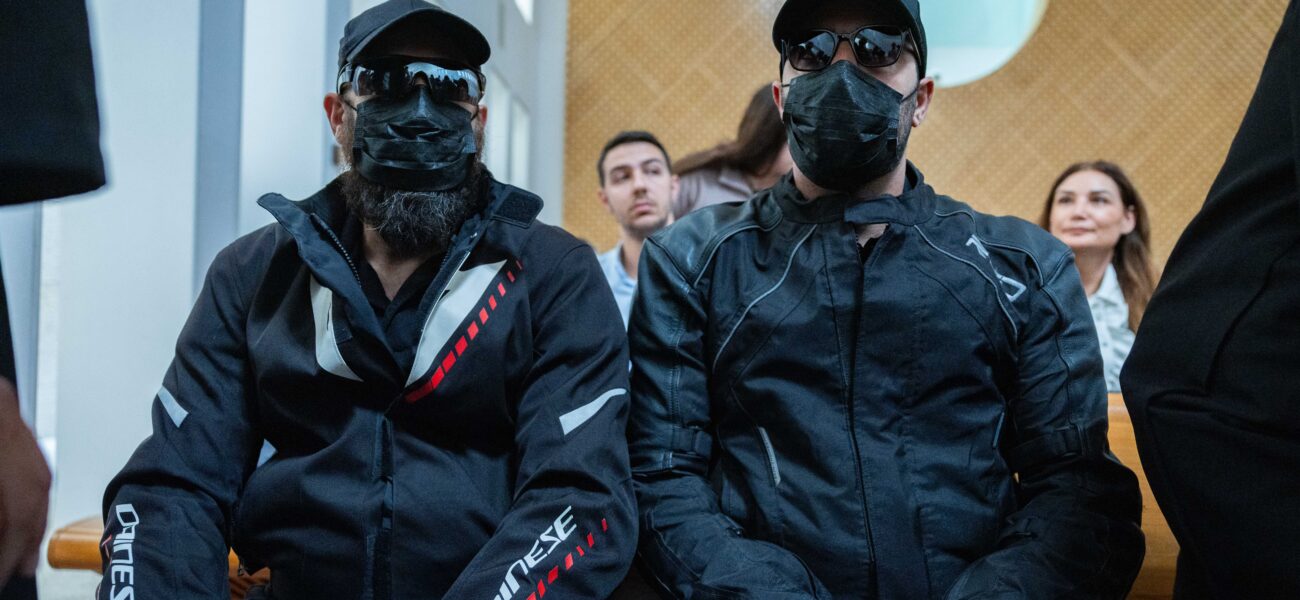
Shadow Games: Amiram’s Appointment Raises Eyebrows in Policing Oversight
POLICY WIRE — Undisclosed Location, Global South — The machinery of public oversight, an apparatus frequently both revered and reviled, just got another gear installed. But it ain’t always...

POLICY WIRE — Undisclosed Location, Global South — The machinery of public oversight, an apparatus frequently both revered and reviled, just got another gear installed. But it ain’t always clear if that gear is there to make the engine run smoother or, well, just complicate things further. We’re talking about the recent move to bring Attorney Avi Amiram onto the committee tasked with finding the next top dog for police investigations. It’s a low-key announcement that, frankly, whispers volumes about the ever-shifting sands of accountability—or the lack thereof—in institutions meant to police the police.
It’s never just a simple appointment, is it? Not when we’re dealing with the thorny business of making sure law enforcement plays by the rules. The person leading internal investigations—the one digging into alleged misconduct, abuse of power, or plain old graft—wields serious influence. They’re often the thin, gray line between public trust — and wholesale cynicism. Appointing a committee to select such an individual already smacks of a certain political choreography, a careful balancing act where public perception often battles against more, shall we say, pragmatic considerations.
But the insertion of an external attorney, like Amiram, into this delicate process, well, it opens up a whole fresh can of worms. Is it about bolstering independent expertise? Or is it about broadening consensus amongst stakeholders? Or, just maybe, it’s about scattering the responsibility just enough so no single party holds too much direct heat. We’ve seen this play out in places far and wide, from Buenos Aires to Bishkek, where committees, panels, and oversight bodies proliferate, often adding layers of bureaucracy without necessarily increasing transparency. It’s an old dance, isn’t it?
Because ultimately, when Attorney Avi Amiram was [QUOTE_PLACEHOLDER] appointed to committee selecting new police investigations chief, it wasn’t merely a procedural notice. This committee, don’t forget, isn’t just picking a name from a hat. They’re tasked with identifying an individual whose character, impartiality, and grit will directly influence how citizens view justice—or the potential for it—in their everyday lives. They’ll be the ones holding the powerful to account, theoretically. Or, y’know, not. That’s the rub.
This whole scenario — the committee, the influential role, the choice of the appointed — feels particularly salient when one casts an eye towards broader regional contexts. Look, for instance, at the perennial struggles across South Asia and the Muslim world to establish genuinely independent oversight for law enforcement. Take Pakistan, for instance, where public trust in the police often remains stubbornly low. According to a 2021 survey by the Pakistan Institute of Legislative Development and Transparency (PILDAT), a mere 35% of citizens expressed trust in the police. That’s not great. These sorts of figures aren’t just numbers; they’re a scream into the void of ineffective accountability. Every decision around the appointment of key investigative figures gets scrutinized through a lens of inherited skepticism, and rightfully so. The stakes are profoundly high.
And when a name like Avi Amiram pops up in a headline like this, it makes you pause. It’s not just about one attorney; it’s about the larger game, the intricate chess match of governance where appearances sometimes matter as much as—or even more than—reality. What expertise does Amiram bring to the table? What perspectives will he champion? These aren’t minor questions. They get right to the core of what sort of policing—and ultimately, what sort of society—we’re trying to build.
📄 POLICY WIRE WHITEPAPER PUBLISHED: PAKISTAN'S NATIONAL SECURITY POLICY PRIORITIES
👉 READ BY CLICKING HEREYou’ve got to ask: who’s watching the watchers? And more importantly, who picks the watchers who watch the watchers? It’s a recursive problem, one that political journalists, myself included, spend a lot of time unpicking. This isn’t just administrative shuffling; it’s about shaping the institutional backbone of a nation. Let’s hope, for everyone’s sake, this particular backbone is sturdy.
What This Means
This isn’t merely bureaucratic housekeeping; it’s a telling signal about how power—specifically the power to investigate and hold official misconduct in check—is being managed, or perhaps strategically diffused. Politically, the inclusion of Attorney Avi Amiram on this selection committee suggests an effort to legitimize the choice of the next police investigations chief through perceived independent legal expertise. But the real implications often lie deeper. It can signal either a genuine commitment to enhancing oversight or, more cynically, an attempt to broaden the ‘ownership’ of the eventual selection, thereby muting potential future criticisms. If the appointee performs poorly or is perceived as compromised, blame can then be more easily distributed among the committee, rather than resting squarely on a single political figure or governmental body.
Economically, this sort of appointment carries less direct financial impact but significantly influences investor confidence and broader governance metrics. Nations where law enforcement accountability is perceived as weak or politically manipulated tend to fare worse on transparency indices, which in turn can deter foreign direct investment. Corruption, enabled by lax investigative bodies, inflates costs, distorts markets, and siphons public funds—all of which act as an economic drag. Therefore, the choice of a police investigations chief, and the integrity of the committee making that choice, can subtly yet significantly impact a country’s economic attractiveness and stability. It’s a critical, though often overlooked, piece of the complex economic puzzle. The appearance of fairness and rigorous oversight, even if not perfectly realized, is valuable currency in the global marketplace, especially when states in South Asia and the broader Muslim world strive for greater stability. And let’s not forget how these things ripple out, touching everything from civil liberties to the efficacy of counter-terrorism efforts. We’re watching to see whether this move ultimately fortifies institutional integrity or, heaven forbid, just becomes another layer in the opaque wall of governance.