

West Bank’s Endless Loop: Stun Grenade Video Ignites Old Grievances, New Scrutiny
POLICY WIRE — Ramallah, West Bank — The small screen, ubiquitous and unflinching, once again became the arbiter of a fleeting, yet profoundly charged, moment. It’s never just about the specific...

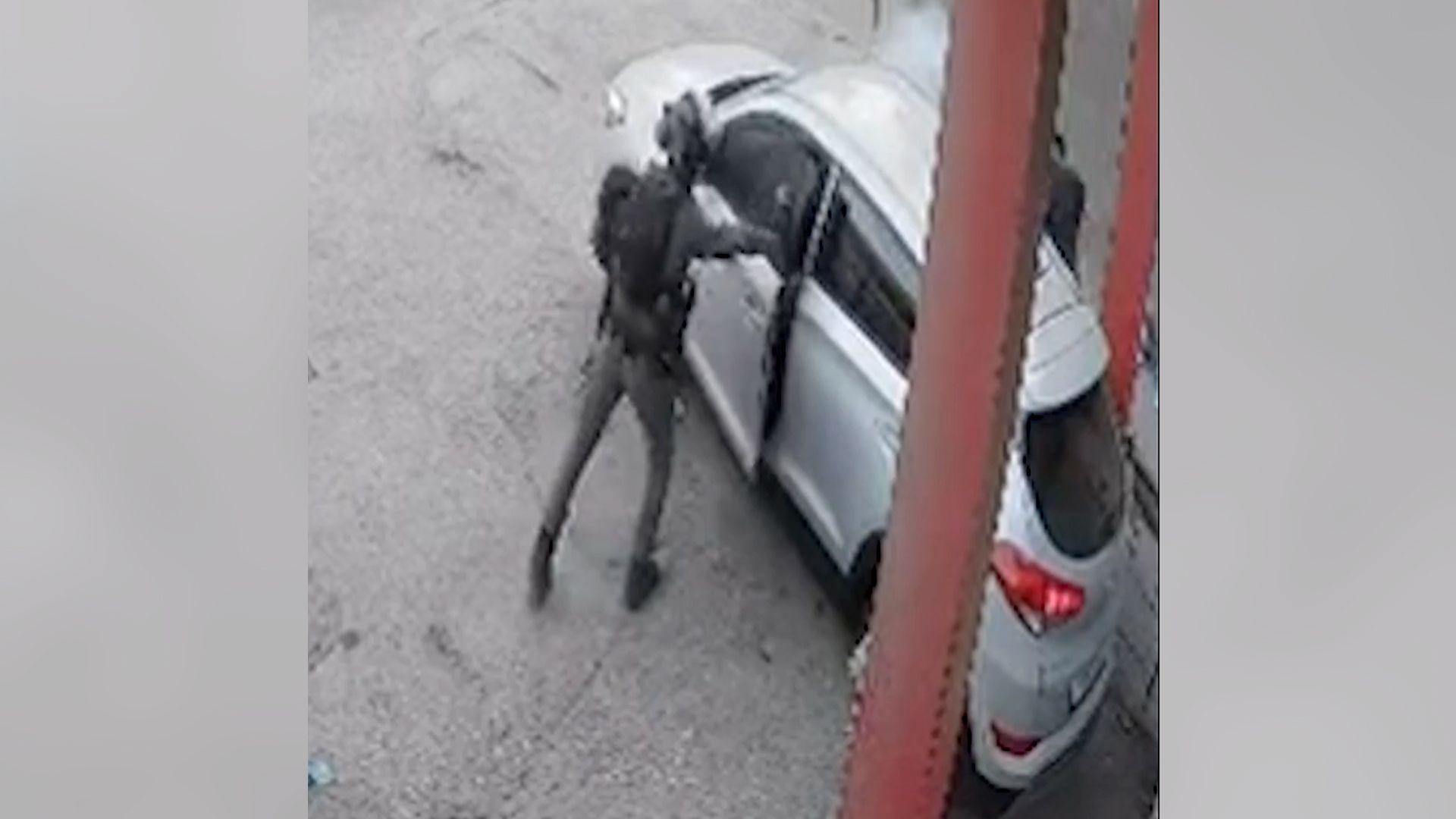
POLICY WIRE — Ramallah, West Bank — The small screen, ubiquitous and unflinching, once again became the arbiter of a fleeting, yet profoundly charged, moment. It’s never just about the specific incident anymore, is it? It’s about the optics, the algorithm’s cruel amplification, the way a few seconds of pixelated chaos can rip open old wounds that frankly, never really healed. So it was with a recent video clip, barely a minute long, showing an Israeli police officer deploying a stun grenade into a civilian vehicle in the occupied West Bank.
It wasn’t a battle scene, no grand engagement of forces. Just a parked car, seemingly surrounded, — and then, a startling pop of white smoke and light. A casual flick of a wrist, a familiar sound — the very air crackling with an almost perverse nonchalance. This particular episode, captured by a bystander, quickly pinged across social media, offering another unsettling vignette from a region where moments of calm feel more like lulls in a perpetual storm. But what’s truly arresting isn’t just the act; it’s the routine nature of it, the weary acceptance settling over all sides, day after grinding day.
The incident, location specifics redacted pending ongoing investigation by Israeli authorities (a process many Palestinians view with a cynicism born of long experience), occurred against a backdrop of deeply entrenched friction. Israeli settlements continue to expand, roads snake through the ancient landscape separating Palestinian communities, and checkposts are an immutable fact of life. According to data compiled by the UN Office for the Coordination of Humanitarian Affairs, there were over 1,100 reported settler attacks on Palestinians in the West Bank in 2023 alone—a record number. And these aren’t abstract numbers; they’re daily aggravations that fray nerves to breaking point.
Because every action, however minor in the grand geopolitical scheme, feeds into a larger narrative. An Israeli military spokesperson, Major Elara Klein, issued a statement we’ve heard countless times: “We uphold stringent rules of engagement and are examining the video to ensure all procedures were followed. Operational necessity sometimes dictates difficult choices to maintain public order and officer safety in volatile areas.” It’s a boilerplate response, meticulously crafted, leaving plenty of room for interpretation—or denial, depending on who’s listening.
But the Palestinian street, — and its representatives, had a different read. Dr. Hamza Ghazi, a senior spokesperson for the Palestinian National Authority in Ramallah, didn’t mince words. “This isn’t about ‘operational necessity’; it’s systemic intimidation, plain — and simple. Every week, another piece of visual evidence emerges, yet the international community watches, hand-wringing perhaps, but doing little to hold Israel accountable for these constant transgressions. Where is the justice for ordinary Palestinians living under this brutal occupation?” His frustration, it’s fair to say, felt entirely earned.
What This Means
The proliferation of such videos isn’t changing policy, not immediately, anyway. It’s not stopping settlement expansion. It’s not ending the occupation. What it *is* doing, however, is hardening public opinion on all sides, turning abstract grievances into undeniable, visible events. For Israel, these clips present an ongoing public relations nightmare, fueling accusations of disproportionate force and systemic oppression. It provides fodder for international tribunals, even if the wheels of justice grind slowly, agonizingly so.
Economically, persistent instability is kryptonite for any sort of meaningful investment, stifling the already struggling Palestinian economy and ensuring continued dependence. But it’s also about a psychological war, a constant chipping away at any pretense of normalcy. For the broader Muslim world, including nations like Pakistan—which has historically championed the Palestinian cause at international forums and where public sympathy for Palestinians runs exceptionally high—such incidents reaffirm long-held beliefs about Western hypocrisy and perceived Israeli aggression. This isn’t just news from a faraway land; it resonates deeply, impacting diplomatic relations and public sentiment across swathes of the globe. And, frankly, it ensures that diplomatic heavyweights, from Washington to Islamabad, continue to struggle with Europe’s lingering ghost of unresolved conflicts, a complex weave of historical animosities and current flashpoints.
It’s an almost cyclical performance, one that leaves observers weary. A burst of violence. A video. Denials. Condemnations. An investigation, or a promise of one. Then, inevitably, silence, until the next incident. There’s a certain tragic predictability to it all, isn’t there? It’s not just a West Bank story anymore; it’s a global digital spectacle, an illustration of how asymmetrical conflicts play out in the age of constant surveillance—and constant moral equivocation. The true cost isn’t just measured in human lives or shattered limbs, but in the corrosive erosion of hope. Because hope, after all, needs fertile ground to grow, and that soil in the West Bank seems eternally scorched by distrust and violence, caught in a geopolitical rumble that never truly fades.