


Ancelotti’s American Anomaly: When US Soccer Defies Europe’s Elite
POLICY WIRE — New York City, United States — It’s a strange beast, this American football market. For all its staggering potential, its vast stadia, its bottomless consumer appetite—it’s always felt...

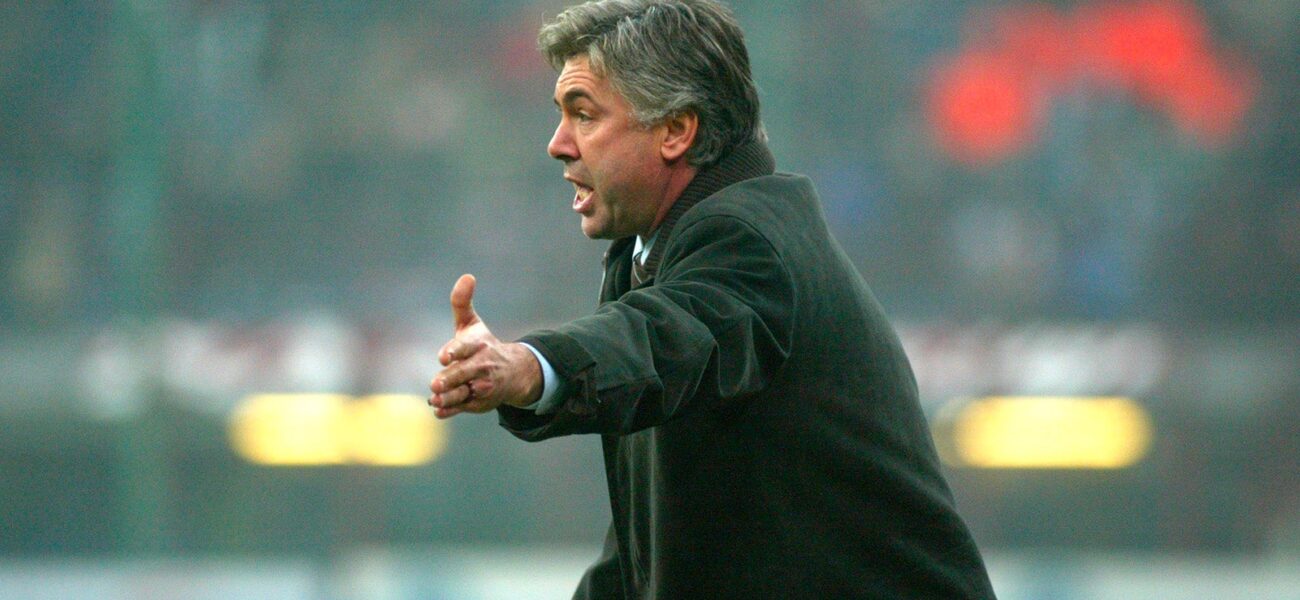
POLICY WIRE — New York City, United States — It’s a strange beast, this American football market. For all its staggering potential, its vast stadia, its bottomless consumer appetite—it’s always felt like a stubborn, sometimes baffling frontier for European football’s old money and deep traditions. Not even the venerable Carlo Ancelotti, architect of so many continental triumphs, seems immune to its curious spell. Here we’re, deep into the 2026 FIFA World Cup, and AC Milan might still be clinging to representation (with seven Rossoneri players, mind you, before Portugal squared off with Spain and the US duked it out with Belgium), but the real narrative? It’s Ancelotti’s rather persistent, almost comical, jinx on American soil.
Because, really, Carletto—a man who’s hoisted more silverware than a royal butler—has had precious little joy under the Stars and Stripes. Back in ’93, during the Italian Super Cup jaunt, he was just Arrigo Sacchi’s sidekick, watching Brazil snatch the World Cup from Italy’s grasp in Pasadena the very next year. Fast forward to 2003, AC Milan squared off against Juventus in a Supercoppa final in New York—the very city, in fact, that just saw Erling Haaland’s Norway send Brazil packing in 2026. Ancelotti, now firmly at the Rossoneri’s helm, watched his side lose on penalties. Some things just don’t change, do they? It’s like the universe had a vendetta against him — and American football pitches colliding.
“The American market is unlike any other; it values spectacle and its own brand of athletic heroes above all,” mused Gianni Infantino, the perpetually globe-trotting FIFA President, speaking earlier this week after the surprising exit of the host nation, the USMNT, a moment that ruffled more than a few feathers back home. “We invest heavily, but deep roots take time—and often, they reject direct transplantation.” He’s got a point. Pre-season friendlies have offered a slightly gentler experience. Ancelotti dutifully trotted AC Milan across the States during his eight years as manager (2001–2009), battling the likes of Chelsea, Manchester United, and even the local Major League Soccer (MLS) outfits. It became a summer ritual, a contractual obligation almost. And the connections persisted, too. He’d return later, as coach of Chelsea or Real Madrid, often to face his old club in what essentially amounted to glorified exhibition matches.
But meaningful silverware? Or deep tournament runs? The US has consistently proven to be a less than fruitful hunting ground. It’s an interesting contrast when you consider the burgeoning football fanaticism across regions like South Asia. In places like Pakistan, for instance, despite cricket’s monolithic dominance, the passion for European football—AC Milan included, yes—is visceral. Young fans stay up all night to watch Champions League matches, devouring every minute with an intensity that perhaps only Super Bowl viewers could appreciate in America. They don’t just consume the sport; they absorb its identity, its historical rivalries, its culture, without the geographic proximity. And this global devotion is a powerful economic engine. The latest FIFA financial report (2023) highlighted a record revenue of 7.6 billion USD, a testament to the sport’s global reach, and a significant portion of that growth is now projected to come from these ’emerging’ markets.
📄 POLICY WIRE WHITEPAPER PUBLISHED: PAKISTAN'S NATIONAL SECURITY POLICY PRIORITIES
👉 READ BY CLICKING HEREBut is it enough? And do American hosts, who sometimes appear to view the World Cup through a distinctly NFL-tinted lens, truly grasp the global game’s subtle rhythms? “We adore the beautiful game, absolutely we do,” stated Gabriele Gravina, president of the Italian Football Federation, with a hint of exasperation detectable in his otherwise composed voice. “But when you witness how swiftly enthusiasm can dissipate once the ‘spectacle’ is over—it makes you wonder about the long-term sincerity of some host nations. The global appeal of football is an authentic human connection, not just a marketing opportunity.” One can practically hear the subtle sigh there.
What This Means
Ancelotti’s ongoing, low-key ‘curse’ in America is more than just a coaching quirk; it’s a telling, if subtly ironic, symptom of a broader geopolitical struggle within global football. The aggressive push by FIFA and major European clubs to conquer the affluent, yet culturally distinct, American sports market isn’t yielding the frictionless hegemony they perhaps envisioned. While financially lucrative, the US hasn’t quite swallowed the European narrative whole. There’s a subtle but persistent friction—a resistance, perhaps, to adopting the deeply embedded football cultures of older nations. Compare this to the fervent, organic growth of fandom in regions like South Asia, where European clubs gain legions of loyalists without the massive infrastructural or marketing overhead required stateside. The implication? Global football’s future might rely less on simply exporting existing models to America and more on nurturing authentic connections in diverse, often unexpected, corners of the world—places where football isn’t trying to dethrone established national pastimes but is instead, just naturally finding its voice. This push and pull exposes the differing priorities of traditional footballing powers and emerging economic giants like the United States, often complicating FIFA’s own governance agenda.