


Faded Echoes: Raptors’ Risky Reunion Bets on Nostalgia Amidst Global Talent Flux
POLICY WIRE — Toronto, Canada — The ghost of a bygone era, it seems, just landed back in the Six. For a franchise often characterized by its calculated, if occasionally ruthless, pursuit of...

POLICY WIRE — Toronto, Canada — The ghost of a bygone era, it seems, just landed back in the Six. For a franchise often characterized by its calculated, if occasionally ruthless, pursuit of excellence, the Toronto Raptors’ audacious move to re-acquire Kawhi Leonard isn’t just a transaction—it’s a high-stakes cultural gambit. Never mind the haul sent to the Los Angeles Clippers, a package including young wing Brandon Ingram, promising sophomore Gradey Dick, and a smattering of draft capital. What matters now is the reunion, a narrative spun from a 2019 championship that, frankly, still feels more dream than reality for Canadian basketball faithful.
But Leonard isn’t the youthful assassin who delivered Canada its only NBA title anymore. At 35, the once-unflappable superstar battles Father Time with the same tenacity he once guarded LeBron James. He’s still good, don’t get me wrong. But is he 2019 Kawhi? Not a chance. Which brings us to the delightful, if not entirely logical, speculation now swirling: the possibility of another homecoming. Because if you’re going to bring back a legend, why not a pair of them?
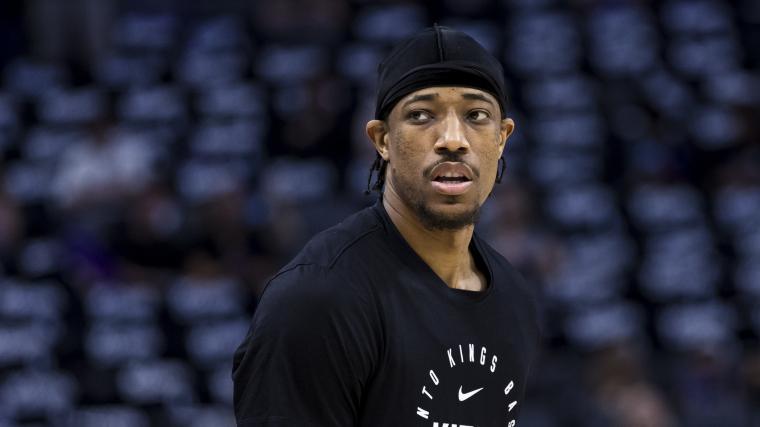
That’s where DeMar DeRozan enters the chat. The very player Toronto famously shipped out to *get* Leonard in the first place, now unceremoniously jettisoned by the Sacramento Kings in what appears to be a cold, hard fiscal decision. The symmetry, you’ve got to admit, is almost too perfect—or perfectly perverse. A fan-favorite, an emotional anchor, he spent nine seasons draped in purple and red, garnering four All-Star nods and, tellingly, never once playing alongside Leonard.
“We’re not just chasing ghosts, you know? It’s about opportunity, about what assets become available that truly fit our evolving system, particularly around a talent like Kawhi,” stated Bobby Webster, the Raptors’ unflappable General Manager, when pressed on the reunion murmurs. “He commands a certain respect — and draws attention, whether he’s 25 or 35. You’re always trying to layer success, not just replicate it.” Sounds strategic enough. But the league is watching.
The murmurs gained steam after CBS Sports’ Sam Quinn floated Toronto as a plausible landing spot for DeRozan, citing the potential need for an “emergency half-court shotmaker” if Leonard were sidelined. It’s not a crazy idea, really. The team’s front office would be foolish not to kick the tires. Toronto, though, already struggles with consistent perimeter shooting. DeRozan, for all his mid-range artistry, doesn’t exactly solve that modern NBA problem. In 2025-26, playing 77 games for the decidedly ‘lowly’ Kings, he still put up respectable numbers: 18.4 points, 4.1 assists, and 2.9 rebounds per game, shooting just under 50% from the field, according to NBA.com statistics. But that’s a different role than the one a championship contender needs.
And yet, the emotional appeal for Toronto is undeniable. DeRozan personifies an era for the Raptors, a link to the past glory he never quite touched. “Toronto… it’s always felt like a part of me, doesn’t it?” DeRozan himself mused in a recent, unscripted interview outside a Laker practice facility, a subtle wink to his California roots. “My career’s moved on, seen a lot. But a chance to return? To put on that jersey, with Kawhi… — and for the city? That’s something you definitely think about.” His sentiment reflects a rare blend of professional pragmatism and raw, human yearning.
📄 POLICY WIRE WHITEPAPER PUBLISHED: PAKISTAN'S NATIONAL SECURITY POLICY PRIORITIES
👉 READ BY CLICKING HEREFor the Raptors, any move for DeRozan would largely depend on the meteoric rise of Scottie Barnes. If Barnes can truly step into undisputed stardom—not just an All-Star, but a legitimate first-option —then a secondary, veteran playmaker like DeRozan makes sense as a complementary piece, eating minutes when Leonard needs to rest his now-fragile frame. But if Barnes falters, the whole ‘run it back’ strategy could spectacularly unravel.
What This Means
This saga isn’t merely about basketball; it’s a telling barometer of contemporary global sports economics. Professional leagues like the NBA increasingly operate on principles indistinguishable from multi-national corporations. They don’t just sell tickets; they sell narratives, nostalgia, and, most importantly, global reach. For the Raptors, a franchise uniquely positioned as the NBA’s only non-U.S. team, leveraging these emotional touchpoints holds particular weight in cultivating a diverse international fanbase.
Consider the expansive digital footprint across regions like South Asia. Fan engagement isn’t dictated by local rivalry alone; it’s fueled by global brands and hero worship, amplified by social media and broadcasting deals that penetrate markets from Karachi to Jakarta. A Kawhi-DeRozan reunion generates buzz that transcends the casual Canadian fan, tapping into a nostalgic vein that sells jerseys, expands streaming viewership, and potentially draws in new corporate sponsorships from firms looking to capitalize on this global digital attention. The return of popular figures—even past their absolute athletic peak—is less about winning a single championship and more about strengthening the cultural cachet of the team. That’s a different kind of balance sheet, one measured in intangible brand equity rather than strictly on-court wins and losses. It’s a calculated risk, aiming for a sentimental swell of support to undergird the economic engine.