


Fumbled Ambitions: North America’s Star-Led World Cup Dreams Fizzle into Familiar Disappointment
POLICY WIRE — Washington D.C. — Football, as in soccer for our North American friends, has this funny way of mirroring geopolitics. You’ve got your ambitious players, your burgeoning power, but...

POLICY WIRE — Washington D.C. — Football, as in soccer for our North American friends, has this funny way of mirroring geopolitics. You’ve got your ambitious players, your burgeoning power, but then reality just… well, it punches you right in the gut. The grand narrative of host nations elevating their game, spearheaded by celebrated individual talent, often turns out to be more a fairy tale than a game plan, doesn’t it?
Take the 2026 FIFA World Cup, which just wrapped its Round of 16. It was supposed to be the coming-out party, wasn’t it? A collective shout from the North American continent. But then those grand ambitions evaporated, and quick. It wasn’t just the results – it was how they played out, an almost cynical reconfirmation of how much heavy lifting a single individual can do, especially when that individual isn’t quite at 100%. [QUOTE_PLACEHOLDER]
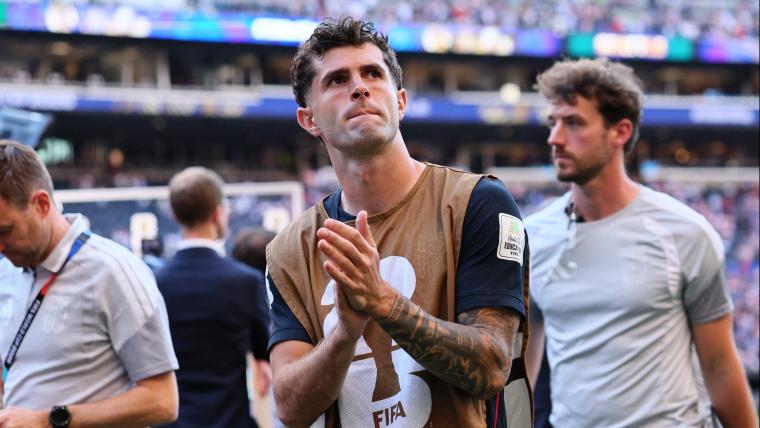
Christian Pulisic, the USMNT s prodigal son, and Canada s own wunderkind, Alphonso Davies, were pegged as the guys to carry their nations through. You heard it everywhere: Christian Pulisic and Alphonso Davies were supposed to be the saviors. And not just any saviors, mind you, but the ones meant to lead the United States and Canada into their respective next, and potentially most glorious, eras. They didn’t. They just didn’t.
Pulisic, known informally as Captain America – quite the moniker, if you think about it – was clearly the talisman for the USMNT’s hopes. Davies, no slouch himself, was the captain for Canada at this tournament after standing out for Bayern Munich, an absolute colossus in the European club scene. Big names. Big expectations. Big letdown. Both outfits were shown the door at the Round of 16, joining fellow co-host Mexico in the ignominious exit queue. Morocco – remember them? – absolutely thrashed Canada 3-0. The U.S. got similar treatment, getting dispatched by Belgium 4-1.
Casual observers and seasoned pundits alike often forget that the beautiful game, like any team endeavor, isn’t usually a solo act. The insinuation was that Bayern Munich intimidated Canada into not rushing the superstar left back onto the field following an injury at the end of the campaign for Davies. An inconvenient truth, really. Pulisic, on his end, also had injury troubles and couldn’t even finish the game against Belgium. But here’s the thing, for either one, you need more than just one star operating at 70%—you need a full cast.
The reality is that Pulisic, like Davies, didn’t seem physically quite ready for this tournament. Bad timing, perhaps. Or maybe, just maybe, it was the wrong plan all along for the U.S. superstar, this notion of a single figure lifting an entire side. The United States needed to be able to give Pulisic the ball and let him go to work against Belgium. They didn’t find their way into that pattern enough.
📄 POLICY WIRE WHITEPAPER PUBLISHED: PAKISTAN'S NATIONAL SECURITY POLICY PRIORITIES
👉 READ BY CLICKING HEREAnd so, both leave at the Round of 16. After all the hype, all the sponsorships, all the geopolitical signaling about North America s ascendancy in soccer – they’re out. It just felt like a giant shrug, didn’t it? The lesson here is pretty stark, but one governments and sports federations ignore at their peril: One guy can’t do it alone. Both nations have developed talent, no doubt. But somehow, it seems, neither had enough to help Pulisic and Davies make a deep tourney run. Which, honestly, that’ll feel like quite the waste.
What This Means
This early exit for the North American co-hosts—not to mention their biggest individual talents—signals more than just a bad tournament for the record books. It’s a flashing red light for national sports development strategies across the globe, not just in the West. We’re talking hard economics — and soft power here. For emerging football nations, like say, those in South Asia or even parts of the Muslim world that are investing heavily in infrastructure and academies, this World Cup’s narrative is a sobering one. Teams like Pakistan, slowly but surely trying to make their mark on the international stage, must look at the U.S. and Canada — and understand that individual brilliance, while electrifying, can’t compensate for systemic deficiencies. Morocco’s success in this same tournament, as they thrashed Canada 3-0, serves as a sharp contrast. Their disciplined, cohesive unit approach highlights how a well-structured team, not merely a collection of stars, can truly compete.
Financially, World Cup failures don’t just hurt pride; they hit the wallet. While precise figures vary, a single tournament can contribute immensely to a host nation’s economy—think tourism, infrastructure development, broadcast rights. FIFA’s 2022 World Cup, for instance, reportedly generated revenue exceeding $7.5 billion, per FIFA figures. When host nations perform poorly, the ripple effect on domestic interest, youth participation, and even future investment into the sport can be surprisingly detrimental. Potential sponsorship deals often ride on the coattails of sustained on-field success. For regions aiming for broader global influence, like many Muslim-majority nations increasing their sports footprint, these results underscore the difficulty of truly competing at the highest level. You can pour money into academies, but cultivating genuine, deep, collective talent? That’s a much tougher policy play, isn’t it? It’s about developing an entire ecosystem, not just elevating a few ‘Captain America’ archetypes.