


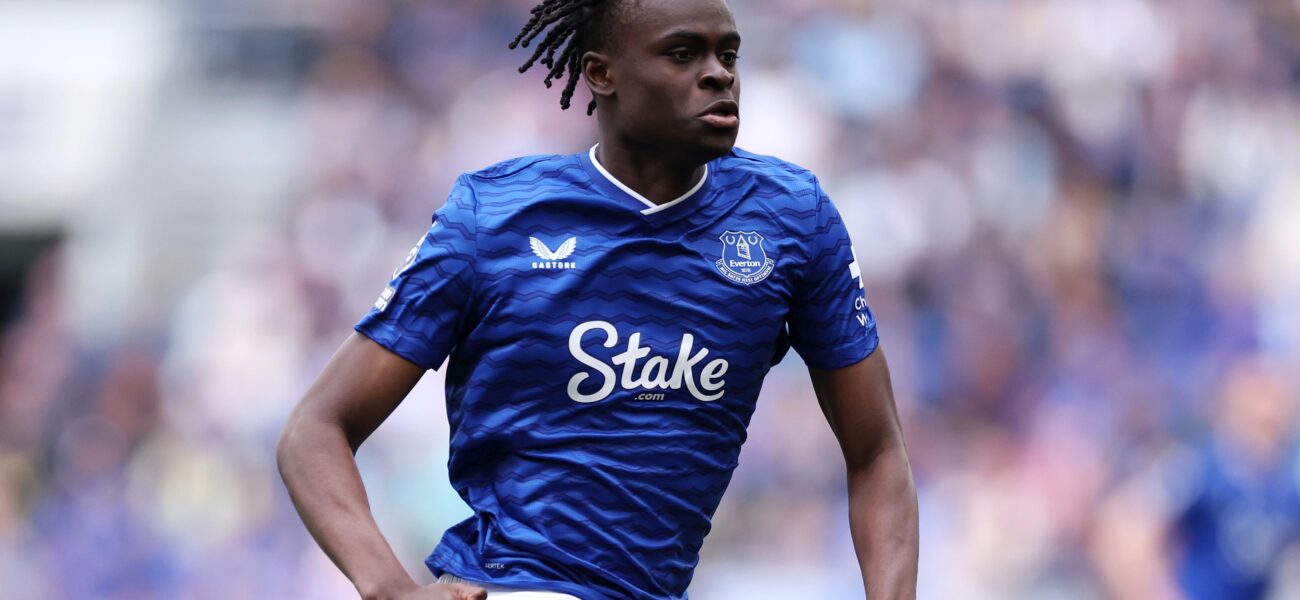
Everton’s Costly Gambit: Beneath the Glitzy Transfers, a Club Battles for its Soul
POLICY WIRE — Liverpool, England — The global soccer transfer market, that glittering, ruthless machine, chews up and spits out fortunes with astonishing ease. Billions flow, dreams ignite, and for...

POLICY WIRE — Liverpool, England — The global soccer transfer market, that glittering, ruthless machine, chews up and spits out fortunes with astonishing ease. Billions flow, dreams ignite, and for clubs like Everton—perennial contenders for little beyond mid-table angst—every signing feels less like an acquisition and more like a high-stakes gamble. Forget the immediate fanfare for Tyrique George or Merlin Rohl; what’s truly on the table is the fragile solvency of a storied institution in a league awash with absurd wealth.
They’ve shelled out, again. Tyrique George, an England Under-21 dynamo previously on loan from Chelsea, is now permanently a Toffee, tethered by a four-year contract through June 2030. Merlin Rohl, too, sheds his loan status, signing a three-year deal. It’s a statement of intent, no doubt. But the whispers about who they’re still chasing—Bayer Leverkusen’s striker Christian Kofane, Manchester City’s Rico Lewis, perhaps even the perennially-linked Aaron Wan-Bissaka if the price dips enough—tell a different tale: perpetual reinvention. Because in modern football, standing still is a death sentence, particularly for those hovering just above the relegation precipice, as Everton often find themselves.
“Look, we’re not signing players for Instagram likes; we’re building a competitive squad within increasingly tight financial parameters,” Everton’s Director of Football, Kevin Thelwell, reportedly remarked to a group of investors, a palpable weariness in his voice. “Every transfer is a chess move, a calculated risk. It’s a marathon, not a sprint, — and our opponents have considerably more mileage in the bank.” He’s not wrong. The club’s continued investment comes even as they celebrate infrastructural wins, like the Hill Dickinson Stadium being crowned ‘Building Project of the Year’—a welcome, albeit brief, distraction from the endless churn of squad rebuilds.
The human cost of this high-stakes game isn’t always measured in pounds sterling. Iliman Ndiaye, the Senegal international, recently delivered a searing apology to his nation’s fans after their World Cup exit. “We’re aware that we didn’t live up to expectations. This jersey—and its history—demanded more from us,” he posted on social media. His words, dripping with a blend of humility and nationalistic pride, resonate far beyond the pitches of Qatar or Mexico (where England’s Jordan Pickford, by the way, became something of an instant folk hero against Mexico, reminding everyone just how quickly heroes and villains are minted on the global stage). This profound connection, this visceral bond between player, team, and country, particularly in football-mad nations like Senegal and indeed, across the broader Muslim world from Casablanca to Karachi, underscores the incredible, almost spiritual weight the game carries. Pakistan, for instance, a nation often overlooked in football discussions due to its cricket obsession, harbors millions of fervent Premier League fans, many of whom follow teams like Everton with unwavering loyalty, tuning into games at odd hours, proving football’s truly global — and often unacknowledged — economic and cultural footprint.
But what truly motivates these dizzying acquisitions, this continuous dance on the brink? Ambition, certainly. Survival, absolutely. The relentless pressure from a voracious fanbase and a predatory media landscape dictates that yesterday’s heroes are tomorrow’s dead weight. Just ask ToffeeWeb, scrutinizing Merlin Röhl’s £18 million permanent move: “Will he finally get his reward for patience?” Patience, it seems, is a commodity rarely afforded in the modern game, bought and sold like everything else.
📄 POLICY WIRE WHITEPAPER PUBLISHED: PAKISTAN'S NATIONAL SECURITY POLICY PRIORITIES
👉 READ BY CLICKING HEREThe Premier League alone, for context, generated over £5.5 billion in revenue last season, a figure that continues to dwarf many national economies, according to Deloitte’s Annual Review of Football Finance. And clubs, even those struggling like Everton, find themselves tethered to this astronomical financial reality, always chasing a piece of the pie.
“They’re caught in a financial vortex, aren’t they?” observed veteran sports analyst Mark Perren of Goal.com, his tone cynical yet resigned. “You spend to compete, you risk more debt. You don’t spend, you fall behind, — and face the unthinkable. For clubs outside the Big Six, it’s a tightrope walk over an alligator pit, and some years, it’s just a matter of which alligator gets to eat first. George and Rohl are just the latest sacrifices to the god of competitiveness.” Perren isn’t wrong; it’s a zero-sum game, where someone’s gain often means another’s slow, agonizing decline. This isn’t merely about wins — and losses; it’s about staying relevant in an ecosystem designed to favor the few.
What This Means
Everton’s seemingly unending cycle of player acquisition, against a backdrop of their own significant financial challenges—including ongoing questions about FFP compliance and past points deductions—illustrates the increasingly fraught economics of global football. It’s a microcosm of a larger trend: the pursuit of elite sporting success at any cost, often leveraging future earnings and escalating debt. For Policy Wire readers, this isn’t just sports trivia. It’s an example of how large capital flows dictate performance, even distorting fair play, in an industry that generates national pride and considerable soft power. Nations, through their sporting institutions, project influence. The emotional investment from billions of fans worldwide (like those across South Asia or the Gulf) translates into massive broadcasting deals and merchandise sales, shaping economies from London to Lahore. But the increasing cost of entry means that only those with deep pockets can truly compete, raising questions about sustainability, competitive balance, and indeed, the very soul of the beautiful game itself. This situation could also be seen as an ongoing economic policy debate, determining whether regulatory bodies like the Premier League should enforce stricter financial controls or allow market forces to dictate club fates. The global talent market isn’t unique to football; it’s a theme seen in countless other high-stakes industries, including basketball, where unheralded players can command enormous sums, triggering fierce debates about their perceived value versus actual contribution.