


Host Nation Hopes Implode: World Cup Dreams Turn to Dust for North America’s ‘Great Experiment’
POLICY WIRE — Seattle, USA — Three nations, each brimming with lofty ambitions and hosting rights, found their World Cup dreams unceremoniously punted into the abyss of disappointment. It...

POLICY WIRE — Seattle, USA — Three nations, each brimming with lofty ambitions and hosting rights, found their World Cup dreams unceremoniously punted into the abyss of disappointment. It wasn’t just the final whistle that shattered American hopes, nor the ignominious 4-1 shellacking by Belgium on Monday night; it was the eerie, synchronized implosion of an entire continent’s collective sports venture. The Great Experiment has ended for FIFA, leaving everyone with a bitter taste.
See, it wasn’t supposed to go this way. Mexico, once a perennial dark horse, dropped out 3-2 to England—and they were playing with 10 men for a good portion of the contest, mind you. Canada, fresh off what felt like a new dawn, became a 3-0 loser to Morocco. Then came the United States, supposed flag-bearer for the triple alliance. For those watching, particularly the reported sellout crowd of 66,925 at Lumen Field Monday in Seattle, the party began with such feverish anticipation, with expectations for advancing to the quarterfinals Friday at SoFi Stadium so sky-high, you’d think the championship was a mere formality.
But the Belgians, they didn’t get the memo about American destiny. Perhaps their ire was stoked, and who can blame ’em, by the whispers around FIFA president Gianni Inafatino’s acquiescing to the President of the United States’ “request” that Balogun get to play. And yeah, Balogun was indeed on the field, despite a recent red card. That little maneuvering act, shall we say, hit U.S. Soccer and the star striker with a $40,000 fine for letting him back on the pitch after rescinding his one-game suspension following his red card against Bosnia and Herzegovina. The whole affair stank of political expediency overriding sporting principle. No wonder the Red Devils played like they had a point to prove. They dominated the entire time.
Down at Johnny Mac’s Bar in downtown Henderson, a place normally a haven for Buffalo Bills fans, the atmosphere was a mix of fervent belief and barely contained anxiety. FOX kept promoting it; the bar was awash in soccer jerseys, hats, T-shirts — and optimism. For a fleeting moment, a spark ignited. Malik Tillman’s free kick in the 31st minute went off a Belgian defender — and in to tie the game 1-1. It was the Americans’ One shining moment, a phrase probably trademarked somewhere. Usually, that gives a side momentum, maybe even control. Instead, Belgium scored two minutes later to take a 2-1 lead. When goalkeeper Matt Freese misplayed a ball past the top of the penalty area and Hans Vanaken scored in the 57th minute, that was pretty much it. It was 3-1, and the end was at hand. Silence. You could feel the dread in the bar. Most patrons just stuck it out to the bitter end, nursing their beers and yet another disappointment.
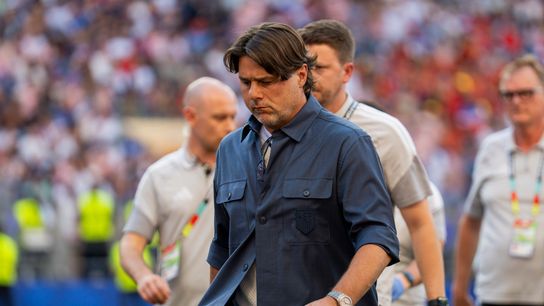
Coach Mauricio Pochettino, walking back to the locker room during a FIFA World Cup match against Belgium, Monday July 6th, 2026 in Seattle, Washington, seemed to grasp the raw reality better than anyone. He later told FOX, From the beginning, we didn’t connect with the game, we never were in the game. Even when we scored the goal, 1-1, we conceded the next action. It was really tough from the beginning. To congratulate Belgium, they were better than us. It wasn’t our day, it’s not to find excuses, because we didn’t show what normally that team can show. That’s the reality. Straight talk, that.
And so, America finds itself pondering what happened. Can U.S. Soccer keep Pochettino? Does he want to stay after this? The player selection, in fairness, was as good as one could expect, given the limited pool. But questions about the future, about expanding the talent pipeline, will absolutely surface. This collective failure of the host nations—particularly against teams like Morocco, who demonstrated incredible prowess and determination—certainly resonates beyond North America’s borders. For football-mad regions like South Asia and parts of the Muslim world, where discussions often revolve around equitable play, the implications of such controversies—and the eventual outcomes on the pitch—are dissected with particular scrutiny, fueling narratives about the integrity of global sports governance and who ultimately benefits from FIFA’s massive, complicated machinery.
What This Means
The ignominious exits of all three co-hosting nations aren’t just a sporting failure; they represent a significant policy and economic setback. On a geopolitical level, the perception that a specific administration’s “request” could influence FIFA’s rulings—such as Balogun’s suspension—can erode trust in international sporting bodies. This sort of alleged interference raises uncomfortable questions about fairness and equitable application of rules, particularly in parts of the world where such influence is often perceived as a tool of powerful nations. For countries in the developing world, who invest heavily in vying for or co-hosting such tournaments, the precedent of early elimination after significant infrastructure investment poses a stark warning. You just wonder if the economic returns can ever truly justify such colossal undertakings, especially if the home team flameout drains much of the national enthusiasm, taking away what should be a consistent revenue stream as the tournament progresses.
Economically, the early departure of the host teams likely translates to millions in lost revenue for local economies. Think about all those Americans who had invested plenty to see the Red, White and Blue in SoFi and no longer are interested in attending. That’s a significant dent in expected tourist spending, merchandising, and secondary ticket markets, impacting everything from small businesses around the venues to the wider travel industry. Policy-makers often sell these tournaments on a wave of economic benefits, but the early exit of a team can burst that bubble quickly. It forces a tough conversation about accountability within U.S. Soccer, — and whether their strategy and talent development framework can truly compete on the global stage. It’s not just a game; it’s a national investment, — and right now, the returns look awfully red.