

Soccer’s Rulebook Shattered: Trump’s World Cup Intercession Eviscerates FIFA Credibility
POLICY WIRE — Geneva, Switzerland — Football, the world’s most democratic of sports—or so we thought—just got a brutal reality check. Because on Monday, the beautifully intricate machinery of its...

POLICY WIRE — Geneva, Switzerland — Football, the world’s most democratic of sports—or so we thought—just got a brutal reality check. Because on Monday, the beautifully intricate machinery of its global governance seemed to seize up, sputtering out a decision so brazenly irregular it left the sport’s most seasoned observers slack-jawed. It wasn’t a dazzling goal or a heartbreaking penalty miss that dominated the conversation; it was the audacious intervention of a former U.S. president that bulldozed through sacred rules, kicking the very notion of fair play to the curb.
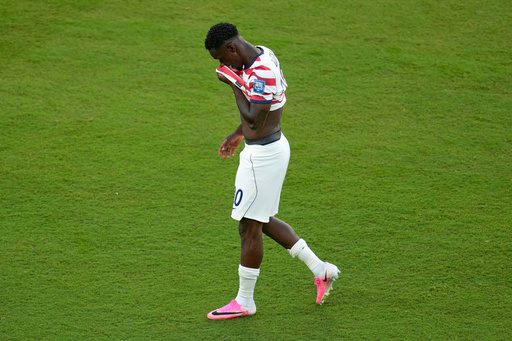
Picture it: A routine red card, handed to U.S. striker Folarin Balogun for an ankle-stomping offense during a World Cup qualifier against Bosnia-Herzegovina. Automatic one-game suspension, everyone assumed. But then the phone rang. And Donald Trump, never one to let a little thing like international sporting regulations stand in his way, dialed FIFA boss Gianni Infantino. He wanted Balogun cleared. Less than 24 hours later, just before the round-of-16 showdown with Belgium, FIFA did exactly that, rescinding the suspension. You can’t make this stuff up.
It’s not just a tweak; it’s a seismic shift, an earthquake in the footballing establishment. This isn’t something that happens, not in a tournament of this stature. Historical precedent, dating all the way back to 1962, confirms that punishments for World Cup offenses just don’t get suspended willy-nilly like this. But here we’re. Sepp Blatter, the disgraced former FIFA president—who certainly knows a thing or two about bending rules—couldn’t help but chime in, posting on social media, “Red cards are not overturned by political phone calls. They’re overturned by rules, evidence — and independent bodies.” He’s not wrong.
The European governing body, UEFA, was, predictably, ballistic. They screamed foul, calling FIFA’s U-turn “unprecedented, incomprehensible and unjustifiable.” But what exactly did they expect? This isn’t Infantino’s first dance with the American strongman. He’d even awarded Trump some rather bizarre ‘peace prize’ back in December, leading to ethics complaints from countries like Norway. European soccer honchos had already stomped out of a FIFA Congress just last year when Infantino turned up three hours late, explaining he’d been with Trump in the Middle East. It’s a pattern, see? A cozy little friendship that now seems to override any pesky rules of governance.
Infantino, of course, insists his ‘judicial bodies’ operate independently. “I explained that there was an ongoing legal process,” he droned, describing his chat with Trump. Sounds awfully procedural for a phone call that, well, ended up changing everything. Trump, ever the humble advocate, admitted he thought the original red card was a “horrible” call but maintained, “All I did was ask for a review. I didn’t say, ‘You have to do this.’” He also, with a straight face, confessed to being confused about red card rules. One almost has to admire the chutzpah.
The Belgians were livid. They lodged a formal challenge, citing the absurdity of it all. But FIFA’s appeals committee swatted it away less than eight hours before kickoff, declaring Belgium had “no standing.” No standing? Their opponents were suddenly able to field a player who, by all accounts and standard interpretations of the rules, shouldn’t have been on the pitch. That’s a curious definition of ‘no standing,’ isn’t it?
📄 POLICY WIRE WHITEPAPER PUBLISHED: PAKISTAN'S NATIONAL SECURITY POLICY PRIORITIES
👉 READ BY CLICKING HERECoaches around the world watched the debacle unfold with a mixture of horror — and grim resignation. “What about the next red card? What happens then?” fumed Norway coach Ståle Solbakken. “Is there going to be some committee somewhere that’s going to take that card away? It’s a bad, bad, bad, bad, bad decision that will hurt the World Cup.” He’s right to wonder. But it’s not an isolated incident. FIFA, under Infantino, has developed a disturbing habit of arbitrary pardons. Cristiano Ronaldo, remember him? Cleared to play in Portugal’s opening World Cup game despite an elbowing offense. That decision saw a three-game ban deferred, largely unheard of until then. Contrast that with South Africa’s Themba Zwane, who got a similar offense but a straight three-game ban, no probation. It’s almost like who you know matters more than what you do. Perhaps it always did, especially when dealing with the U.S. or European elite.
But the real stink here, beyond the blatant hypocrisy, is what this does to the faith people—all people—have in the institutions that claim to be impartial. From Casablanca to Karachi, the common fan already often views global governing bodies with deep cynicism. Pakistan, a country passionate about its sports, has frequently found itself on the receiving end of what feels like arbitrary rule changes or preferential treatment given to richer, more powerful nations in other global contests. This Balogun affair, playing out on the grandest stage, merely provides more ammunition for those who argue that fairness is just a concept, not a principle, especially when political muscle gets flexed. One FIFA survey from 2023 indicated that public trust in global sporting federations, outside of national teams, has dipped to 42%, a statistic likely to plummet further after this kind of maneuvering.
What This Means
This whole messy episode isn’t just about a red card; it’s about the soul of football and the integrity of international governance. Economically, it introduces a terrifying variable: will wealthy nations, or those with powerful political allies, now expect special dispensation? It’s a slippery slope. Financiers and sponsors—companies who rely on a clean image—might just start looking very skeptically at an organization where the rules can be changed with a phone call. Politically, it grants more power to populists and strongmen, suggesting that a well-placed intervention trumps judicial independence. It undermines the very idea of equal treatment under the law, something crucial not just in sport, but in geopolitics. If rules are so fluid for a major player like the U.S., what message does that send to every other nation striving to compete fairly on a global stage? It certainly won’t make developing nations, or those with less direct access to political heavyweights, feel any better about their place in the sporting hierarchy. The reverberations will be felt for years, long after this World Cup’s trophy finds its home.
It’s hard not to feel like we’ve crossed a Rubicon here. When a call from a powerful figure can overturn the referee’s decision, confirmed by VAR and an initial disciplinary committee, you don’t just compromise the rules; you make them a joke. And that’s not just bad for football; it’s a grim precedent for any global body struggling for legitimacy in a world that already suspects the game is rigged. It’s an unfortunate signal for the state of global sports and their governance, illustrating that perhaps, some animals are just more equal than others.