


Ottoman Overture: Ovechkin’s Anatolian Contract Calculus as Capitals Plot Power Play
POLICY WIRE — WASHINGTON — Out on the sun-drenched shores of Turkey, far from the biting D.C. winter or the clatter of pucks on ice, Alex Ovechkin finalized another season with the Washington...

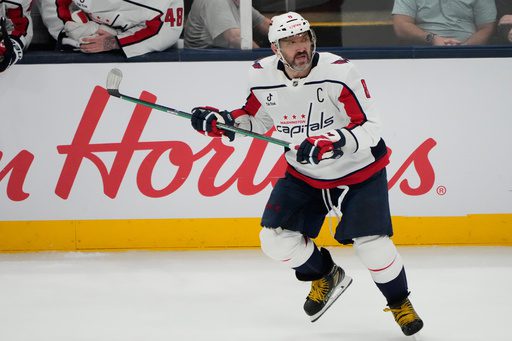
POLICY WIRE — WASHINGTON — Out on the sun-drenched shores of Turkey, far from the biting D.C. winter or the clatter of pucks on ice, Alex Ovechkin finalized another season with the Washington Capitals. Not just any season, mind you. At 41 years old, the Great Eight, NHL’s all-time leading scorer, isn’t simply lacing up skates for old time’s sake; he’s part of a meticulously constructed financial and sporting gambit—one apparently settled between dips in the Mediterranean and sipping something exotic. It’s hardly the humble scene of a veteran considering his options. This was, one imagines, a celebrity negotiation with an unusual, even exotic, backdrop.
His casual “I don’t know” when asked if this is the final dance sounds less like genuine indecision and more like the calculated ambiguity of a seasoned power broker. And frankly, why commit? It’s good for the brand, great for leverage. His wife’s alleged suggestion to play “one more year, or maybe two years”—delivered over what must’ve been a particularly lavish Turkish breakfast—only reinforces the notion that the man who’s broken Gretzky’s ghost understands personal narrative as much as power plays.
But here’s the kicker, the fine print that tells the real story of this modern sports-business merger: a base salary of a cool $1 million, padded by a whopping $8 million in bonuses. A significant chunk of that ($4.75 million) triggers after just ten games. Call it a handshake deal wrapped in an eight-figure incentive package. “Alex, thank you very, very much for the way you handled this,” said Capitals owner Ted Leonsis. You don’t often hear owners thanking players quite so effusively unless they’ve just pulled off a financial coup—which this deal, cap-wise, is, counting only $4.25 million against Washington’s substantial cap space. It’s a shrewd bit of accounting, turning the star’s swansong into a clever cap play.
The Capitals, meanwhile, have been anything but static. They’ve added some serious talent—Jordan Kyrou, Alex Tuch, Boone Jenner, to name a few—all 30-goal scorers at various career junctures. Because, you see, a legend needs a supporting cast, especially an aging one. “When you look at our roster, it’s a Stanley Cup contender,” Ovechkin brazenly declared. It’s a statement that rings with more ambition than conviction, particularly for a team that, despite equaling Vegas’s 95 points before the Golden Knights’ Cup run, still missed the playoffs. They finished tied for third in the NHL in even-strength goal differential, according to official NHL statistics—a silver lining perhaps, but not exactly a championship parade.
The sight of Ovechkin video conferencing from a Turkish vacation spot, not just a casual trip but an Anatolian retreat, throws a fascinating curveball into the conventional sports narrative. It’s a powerful optic, signaling not just personal luxury but a subtle nod to Russia’s shifting geopolitical allegiances and economic comfort zones. Turkey, a NATO member straddling Europe — and Asia, has become a key, if complicated, partner for Moscow. To see a Russian national icon like Ovechkin conducting business there adds another layer to the increasingly blurred lines between sports, finance, and soft power. And you can bet the symbolism isn’t lost on the chancelleries from Islamabad to Jakarta, where sports heroes often hold as much, if not more, cultural sway than political leaders. Consider how Pakistan’s cricket captains wield significant public influence, their images used to inspire or, at times, mollify popular sentiment.
📄 POLICY WIRE WHITEPAPER PUBLISHED: PAKISTAN'S NATIONAL SECURITY POLICY PRIORITIES
👉 READ BY CLICKING HEREBrian MacLellan, the team’s president of hockey operations, sounded suitably bureaucratic. “We came in looking to add skill to our top six,” he explained, like a general dissecting a budget. But they’re not just buying skill; they’re buying time for a franchise that’s essentially been rebuilt around its enduring centerpiece. Ovechkin is the sun around which all these new planets are now supposed to orbit. He even cited Cristiano Ronaldo — and Lionel Messi as proof that age isn’t a deterrent. These are not merely athletes; they’re global brands, with all the accompanying demands — and rewards. They’re subjects of intense scrutiny, and their perceived decline (or resilience) can impact entire economic ecosystems, far beyond mere ticket sales. For more on the complex web of celebrity and sport, see Policy Wire’s Ovechkin’s Ottoman Retreat: The Global Game, Aged Superstars, and a Contractual Coup. This whole episode—the contract structure, the exotic locale, the casual public pronouncements—it’s a carefully managed production, where performance on the ice is only part of the deal. Because at this level, it’s always more than just a game.
What This Means
This whole situation isn’t simply about an athlete extending his career; it’s a textbook case study in brand management, financial engineering, and the curious dance between aging legends and ambitious franchises. On one hand, it’s a calculated risk: retaining a guaranteed gate attraction who, even at a slower pace, still generates highlight-reel moments. But on the other, it represents a tacit acknowledgement that a team’s value now extends far beyond immediate on-ice results. They’re betting on nostalgia, on the enduring power of a name, and on the specific marketing pull that comes with pursuing, and likely shattering, an unbreakable record.
Economically, it’s a creative way to maximize salary cap space while ensuring a marquee player remains tethered, at least for another year. It also showcases the sophisticated financial maneuvering prevalent in top-tier sports. For Washington, it’s an investment in a global icon, whose presence, even with a reduced role, maintains a certain prestige. For Ovechkin, it’s continued relevance, high-stakes incentives, and the luxury of setting his own terms from a villa halfway across the world. And from a political optics perspective, a Russian sports hero maintaining his commercial presence in Western-aligned sports, especially while holidaying in Turkey, offers a peculiar blend of soft diplomacy and capitalist normalcy that, in a fractured global landscape, isn’t without its own understated significance. But don’t expect this kind of flexibility if you’re not breaking records or scoring north of 800 goals.