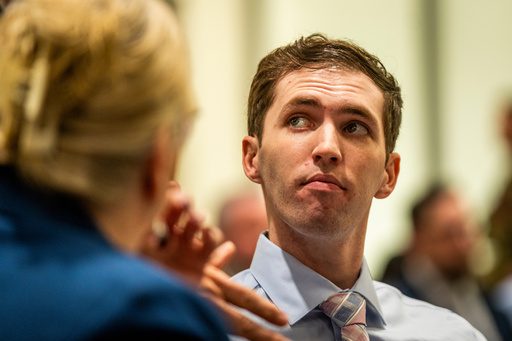
Sniper’s Lair or Forensic Folly? Kirk Assassination Case Starts with Chilling Rooftop Find
PROVO, Utah — United States — It isn’t often that an apparent assassin’s hideout enters testimony with the almost prosaic detail of elbow and knee marks. But that’s exactly what went down...

PROVO, Utah — United States — It isn’t often that an apparent assassin’s hideout enters testimony with the almost prosaic detail of elbow and knee marks. But that’s exactly what went down this week in a Utah courtroom, marking a grimly dramatic opening for the preliminary hearing into the murder of conservative activist Charlie Kirk. The state’s case began not with ballistic evidence or blood spatter, but with a former campus officer’s chilling discovery: what looked for all the world like a planned, elevated kill zone.
Former Utah Valley University Officer Christopher Bagley, who witnessed Kirk’s shooting, recounted his unsettling find soon after the event on Sept. 10. Up on a nearby gravel rooftop, with a clear sightline straight to where Kirk spoke, Bagley found unmistakable impressions. It looked like someone had been lying prone—just waiting. Bagley himself put it bluntly: [QUOTE_PLACEHOLDER], adding, “you’ve got markings of elbows, knees and feet.” Not the sort of thing you usually stumble upon after a campus speaker takes a bullet, is it?
This particular preliminary hearing, a five-day affair, isn’t about guilt or innocence. It’s about whether there’s enough meat on the bones for prosecutors to advance their case, potentially all the way to a death penalty trial for 23-year-old Tyler Robinson, the defendant. The stakes are immense, not just for Robinson and Kirk’s bereaved family, but for the heated political discourse Kirk so readily engaged in. You’ve got Kirk’s parents, Kathryn and Robert, and his widow, Erika, sitting in the courtroom, right alongside Donald Trump Jr. —a real indicator of the wider reverberations this tragedy’s made.
Prosecutors, playing their hand early, have zeroed in on aggravated murder charges. Robinson turned himself in the day after the shooting. His attorneys haven’t said much about guilt, but they’ve been battling hard to get the death penalty taken off the table. So far, no dice there. Because the legal threshold for proceeding to trial is, frankly, low. As Mark Kouris, a former prosecutor — and state judge, bluntly told it, [QUOTE_PLACEHOLDER]
And yes, the court proceedings themselves? Brutally raw. Prosecutors aired new video—the graphic assassination, complete with Kirk’s security detail trying to save him. Judge Tony Graf wouldn’t let it be publicized, calling it graphic. You saw the scene, though: Kirk interacting with the crowd, then the shot, then the panicked, desperate attempt to render aid. But when those videos hit the screens, Kirk’s family couldn’t handle it. They walked out, twice, a stark human element in the cold, calculated environment of the courtroom.
Bagley, the initial witness, detailed hearing the gunshot, then seeing Kirk go down. “I saw him go to the left … I could no longer see the right side of his body,” Bagley said. “Then everybody started getting up and started to run, more of a chaos situation.” He even mentioned an empty pistol holster found on the ground later, something defense attorney Kathryn Nester questioned the chain of custody for. You’ve got to remember, this is Utah, an open carry state. Everyone — and their uncle might have a firearm. And Nester? She was on the defense, objecting to almost everything, often overruled. Still, she won one against a compilation of altered surveillance videos from the university.
But the biggest punch the prosecution might be throwing comes from inside Robinson’s circle. They’re planning to present DNA, autopsy findings, — and crucial witness statements, sure, but they’ve also got a note. A confession note allegedly left for his roommate—who was also his romantic partner. It apparently read: “I had the opportunity to take out Charlie Kirk and I’m going to take it.” That’s a rather stark piece of evidence, isn’t it? The roommate won’t testify live, but their recorded testimony could be a focal point, particularly given text messages where Robinson reportedly told them he targeted Kirk because he [QUOTE_PLACEHOLDER].
It’s a tough situation for all involved. Erika Kirk, who previously said she forgave Robinson, encapsulated the lasting pain: “Every court proceeding serves as a painful reminder of his death,” she wrote, “and the loss that has irrevocably impacted our lives and the lives of his children.” Before his death, Kirk, and his outfit Turning Point USA, were instrumental in firing up the youth conservative vote. Because of this, his death, — and the subsequent trial, carries an electoral weight too heavy to ignore.
What This Means
The grim tableau playing out in Provo extends far beyond a single courtroom. It reflects the hardening arteries of political division across the West, a toxicity that, in its most extreme manifestations, escalates from rhetoric to deadly violence. When a high-profile figure like Charlie Kirk, a staunch ally of former President Trump, is targeted, it’s not just a criminal act; it’s a direct strike at the perceived legitimacy of a particular ideological flank.
In regions like Pakistan or other parts of South Asia and the Muslim world, such high-profile political assassinations are, sadly, a recurring nightmare. The targeting of political and religious figures, often accompanied by accusations of blasphemy, hate speech, or sedition, can destabilize governments and incite widespread civil unrest. We’ve seen it throughout history—from the murder of Benazir Bhutto to various sectarian killings—where the ‘sniper’s pad’ might be replaced by a bomb or a mob, but the intent to silence or disrupt remains horrifyingly similar. The underlying dynamics—a radicalized individual or group acting on deeply held grievances against a public figure’s ideology—carry unsettling global parallels. And when you factor in a death penalty case, that’s going to reverberate across the political landscape, sparking intense debates on justice, retribution, and deterrence.
the judicial maneuvering we’re witnessing here, particularly the aggressive push for the death penalty—which, according to data from the Utah State Attorney General’s Office, is sought in less than 0.1% of murder convictions annually in the state—highlights the profound ideological chasms shaping America’s legal and social discourse. It’s an aggressive stance by the prosecution, meant to signal the severity of this crime. Because when you’ve got a case intertwined with national politics, it’s not just about what happened, it’s about what it all *means*.