


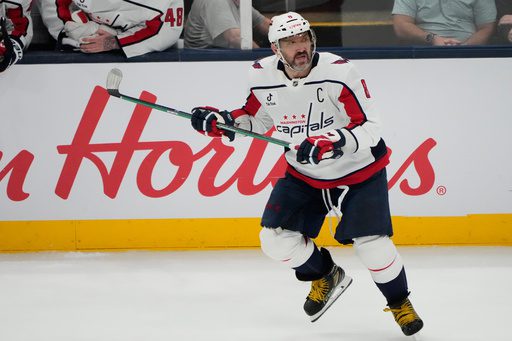
Ovechkin’s Ottoman Retreat: The Global Game, Aged Superstars, and a Contractual Coup
WASHINGTON D.C., UNITED STATES — So, the saga of hockey’s grizzled czar, Alex Ovechkin, rolls on. Not with a bang from a press conference stage, mind you, but quietly, from the sun-drenched shores of...

WASHINGTON D.C., UNITED STATES — So, the saga of hockey’s grizzled czar, Alex Ovechkin, rolls on. Not with a bang from a press conference stage, mind you, but quietly, from the sun-drenched shores of Turkey. One minute he’s extending his Hall-of-Fame career with the Washington Capitals, the next he’s on a video call discussing contracts while enjoying a Mediterranean sojourn—a neat little geographical nod, one could argue, to the ever-blurring lines of global celebrity and professional sport’s economic tentacles. It’s never just about the ice; it’s about the entire ecosystem.
At 41 years old, after already eclipsing Wayne Gretzky’s impossible goal record in 2024-25, many assumed this season might finally be his last hurrah. But the Great Eight remains evasive. “I don’t know,” he told reporters, a classic non-committal shrug, albeit a virtual one. “We’ll see.” Apparently, his domestic committee, otherwise known as his wife, offered a modest suggestion: “one more year, or maybe two years, I don’t know.” That’s hardly the clarion call for a retirement parade, is it? More like a tentative lease renewal on a particularly expensive — and well-used apartment.
And yet, this isn’t just sentimentality. The Capitals, bless their ambitious hearts, didn’t just sign the man; they revamped the entire furniture store around him. They went on an off-season shopping spree, reeling in names like Jordan Kyrou, Alex Tuch, and Boone Jenner—each a 30-goal scorer in their own right, even Ovechkin did it last season. Throw in Dylan Strome, Jakob Chychrun, and Pierre-Luc Dubois, plus new netminder Logan Thompson, and you’ve got something cooking. “We came in looking to add skill to our top six,” president of hockey operations Brian MacLellan said, quite plainly. “We wanted to get a physical, long defenseman that had a net-front presence. We were looking at veteran leadership.” It seems they’re going all-in for one last dance with their legendary captain.
Their prior campaign wasn’t abysmal, despite missing the postseason. The Caps clocked 95 points, which, tellingly, matched the Vegas Golden Knights before that squad took off on its improbable Stanley Cup run. They even tied for third in the NHL for even-strength goal differential. So, it isn’t delusional. “When you look at our roster, it’s a Stanley Cup contender,” Ovechkin declared with characteristic confidence. “I know I still can play, and bring energy to the locker room, energy on the ice.” One assumes he brought that same energy, perhaps a little more relaxed, to his Turkish vacation. And it speaks to an intriguing point about modern athletic careers: you can be a titan of American sports, command multi-million dollar contracts, and still manage your public image, and your contract discussions, from half a world away.
The deal itself is a fascinating glimpse into elite-level sports economics: a base salary of $1 million, spiced up with $8 million in bonuses. A hefty $4.75 million of that dangles on him simply playing 10 games. And because Washington’s got salary cap space for days—a political commodity in itself—it only counts as $4.25 million against the cap. A shrewd bit of financial maneuvering, that, showcasing the kind of strategic asset management that wouldn’t be out of place in sovereign wealth fund discussions. Owner Ted Leonsis even extended a public, televised thank you: [QUOTE_PLACEHOLDER]
Ovechkin’s power play, an historic weapon for so long, had a slight hitch last season, scoring only five goals on 86 shots. A rare chink in the armor for a man who often seems immune to age. Yet, like a true veteran, he draws inspiration from elsewhere. Observing footballers like Cristiano Ronaldo and Lionel Messi, who defy time itself, provides context for his own defiance. “If you look at Messi and Ronaldo, those players show example that if you’re able to continue show the level what you have, the skill, it’s tremendous,” he opined. Indeed. It’s about more than just numbers; it’s about projecting an aura of enduring relevance, an invaluable trait whether you’re a forward or a political leader.
📄 POLICY WIRE WHITEPAPER PUBLISHED: PAKISTAN'S NATIONAL SECURITY POLICY PRIORITIES
👉 READ BY CLICKING HEREWhat This Means
Ovechkin’s continued presence—and his contractual arrangements—illustrates a deeper geopolitical and economic shift in professional sports. The veteran star, once seen as a diminishing asset, is now, in specific contexts, a prized, calculated investment. His substantial bonus structure, tied largely to participation, rather than just raw performance, underscores a bet on his drawing power and veteran leadership, not just his goals total. This isn’t just hockey; it’s a global commodity, — and the market for aging, legendary talent is robust.
Consider the ripple effect. Teams are aggressively pooling cap space — and leveraging strategic contracts to chase glory in compressed windows. This high-stakes approach is symptomatic of a broader economic trend, not just in North America but across the burgeoning sports economies of South Asia and the Middle East, too. Wealthy owners in regions like the UAE or Pakistan, increasingly keen on attracting global sporting spectacles and talent—think cricket leagues or high-profile football acquisitions—study these tactics intently. How to maximize investment, how to extend relevance, how to create a narrative that transcends mere sport and becomes a brand. Just as Ovechkin holidaying in Turkey—a nation with considerable geopolitical sway and increasing soft power projection into the broader Muslim world—might be incidental, it subtly reflects how top-tier athletes now operate in a truly borderless, interconnected global market.
His contract structure also serves as a masterclass in salary cap management, an art form for any global sports enterprise attempting to navigate strict financial fair play rules or league restrictions. For nations or entities aspiring to host or own global sports franchises, understanding these nuances—how an older player can generate immense value not just on the field, but through endorsements, mentorship, and simply drawing eyeballs—is paramount. These are the same calculations made in football’s big leagues, in F1’s dizzying circuits, and yes, in the burgeoning athletic markets from Lahore to Doha. And perhaps the Capitals are on to something, taking cues from how even developing economies often manage significant infrastructure projects or public spending: a focus on immediate impact, measurable deliverables (games played!), and a shrewd leveraging of available capital (cap space) to achieve aspirational goals. It’s a calculated gamble on human spirit meeting shrewd economics.
📖 GET YOUR FREE COPY NOW OF POLICY WIRE DIGITAL MAGAZINE JULY 2026 EDITION
👉 READ & DOWNLOAD FREE MAGAZINE