


Sacaton Fire’s Relentless March Tests Human Resolve in New Mexico
POLICY WIRE — Catron County, N.M. — There’s a specific kind of quiet that falls when smoke replaces sky, a suffocating hush preceding the real storm. Folks in New Mexico are getting...

POLICY WIRE — Catron County, N.M. — There’s a specific kind of quiet that falls when smoke replaces sky, a suffocating hush preceding the real storm. Folks in New Mexico are getting well-acquainted with it. Out there in Catron County, the Sacaton wildfire isn’t just another blip on the evening news—it’s an escalating catastrophe, eating up the arid landscape with a relentless, terrifying appetite. But this isn’t just a local issue; it’s a symptom of a much larger, global sickness we’re seeing played out in deserts and forests worldwide.
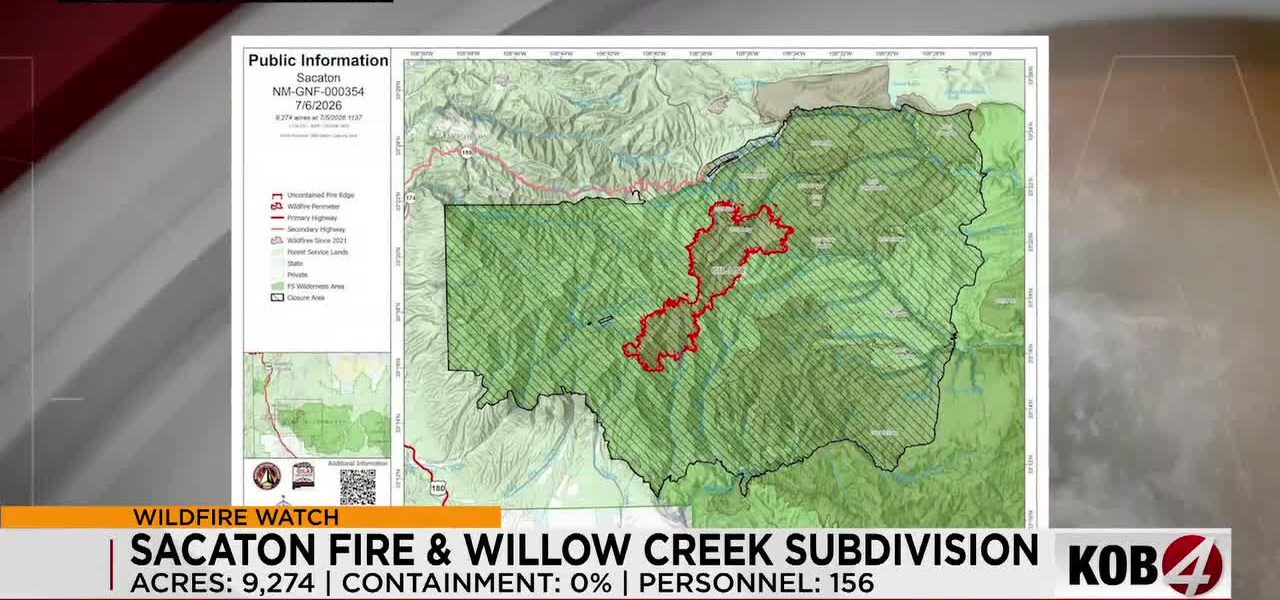
No stranger to fire seasons, the Southwest faces its annual purgatory, yet this one feels particularly grim. The conflagration, a mere smolder when it commenced on June 21, now commands a staggering footprint. It’s grown to more than 9,200 acres, an area larger than a dozen New York City Central Parks combined. Fire crews, those weary souls on the front lines, they’ve been wrestling this monster since day one, a battle they continue to lose, acre by scorched acre. And that particular grim fact—it just grinds at you. [QUOTE_PLACEHOLDER]
It’s an exhausting dance, trying to contain what Mother Nature seems hell-bent on consuming. The Sacaton wildfire grows to more than 9,200 acres, defying best efforts. For residents of the Willow Creek subdivision in Catron County, the threat is all too real; their properties are under mandatory evacuation orders, effectively emptying homes and businesses as smoke plumes billow high into the cobalt skies. It’s the “GO status” for evacuations — a phrase no one ever wants to hear about their own address.
Because every day, this uncontained beast digs in deeper. It’s a stubborn thing, fire is. Authorities, they’ve had to put their foot down, establishing “Stage 1 Fire Restrictions” across the Gila National Forest. Makes sense. You wouldn’t want some errant campfire sparking off a new inferno, would you? The rules don’t stop there; open burning has been forbidden throughout unincorporated Catron County and Catron County Fire District 30. It’s an acknowledgment that human activity, whether directly causing or inadvertently exacerbating, plays a part in these scenarios.
Firefighters, these aren’t just folks with hoses, you know? They’re strategic thinkers, adapting on the fly. We’re talking about deploying comprehensive systems — setting up sprinkler systems along with hoses and pumps to support suppression efforts, like an elaborate, desperate plumbing project to push back against the flame. It’s grueling work, demanding a relentless commitment to protecting what little remains. But this particular battle isn’t happening in isolation; wildfires have become an uncomfortably familiar summer saga across the globe. Last year, the National Interagency Fire Center (NIFC) reported nearly 50,000 wildfires torched over 2.6 million acres across the U.S., a figure that tells you this isn’t some one-off fluke. It’s a pattern, becoming frighteningly normal.
And you see echoes of this struggle, really, even halfway across the world. Think of the policy debates, the resource allocation crises, the human displacement, and the environmental degradation caused by extreme weather events. You don’t need to look much further than Pakistan, for example, a nation wrestling with the opposite side of the climate coin — catastrophic flooding or blistering heatwaves that often set off their own cycles of devastation, demanding international intervention and Herculean domestic efforts to simply cope. They too face an ever-present, escalating threat to infrastructure, agriculture, and civilian life, forcing a similar re-evaluation of long-term climate strategies. There are lessons here for everyone.
📄 POLICY WIRE WHITEPAPER PUBLISHED: PAKISTAN'S NATIONAL SECURITY POLICY PRIORITIES
👉 READ BY CLICKING HEREWhat This Means
The immediate political implication of the Sacaton fire, beyond the harrowing evacuations, centers squarely on resource management and emergency response preparedness. We’re witnessing local agencies — underfunded — and often stretched thin — pushed to their limits. Catron County isn’t exactly a bustling metropolis with an infinite budget for fire suppression. The increasing frequency — and intensity of these fires place an untenable burden on rural economies and state budgets. Where’s the money coming from when a blaze, like this one, digs in for weeks, maybe months?
Economically, the impact goes beyond the lost timber or destroyed property. The disruption to tourism, the cost of evacuations, the long-term ecological damage that strips soil of nutrients and invites devastating mudslides — these are all heavy fiscal weights. Small businesses in affected communities, they don’t just rebound overnight. They’re facing an uphill climb, — and federal disaster aid often feels like a trickle against a torrent of losses. But it’s also an indictment of current land management practices, and perhaps, a call for deeper federal investment in prevention rather than just suppression. It’s cheaper, you know, to stop the house from burning down in the first place.
This situation also raises broader questions about how regions vulnerable to climate change are being supported — both financially and logistically. For all the focus on flashy, distant geopolitical contests (like, say, FIFA’s odd reversal and its geopolitical implications), the relentless grind of climate-driven domestic disasters quietly drains national resources and human capital. This isn’t just about New Mexico; it’s a dress rehearsal for an increasingly volatile world where climate change isn’t some far-off threat, but an uninvited, destructive guest already smashing through the front door.