


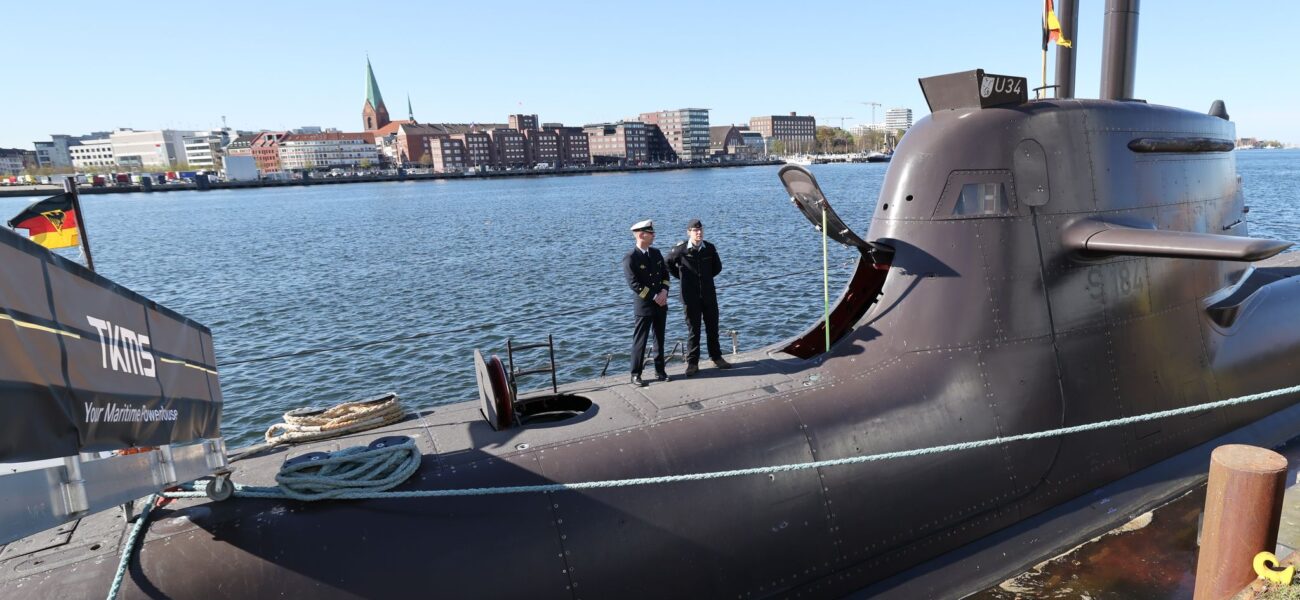
Canada’s Submarine Gambit: Northern Ambitions Meet German Steel
POLICY WIRE — Ottawa, Canada — For years, the Arctic melt has been less a geological certainty and more a political metaphor for Canada’s often-glacial pace on defense procurements. Yet, beneath the...

POLICY WIRE — Ottawa, Canada — For years, the Arctic melt has been less a geological certainty and more a political metaphor for Canada’s often-glacial pace on defense procurements. Yet, beneath the perpetual hand-wringing — and budget debates, a tectonic shift might just be underway. It’s not about new fighter jets or refitted frigates, but something far more submerged, far more… German.
Defense Minister William Carney confirmed this week what naval observers had whispered for months: Canada is in advanced negotiations to acquire a formidable fleet of up to 12 next-generation submarines from Germany’s ThyssenKrupp Marine Systems. This isn’t simply replacing rust buckets; it’s an ambitious play for genuine underwater clout, an aspiration that many thought had sunk long ago.
“Look, our existing submarines have done us proud, but they’re not built for the demands of the 21st-century domain,” Carney told Policy Wire, his voice holding an uncharacteristic firmness. “We’re not just guarding fishing lanes; we’re talking about defending sovereign territory, securing global trade, and projecting influence when and where it matters. This is about national security, plain — and simple.”
But simple it rarely is in the realm of defense. The proposed submarines, likely a variant of the formidable Type 212CD currently in development for Norway and Germany, represent a technological leap. They’re designed for silent operation, extended patrols, and—critically for Canada—operating under ice. The price tag for such sophistication? Eyewatering. Modern non-nuclear submarines, with their bespoke sensors and advanced weaponry, can each exceed a billion U.S. dollars, — and this doesn’t even touch maintenance or personnel training. For a country that routinely faces skepticism about its defense commitments, it’s a heck of a gamble.
The deal reflects not just Canada’s needs, but Germany’s burgeoning role as a European defense powerhouse, a position strengthened by the renewed focus on NATO capabilities following conflicts in Eastern Europe. German Defence Minister Annegret Kramp-Karrenbauer, speaking from Berlin, framed the negotiations as a natural extension of shared values. “Our European partners understand that security is a collective endeavor. Providing cutting-edge capabilities to allies like Canada isn’t just good business; it’s reinforcing the democratic alliance system we all rely on,” she asserted, a thinly veiled nod to transatlantic unity.
And so, while Ottawa grapples with the sticker shock, the geo-political currents churn. An enhanced Canadian naval presence, particularly in the Indo-Pacific, aligns neatly with Washington’s broader strategic pivot. It also quietly alters the power calculus in critical maritime corridors. Suddenly, Canadian flags flying further afield might become a less anomalous sight, possibly even crossing paths with the expanding navies of powers like Pakistan, which is also upgrading its subsurface fleet with Chinese assistance, or India, navigating its own complex naval expansion.
📄 POLICY WIRE WHITEPAPER PUBLISHED: PAKISTAN'S NATIONAL SECURITY POLICY PRIORITIES
👉 READ BY CLICKING HEREBut the road to acquisition is littered with procurement fiascos — and cost overruns. Skeptics point to past attempts at naval modernization as proof of Canada’s sometimes-uncomfortable relationship with big-ticket defense spending. “We’ve seen this movie before, haven’t we?” mused one long-serving parliamentary aide, who insisted on anonymity for obvious reasons. “Grand announcements, inflated numbers, delays stretching longer than a Quebec winter. I’ll believe it when I see the subs actually *submerging*.” They’re not wrong to be wary; Canada’s military procurement history could fill a library of bureaucratic tragicomedies.
Yet, this isn’t just about naval bragging rights. It’s about hedging bets in a world where maritime domains are becoming increasingly contested, where commercial shipping routes are strategic chokepoints, and where adversaries lurk beneath the surface. The North American continent’s northern reaches, once considered remote — and inviolable, are opening up. Canada, it seems, has finally decided it’s time to truly chart those waters, rather than just glance at them on a map.
What This Means
The political implications of this proposed submarine acquisition are multifaceted — and deep. Economically, it represents a substantial long-term investment that will strain Canada’s defense budget, potentially diverting funds from other domestic priorities—a perennial headache for any government. There will be intense scrutiny on cost control and industrial offsets (i.e., local Canadian economic benefits from the deal).
Geopolitically, it signals a renewed, and rather robust, commitment by Canada to its responsibilities within NATO and the broader global security architecture. By boosting its subsurface capabilities, Ottawa isn’t just looking at coastal defense. It’s positioning itself for increased operational capacity in contested waters, including the Arctic and potentially the Indo-Pacific. This might alleviate some pressure from allies—especially the U.S.—who’ve long pressed Canada to increase its defense spending and military contributions. It’s also an unspoken nod towards the increasing assertiveness of powers like China and Russia in critical sea lanes and resource-rich northern territories. And domestically, this project could galvanize Canada’s flagging naval industry (or what’s left of it through maintenance and training contracts) while giving the ruling party a talking point about national security seriousness, even if it’s years before the first hull hits the water.