


Shadows and Screens: Viral Footage of Cyclist Assault Unravels Public Faith, Again
POLICY WIRE — Capital City, Nation — Another day, another digital firestorm. This time, it’s not some grand geopolitical blunder or market crash. It’s something far more insidious, a short,...

POLICY WIRE — Capital City, Nation — Another day, another digital firestorm. This time, it’s not some grand geopolitical blunder or market crash. It’s something far more insidious, a short, gut-punching clip that’s ripped open the raw nerves of public confidence in law enforcement. That feeling? It’s like deja vu, but with faster broadband — and more corrosive cynicism.
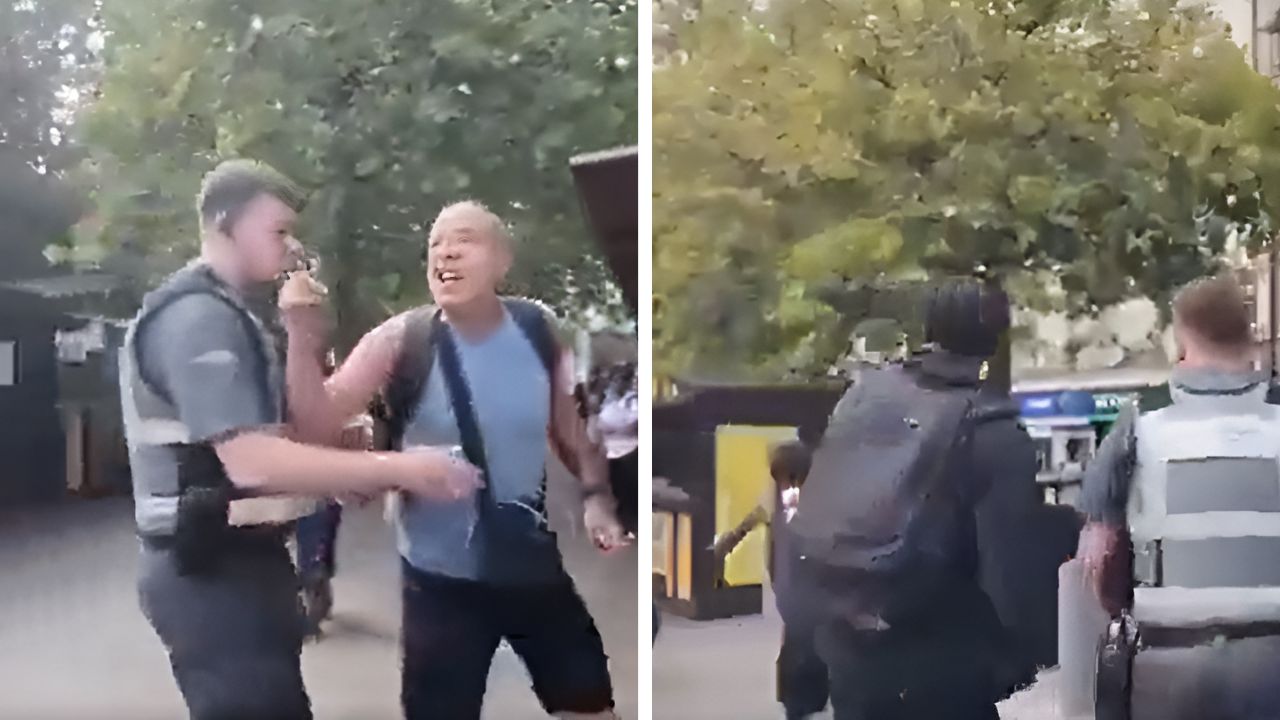
Because let’s face it: our screens often serve as battlegrounds now. This particular fracas began with grainy footage. A cyclist, suddenly, violently—sent sprawling by an unseen assailant. Then, the kicker: uniformed figures, resembling local constabulary, seem to shepherd the perpetrator away from the scene, maybe even into a vehicle. Within hours, it’s everywhere. The accusation, searingly specific, echoed across platforms: “Police helped the perpetrator escape.” A bold claim, absolutely, but one that landed squarely in a fertile ground of pre-existing distrust.
Don’t dismiss this as just another fleeting internet outrage. This incident, playing out on a loop for millions, quickly escalated beyond a street altercation. It became a public referendum on who we trust, and why—especially when the very people sworn to protect are seen (or perceived) to be complicit. It’s bad optics. Real bad. And it quickly becomes a festering wound in the body politic, affecting more than just a single district or department.
Local authorities, predictably, moved to control the narrative. “We’re taking these allegations incredibly seriously,” stated Superintendent Aisha Khan at a hastily called press briefing. Her brow was furrowed, her voice firm. “An internal investigation has commenced. But I urge the public not to jump to conclusions based on partial information.” A standard playbook response, of course. Yet, in this age, platitudes often land flatter than a week-old roti.
But Human Rights Commissioner Zara Ali wasn’t having any of it. Her statement, delivered hours later, didn’t pull any punches. “When the uniform ceases to represent justice — and starts to symbolize impunity, we have failed. We’ve collectively failed these citizens,” Ali declared. “Justice isn’t just about what happens in court; it’s about what people believe on their streets.” She’s right, too. Public perception? That’s currency. And when it’s gone, rebuilding it’s harder than winning an argument on the internet (which, we all know, is impossible).
These kinds of incidents, amplified by citizen journalism (and occasional disinformation), don’t just hit locally. They reverberate. Think about it. The same erosion of trust plays out daily in myriad forms, whether it’s West Bank stun grenade videos that ignite old grievances or reports alleging state actors targeting civilians abroad. The visual evidence, often raw — and unedited, often carries more weight than any official communiqué. In countries like Pakistan, where historical grievances against state apparatus are long-standing and potent, such a clip wouldn’t just be a blip; it’d be gasoline on an already smoldering fire of cynicism, potentially fueling everything from local protests to broad, destabilizing narratives about governance.
It’s no accident that confidence in state institutions often struggles. A 2023 survey by the World Justice Project revealed that public trust in police worldwide averaged only 65%, with significant dips in regions facing high corruption or civil unrest. This incident just adds another dent to an already tarnished shield.
The authorities involved here face a quandary that’s part policing, part public relations disaster. They’ve got to investigate, yes. And they need to communicate. But they also need to recognize that once a seed of doubt takes root via viral video, it can blossom into widespread mistrust. That’s a garden no one wants to cultivate. Especially not when elections loom or social tensions are high.
What This Means
This incident isn’t a mere aberration; it’s a stark reminder of the fragile contract between the state and its citizens. Politically, leaders will face immense pressure. Failure to deliver transparent justice could be exploited by opposition factions, painting incumbents as either inept or, worse, complicit. For regional economies already grappling with instability, like many in South Asia, a perception of unchecked official misconduct discourages both foreign investment and domestic entrepreneurial spirit, stifling growth before it even starts. Imagine trying to attract business to a place where fundamental safety and legal accountability are visibly compromised. It’s a tough sell.
And from a societal standpoint, such events deepen existing fissures. Communities that already feel marginalized or over-policed will see this as further validation of their grievances. Others, traditionally trusting, may begin to question allegiances they’ve held for generations. This isn’t just about one cyclist, one perpetrator, or even one police force. It’s about the continuing, aggressive erosion of institutional faith in the digital age, a process accelerated by every blurry frame that lands online. Our leaders, wherever they’re — whether in parliament or in a police precinct — need to realize that these narratives, once they’re out there, aren’t easily contained. The reverberations will carry far and wide, influencing conversations from Cairo to Karachi, because in the global village, everybody’s watching.