


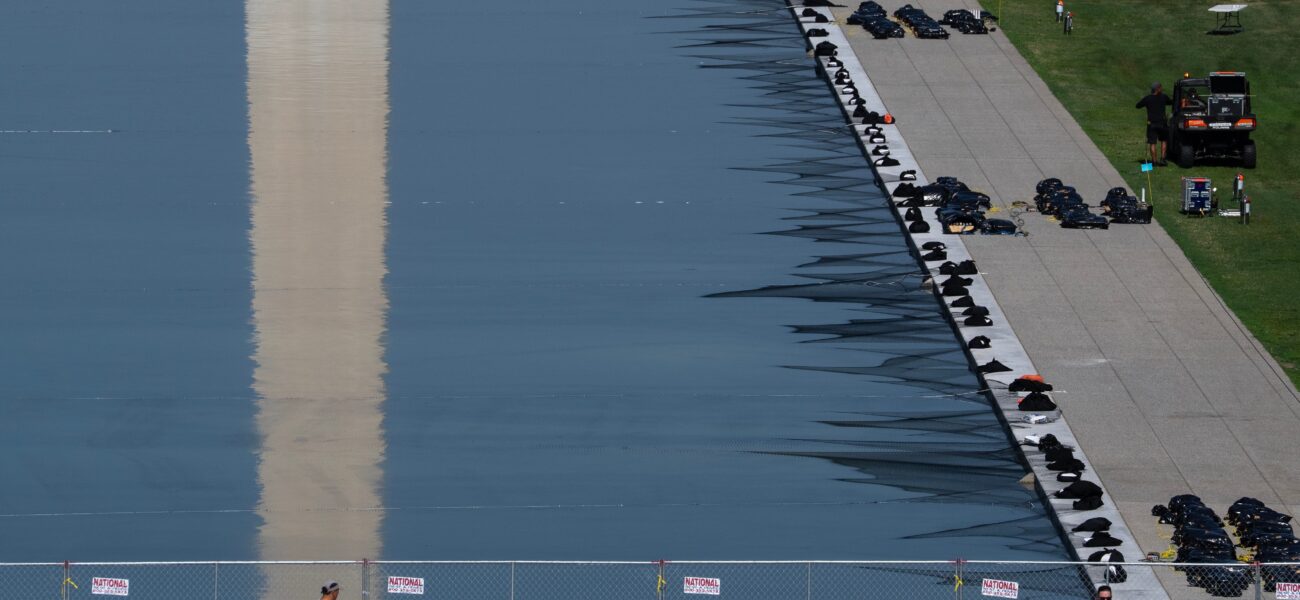
Monumental Inertia: Trump Administration Halts Key Lincoln Memorial Repairs
POLICY WIRE — Washington, D.C. — America’s grand theatrical stage, the National Mall, holds more than just monumental architecture and green expanse; it cradles the very ideals of the republic....

POLICY WIRE — Washington, D.C. — America’s grand theatrical stage, the National Mall, holds more than just monumental architecture and green expanse; it cradles the very ideals of the republic. But even iconic backdrops aren’t immune to the grinding gears of government — or, in this case, their sudden, unexpected halt. The Trump administration, with a characteristic pivot away from anticipated bureaucratic process, won’t be seeking new bids to repair the Lincoln Memorial Reflecting Pool. A simple administrative decision, on the surface. But underneath? A tremor in the foundation, perhaps.
It’s not often that a presidential administration opts to essentially pump the brakes on the preservation of a universally recognized symbol of national unity. For decades, the Reflecting Pool has served as both serene beauty and powerful political canvas, a silent witness to historic marches and inaugurations. Yet, the work to maintain its often-finicky infrastructure—the unseen mechanics that keep it reflecting—has reportedly been halted, at least in its current proposed form. This isn’t just about water — and concrete. It’s about commitment to heritage, about public works, about the nitty-gritty of governance. They’re effectively pausing a necessary facelift, if you will, for a national treasure.
And so, the capital buzzes, not with outrage, but with that peculiar Washington blend of bewilderment and calculated indifference. Bureaucrats are undoubtedly shuffling papers, trying to decipher what this means for pending projects. But the practical effect? Continued wear — and tear on a significant national landmark. This wasn’t some minor fountain in a city park; it’s the Lincoln Memorial. The pool isn’t just ornamental; it’s an integral part of the visitor experience—a vast, shimmering mirror reflecting history itself.
Reports from those privy to internal discussions suggest the reasoning was rooted in an evaluation of existing proposals and perhaps a desire to revisit the scope or cost. A government spokesperson was said to have conveyed [QUOTE_PLACEHOLDER] regarding the move. It’s often difficult to pin down the exact catalyst when political appointees decide to redirect or delay established federal projects. But don’t misunderstand: these aren’t trivial matters. The National Park Service, per a 2018 Government Accountability Office (GAO) report, was grappling with an estimated $225 million in deferred maintenance across its most iconic sites, a sum often described as a mere drop in the bucket against widespread structural decay. This decision, for some, likely feels like adding to that burgeoning ledger rather than reducing it.
But the ramifications stretch further than just the Potomac’s edge. Think globally. Many nations, particularly in regions like South Asia and the broader Muslim world, grapple with the daunting challenge of preserving ancient, often crumbling, heritage sites. Places like Mohenjo-Daro in Pakistan, or the various ancient monuments dotting the Middle East—they face threats from natural erosion, climate change, and sometimes, acute political instability. While the scale and nature of the challenge differ immensely, the underlying questions of resource allocation, governmental priority, and the very philosophy of preservation often echo across borders.
When even a comparatively affluent nation like the United States appears to falter in its stewardship of a modern, nationally cherished symbol, what message does that send? It certainly doesn’t project an image of seamless, efficient federal machinery. Rather, it implies a certain political fickleness—a willingness to sideline maintenance for reasons that remain somewhat opaque. Some observers are saying [QUOTE_PLACEHOLDER] about future projects under similar review.
📄 POLICY WIRE WHITEPAPER PUBLISHED: PAKISTAN'S NATIONAL SECURITY POLICY PRIORITIES
👉 READ BY CLICKING HEREBut how do these decisions get made? It’s never as straightforward as one might hope. Layers of departmental review, budget allocations (or re-allocations), and shifting administrative directives play their part. The public doesn’t see that. They only see the results, or the lack thereof. And this latest move feels like a prime example of administrative turbulence impacting something quite tangible and deeply symbolic.
What This Means
This administrative pause isn’t just a hiccup; it’s a telling political — and economic barometer. Politically, it signals a potentially leaner approach to non-essential infrastructure spending, or at least a highly scrutinized one. It forces other agencies to re-evaluate their own maintenance backlogs. Does this set a precedent for a more interventionist approach to existing contracts and planned works across federal property? One has to wonder. For those hoping for smooth, predictable government action on visible national treasures, this provides a dose of sobering reality.
Economically, holding up major repair projects has a cascade effect. Contractors lose potential work, skilled labor doesn’t get hired, and the local economies that benefit from such projects feel the pinch. More broadly, it raises questions about the long-term investment in national assets. Neglecting upkeep often leads to more costly, extensive repairs down the line—a familiar economic truth in any domain, public or private. From a global perspective, it’s a curious contrast to regions where preserving much older, fragile sites requires extraordinary dedication and funding. The challenge for places like Pakistan to preserve their ancient heritage, say the intricate mosaics of the Lahore Fort, often feels insurmountable. Yet, here, a relatively modern landmark seems to hit a similar snag, albeit for different reasons.
This decision, while seemingly minor in the grand scheme of national policy, illuminates a recurring theme in modern governance: the tension between political will, bureaucratic momentum, and the enduring need to maintain the nation’s physical and symbolic infrastructure. It’s a moment of reflection, so to speak, for the Reflecting Pool itself. One might suggest a new bid for a more efficient bureaucratic process, though I wouldn’t hold my breath. The ripple effects are subtler than water in a pool, but they’re there, make no mistake.