

Legal Labyrinth: Ex-Actor’s Case Tests Grand Jury Secrecy in Albuquerque
POLICY WIRE — Albuquerque, N.M. — It’s a curious thing, the inner workings of justice, especially when public perception collides head-on with procedural minutiae. In Albuquerque, New Mexico,...

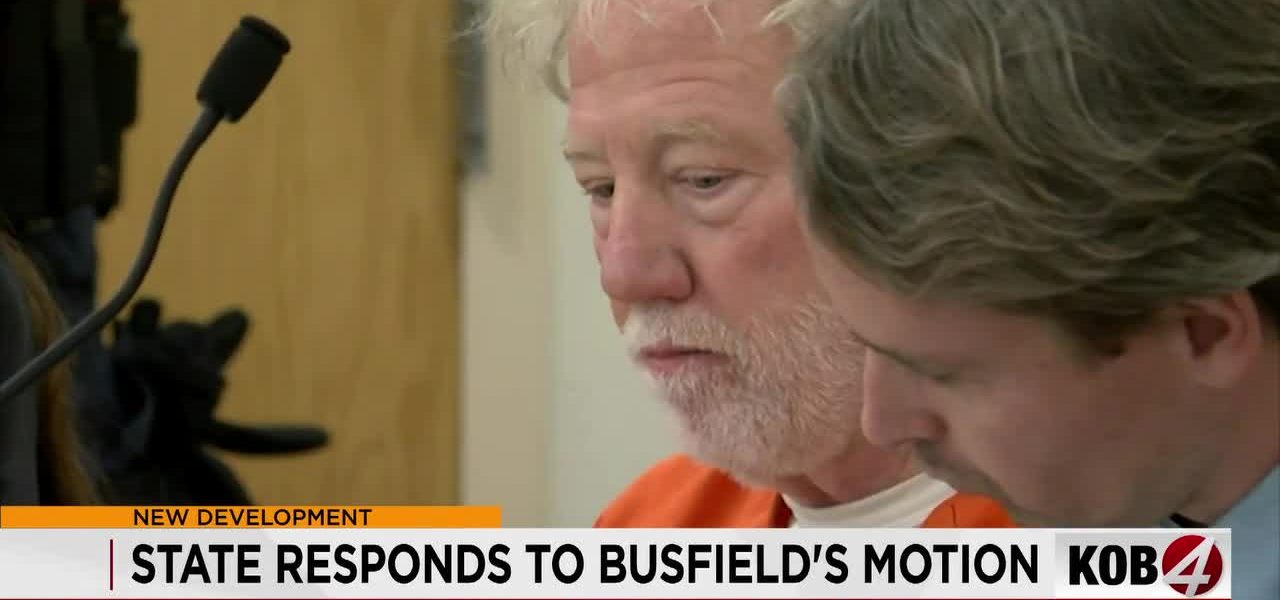
POLICY WIRE — Albuquerque, N.M. — It’s a curious thing, the inner workings of justice, especially when public perception collides head-on with procedural minutiae. In Albuquerque, New Mexico, the fate of an indictment against former actor Timothy Busfield now rests precariously—not on the central accusation, but on the arcane rules governing grand juries. The spotlight, for once, isn’t on a performance; it’s on paperwork, — and the implications of withheld information.
Prosecutors aren’t mincing words; they’ve made their position stark: the criminal case against Timothy Busfield should move forward. They submitted a clear response to the defense’s request to have the indictment tossed out. Their argument’s simple, really: Busfield had enough time to testify before the grand jury, and, what’s more, they didn’t withhold vital information. A straightforward stance, if a touch dismissive of the defense’s agitation. [QUOTE_PLACEHOLDER]
But the defense? They’re painting an entirely different picture, asserting the whole darn process is unfair. Their claim alleges that the state broke grand jury rules by withholding evidence. And not just any evidence, mind you—they’re talking about an independent investigation that reportedly found no evidence of misconduct concerning the accusations levied against the actor. This isn’t just about guilt or innocence; it’s about the sanctity of due process, a concept we discuss with such earnestness in policy circles, yet often see mired in bureaucratic tussles.
For context, Busfield faces accusations of sexually abusing two boys while working with them on a TV show filmed in Albuquerque. It’s a grave charge, obviously, one that echoes beyond the dusty New Mexico courtroom and into the larger discourse about accountability for those in the public eye. And let’s be frank, the entertainment industry—for all its glamour—has seen its share of these allegations become agonizingly public, making these procedural fights all the more scrutinized.
Consider, for a moment, the opacity. Grand jury proceedings, by design, are secretive. That secrecy, originally intended to protect both the accused — and accusers, has become a double-edged sword. It shields information from public view, sometimes to the benefit of justice, other times leading to accusations of procedural missteps—or worse. It’s a bit like the judicial systems you see across Pakistan or other South Asian nations, where the common citizen often feels disengaged, even alienated, from the technical jargon and closed-door deliberations that ultimately dictate their lives.
And that independent investigation, reportedly cleared Busfield? Its existence, and the state’s alleged failure to present it to the grand jury, is the linchpin of the defense’s entire argument. It’s not often a judge gets asked to dismantle a grand jury indictment—they’re generally robust. In fact, according to a 2018 Bureau of Justice Statistics report, federal grand juries returned indictments in approximately 99.8% of cases presented to them. This particular legal dance, then, isn’t just common squabbling; it’s pushing against a deeply ingrained system.
Ultimately, a judge will step into this quagmire. They’ll be the one to decide whether the indictment stands or whether the court dismisses it. No pressure, right? This isn’t just another legal proceeding; it’s a very public—if procedurally dense—reckoning for a well-known face. It’s a reminder that even in cases steeped in scandal, the rules of the game matter just as much as the players themselves. And sometimes, those rules are where the real drama unfolds.
📄 POLICY WIRE WHITEPAPER PUBLISHED: PAKISTAN'S NATIONAL SECURITY POLICY PRIORITIES
👉 READ BY CLICKING HEREWhat This Means
The immediate political implication here is a subtle but persistent erosion of public trust, or at least a renewed skepticism, concerning the fairness of the legal process. When grand jury secrecy meets high-profile allegations and accusations of withheld evidence, it doesn’t inspire confidence among the populace. Regardless of Busfield’s guilt or innocence, this procedural battle itself becomes a potent symbol. For policy wonks, it raises questions about prosecutorial discretion and accountability—especially if a judge rules in favor of the defense’s claims of withheld information. Is this an anomaly, or symptomatic of a systemic problem where the power of the state occasionally overrides strict adherence to justice’s finer points?
Economically, while this specific case might not send ripples through major markets, it does underscore the financial toll legal battles extract from individuals, even those with means. Defending against such charges, especially when it involves questioning the state’s adherence to rules, is monumentally expensive. This puts immense pressure on anyone, regardless of their past career. it reminds us how public perception—shaped by such drawn-out and often opaque legal fights—can permanently alter careers and livelihoods in industries, like entertainment, where public image is everything. The cost isn’t just legal fees; it’s a damaged brand, potentially irrecoverable income, and a long shadow over future endeavors. The principle of justice delayed is justice denied doesn’t just mean a wait for conviction or acquittal; it also means enduring the draining financial reality of protracted legal skirmishes.
There’s a broader societal angle here too, echoing challenges faced globally, particularly in countries where judicial independence is often debated. When legal battles become procedural chess matches, the underlying question of truth can get lost in the maneuvering. The focus shifts from the victim or the accused to the technical integrity of the system. For anyone watching from outside the courtroom—whether in Albuquerque or beyond—this creates a disconnect. You want clarity, but you get complexity.
This situation also implicitly tests judicial checks — and balances. The judge isn’t merely an adjudicator but an overseer of the process itself, holding the state’s powerful arm to account. It’s this delicate balance that ensures fairness, distinguishing a robust legal system from one perceived as arbitrary. But it sure isn’t easy, sitting on that bench and making a call that could rewrite the script, forcing the state to, well, explain itself.
This entire ordeal—from the initial accusations to the current procedural dispute—offers a sobering look at how the American justice system, for all its lauded ideals, often struggles with transparency and public understanding. And if you’ve got questions about bureaucracy, legal quagmires, and how they play out across the vast reaches of a diverse country like the United States, one might point to Texas bureaucracy as a prime example of systemic complexities that frequently befuddle. Both situations reveal how deep systemic cracks can become when challenged by specific, often high-stakes, cases.