

Nagelsmann’s Fury: Germany’s Shock World Cup Exit
Germany's World Cup dream ends in disgrace. Coach Julian Nagelsmann's furious press conference reveals deep-seated issues. A nation reels from the shock.

POLICY WIRE — Berlin, Germany — No, it wasn’t the collapse of the Eurozone, nor a diplomatic snafu in Brussels, nor even another awkward gas pipeline debate that sent tremors through Germany. It was the decisive thump of a football hitting the back of the net after a penalty kick, marking a decidedly unceremonious end to their FIFA World Cup ambitions. You just don’t expect Germany, that perennial juggernaut of competitive spirit, to exit the global stage with a whimper, do you? Especially not against Paraguay, a team they frankly should’ve dispatched without breaking much of a sweat. This wasn’t just a loss; it was a psychological broadside to a nation that prides itself on precision.
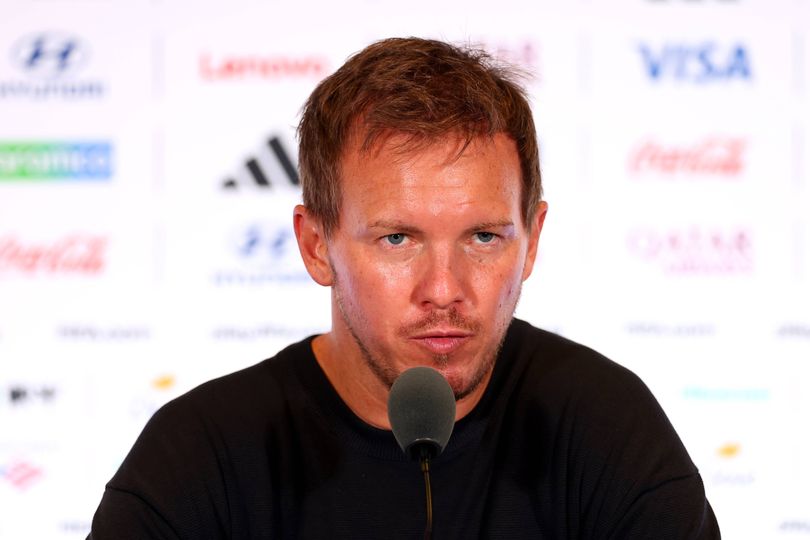
Hours after the crushing defeat in the Round of 32—a truly ignominious result for a four-time world champion—head coach Julian Nagelsmann found himself in a skirmish, not on the pitch, but in the press room. His frustration, palpable enough to cut with a butter knife, boiled over when ZDF reporter Lili Engels started probing about Germany’s sluggish possession game. Nagelsmann, visibly agitated, didn’t hold back. His patience, already wafer-thin after the shocking exit, completely gave way. [QUOTE_PLACEHOLDER]
It’s one thing to lose; it’s quite another to lose the plot publicly, especially for the youngest coach in a World Cup knockout stage in four decades. The 38-year-old, looking weary and beleaguered, had just presided over Germany’s first-ever World Cup shootout defeat, a rather grim milestone for a team that, between 2002 and 2014, had made it to at least the semi-finals in four consecutive tournaments. What a fall from grace, eh? Because really, how do you explain that kind of historical reversal?
Inside that post-game conference, following an extended, surely torturous, spell with his distraught players in the locker room, Nagelsmann’s raw emotions were on full display. He conceded the tactical flaws with a bitter pill. “We had a very slow build-up play; it took ages to shift it from wing to wing,” he acknowledged, ticking off a litany of complaints, which notably included a “scandalous” disallowed goal that probably stoked the flames of his anger. “We did get an equalizer, but we could have done that much more frequently.”
When Engels pushed back, questioning the tactical choices again, Nagelsmann fired back. “Yes, I just told you. The build-up play was too slow. I’ve already said that three times now.” That’s the kind of terse exchange that signals deep-seated issues beyond just ninety minutes of football. And then, the inevitable question about his job. His contract runs until Euro 2028, but now, that’s sounding more like a wish than a certainty.
“I am available. If the DFB [German FA] wants it, then I will do the Euro 2028, and if not then they’ve to tell me,” he declared bluntly, adding for good measure, “I’m not someone who runs away.” But that determination sounds awfully close to a plea when the team you manage just bombed out against a side ranked significantly lower.
📄 POLICY WIRE WHITEPAPER PUBLISHED: PAKISTAN'S NATIONAL SECURITY POLICY PRIORITIES
👉 READ BY CLICKING HEREAnd Nagelsmann’s own words during his press conference offered a brutal self-assessment for a national program facing serious introspection. “If you cannot beat Paraguay over 120 minutes then you are deservedly eliminated,” he said with a grim resolve. “You shouldn’t depend on the opponents’ luck or no luck.” He even took it further, essentially stripping Germany of its long-held elite status: “If you are eliminated by Paraguay you are just not a first-class football team. I am very disappointed.” That’s some heavy self-critique, isn’t it?
Calls for Jurgen Klopp, currently enjoying life as a World Cup analyst on German TV, are growing louder. It feels like a country collectively holding its breath, waiting for the German FA to make a move. The decision is now entirely theirs, with Nagelsmann’s aspirations of guiding Germany to UEFA Euro 2028 hanging precariously in the balance. It’s clear they’ve hit a crossroads.
What This Means
This isn’t just about a football game; it’s a barometer for national pride and, frankly, global perception. German football, like German engineering or fiscal policy, has historically represented excellence, efficiency, and a methodical approach that usually yields results. When a pillar of national identity stumbles so dramatically, particularly against an underdog like Paraguay, it scratches at the veneer of that perception.
Politically, while it won’t trigger governmental collapse, such an upset can stir public discontent, channeling anxieties about the country’s performance onto the sporting stage. Nations often project their domestic mood onto their sporting heroes, and a collective failure can feel deeply personal. Economically, early exits from major tournaments cut into potential revenues from extended broadcasts, merchandise, and tourism. FIFA, for instance, reported revenues of USD 7.6 billion for the 2018-2022 cycle, largely driven by World Cup broadcasting rights, according to its annual report. Missing out on further tournament stages means a palpable hit to enthusiasm, if not directly to GDP. For nations like Pakistan or other South Asian countries, where football might not be the national sport but still commands immense global viewership, such upsets from major European powers resonate far and wide. It’s a vivid reminder that even the mightiest can fall, injecting a flicker of hope and shared humanity into the often-predictable global pecking order, fueling narratives that transcend the pitch itself.