


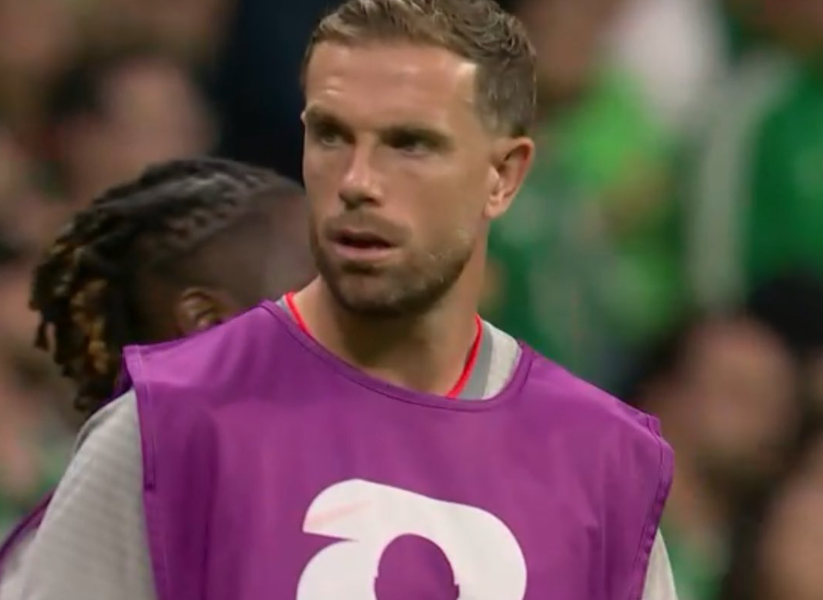
England’s Fleeting Jubilation: A Captain’s Fall Shatters Post-Match High
POLICY WIRE — Al Khor, Qatar — There’s a certain grim irony in sports, isn’t there? One minute, an entire nation breathes a collective sigh of relief, then erupts in joyous hysteria. The next,...

POLICY WIRE — Al Khor, Qatar — There’s a certain grim irony in sports, isn’t there? One minute, an entire nation breathes a collective sigh of relief, then erupts in joyous hysteria. The next, that soaring triumph collapses under the weight of something entirely unexpected, completely mundane. England had just secured its spot in the World Cup quarterfinals, dispatching Mexico with a grit that hinted at true championship mettle. Millions back home—from Wembley’s fervent faithful to a lone tea drinker in Lahore watching via satellite—were likely already mapping out the path to glory. And then, a captain, Jordan Henderson, stumbled.
It wasn’t a clash with an opponent, not a strained hamstring mid-sprint, but something far more prosaic, and in its banality, more jarring: a clumsy misstep after the final whistle. The team had broken ranks, as victorious sides are wont to do, heading past the advertising boards to share the moment with their fans. It’s a spontaneous, raw display of connection, the kind PR strategists couldn’t concoct. But in that joyous chaos, as players were heading back to the pitch, Henderson attempted to step over one of those boards. He fell.
Footage shows it all. You can watch him, there, clutching one of his arms. Then, in an almost cinematic sequence of ill fortune, medical staff were swiftly by his side. They had to take him away on a medical stretcher. One moment, pumping fists and exultant roars; the next, the stark, unsettling sight of a crumpled leader, carried off the field of dreams, his future in the tournament suddenly, chillingly, uncertain. One anonymous medical observer, perhaps with a touch of understatement, remarked, [QUOTE_PLACEHOLDER] The emotional whiplash for the supporters, both at the stadium and glued to screens globally—yes, even in places like Karachi where the beautiful game’s dramas frequently overshadow local political squabbles—was almost instantaneous.
It’s always those small, unforeseen details that trip us up, isn’t it? One could argue this momentary lapse, this fleeting error in judgment during the giddiness of victory, carries a metaphoric weight. England’s football narrative is so often a tale of near misses, of promising starts yielding to disappointing conclusions. The national psyche, particularly when it comes to international football, is fragile. They’ve long carried the burden of past failures, the yearning for a decisive victory. This quarter-final qualification was a cathartic release. But now, this. An incident not born of athletic combat, but from the simple, clumsy physics of human exuberance colliding with advertising signage. Some might say it’s classic England.
But the ramifications stretch beyond mere sentiment. A player of Henderson’s caliber—a calming presence, an orchestrator in midfield—isn’t just a cog; he’s an engine part, often the one steadying the ship when others are listing. His absence, or even a compromised presence, could reshape tactical approaches entirely. It could unsettle the finely balanced psychology of a team marching towards potential glory. His market value alone, by some estimates from a 2023 sports analytics firm, places him upwards of $50 million, a sum that speaks to his strategic importance.
📄 POLICY WIRE WHITEPAPER PUBLISHED: PAKISTAN'S NATIONAL SECURITY POLICY PRIORITIES
👉 READ BY CLICKING HEREWhat This Means
This isn’t just about a footballer tripping over a hurdle, literal or figurative. It’s about the brutal fragility of national aspirations, often tied to figures, symbols, or even the fickle bounce of a ball. For a nation like England, where World Cup campaigns become national events, the injury to a key player isn’t merely a sporting setback; it’s a sudden, sharp downturn in national mood. Governments often understand the power of sports to distract or unite populations, using it to shore up popular support during turbulent times. A successful England run, much like a robust economy, contributes to a feel-good factor that can momentarily gloss over deeper societal anxieties.
From an economic standpoint, the unexpected injury to a high-profile athlete has real financial ripples. Betting markets adjust. Television advertising rates, linked to national interest — and audience size, could see marginal shifts. And let’s not forget the sheer public relations challenge this poses for the England camp, who now have to project both confidence and concern, all while maintaining focus. For countries with deep, almost religious, devotion to football, extending across continents to places where English Premier League broadcasts captivate millions, this moment resonates. A setback to England’s World Cup journey isn’t just a blip; it becomes a talking point in coffee houses from London to Lahore, demonstrating how seemingly disparate events connect nations. They’ve seen how small decisions on the pitch can echo nationally.
But there’s a broader implication too. This freak occurrence serves as a reminder that even in moments of choreographed perfection, when billions are invested and national prestige is on the line, the most elementary of accidents can intervene. It’s a small, personal catastrophe for Henderson, but a tremor through a national dream. It speaks to a universal truth: no matter the scale of success, misfortune can materialize from the most unassuming corners, challenging grand narratives and forcing a sober recalculation of expectations. It’s a lesson applicable in geopolitical strategy as much as on the football pitch: anticipate the knowns, prepare for the unknowns, but don’t forget the completely ridiculous things that simply happen.