


Presidential Touchdown: How Oval Office Shadowed a Soccer Suspension
POLICY WIRE — Washington D.C., USA — Forget the pitch-side drama for a minute; the real skirmishes are unfolding in the corridors of power. It wasn’t the swift foot of Folarin Balogun that grabbed...

POLICY WIRE — Washington D.C., USA — Forget the pitch-side drama for a minute; the real skirmishes are unfolding in the corridors of power. It wasn’t the swift foot of Folarin Balogun that grabbed headlines this past weekend, but rather the curiously convenient timing of FIFA’s eleventh-hour decision to wipe clean his one-game suspension. What was initially an open-and-shut case of a straight red card—received in a testy bout against Bosnia and Herzegovina—somehow evaporated into thin air, igniting a diplomatic firestorm the likes of which sports hasn’t seen in ages. And yes, it involves the White House, allegedly.
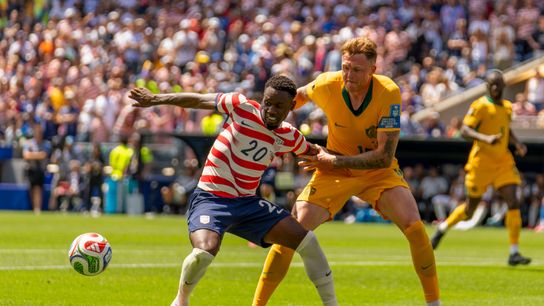
Raphael Claus, the man from Brazil entrusted with keeping order on the field, found himself locked in a verbal battle with the young American star from the whistle. Balogun, leading the U.S. in scoring with three goals, according to FIFA match statistics, was dominating before the incident in the 64th minute. The Bosnian squad simply couldn’t contain him. But he met his match with Claus. Was it an overreaction to send him off after that foul against Tarik Muharemovic? Perhaps. Absolutely, disciplinary action was required. Probably a stern talking to, maybe even a yellow card would’ve sufficed. Claus wasn’t available in the mixed zone of Levi’s Stadium after the match nor offered comment from the sanctuary of the officials’ dressing room, so we’re left to piece it together. We’ll never know what was going through his mind at that particular moment.
But when you’ve got alleged politics extending all the way to the White House involved, the normal playbook gets tossed out. Suddenly, FIFA’s decision to reinstate America’s top scorer ahead of a massive quadrennial game wasn’t just controversial; it was practically geopolitical. The terse and angry response from the Belgian Football Federation came like a perfectly timed counterattack, reviewing all its options in the wake of the decision. One word immediately sprung to mind: “Boycott.” Would they actually refuse to show up at Lumen Field in Seattle Monday? No, they probably wouldn’t resort to something that drastic. It’d be churlish. Also, frankly, childish.
And then there’s the big man himself, Donald Trump. His appearance at sporting events has, let’s say, a certain flair. This time, he seized the narrative. If the Trump administration did indeed intercede on U.S. Soccer’s behalf, chalk it up to another moment where politics — and sport intertwine. We’ve already seen enough influence by the president, like seeing to it that the World Cup draw, which was supposed to be in Las Vegas, was moved to Washington. There’s a certain precedent for heads of state handling the championship trophy, sure—Queen Elizabeth II handed England the trophy when it won in 1966 and Spain’s King Juan Carlos did the honors when Italy won in 1982. But Trump, standing alongside the FIFA President to hand out that gold on July 19 at MetLife Stadium in New Jersey, is still a departure from recent tradition. It certainly smells like the “pardon” for his nation’s top striker might have been part of some grander, less-than-transparent arrangement. Or maybe that contrived FIFA Peace Prize Infantino gifted Trump just brought with it the power of the pen to erase suspensions. Because, on his Truth Social platform Sunday, Trump said: “Thank you to FIFA for doing what was right, and reversing a great injustice!” Straightforward enough for public consumption, no doubt.
For football fanatics across Pakistan and the broader South Asia—a region where allegiances to European leagues run deep and the intricacies of international sport are followed with an almost religious fervor—this sort of apparent political muscle-flexing doesn’t go unnoticed. There’s a cynicism baked into their viewership, honed by decades of observing global power dynamics. When a rich and powerful nation seemingly gets preferential treatment, it reinforces perceptions of a two-tiered system—one for the powerful, one for everyone else. It begs the question: are the rules truly universal, or do they bend according to political expediency? The integrity of the sport itself becomes subject to whispered debates in Karachi tea stalls — and Dhaka cafes. It just kinda feels rigged sometimes, doesn’t it? (It does.)
📄 POLICY WIRE WHITEPAPER PUBLISHED: PAKISTAN'S NATIONAL SECURITY POLICY PRIORITIES
👉 READ BY CLICKING HEREBack to Balogun, though, — and the matter at hand. His presence is huge. He’s a dominating figure — and will be a challenge for the Belgians to keep in check. His return creates the possibility of opening things up for Christian Pulisic, who was limited to just two touches in the win over Bosnia and Herzegovina. Pulisic’ll need a more active role in Seattle if the U.S. hopes to advance to Friday’s quarterfinals at SoFi Stadium. Balogun, naturally, will need to mind his P’s and Q’s now—he’s on double-secret probation, after all—but he can’t let that inhibit his game. He’s gotta be smart enough to know where the line is and how short the leash will be as far as the referee goes.
What This Means
This whole kerfuffle is more than just a football story; it’s a stark reminder of how sports and statecraft are increasingly intertwined. FIFA, ostensibly an independent global governing body, appears susceptible to direct political pressure from its most influential member nations—especially one hosting a major portion of the current World Cup. This compromises the perceived fairness of international competition, casting a long shadow over its adjudicative processes. Economically, such interventions could incentivize host nations to leverage their influence for competitive advantage, potentially skewing investment and sponsorships towards politically favored outcomes. it undermines FIFA’s brand globally. Why should smaller nations, or fans in regions like South Asia and the Muslim world who often view international bodies with skepticism, trust an organization that seems to buckle under White House persuasion? The ‘Ronaldo Treatment’ isn’t just about a star player; it’s about whether the global game operates by a universal rulebook or one dictated by the most powerful. But ultimately, when those powerful nations start flexing their diplomatic muscle over game suspensions, it signals a messy, unavoidable merging of geopolitics and athletic endeavor. A fascinating, if disquieting, development for what’s supposed to be ‘the beautiful game.’
So, what’s done is done. The Belgians will stop grousing. The skepticism over whether FIFA was pressured into giving Balogun the “Ronaldo Treatment” in rescinding the suspension will fall to the podcasters and talk show hosts. Then, finally, they’ll play the game in front of a boisterous — and energized crowd. It’ll be America’s best 11 against Belgium’s best 11. Which is exactly what should’ve been happening from the start. That’s the real win here, no matter what backroom dealings may or may not have happened behind the curtain. For better or worse, the show goes on, reminding us of the global ambition inherent in these tournaments, sometimes, you know, at any cost.