
Albania’s Perpetual Unrest: Thirty-Five Nights, Echoes of Deeper Frustration
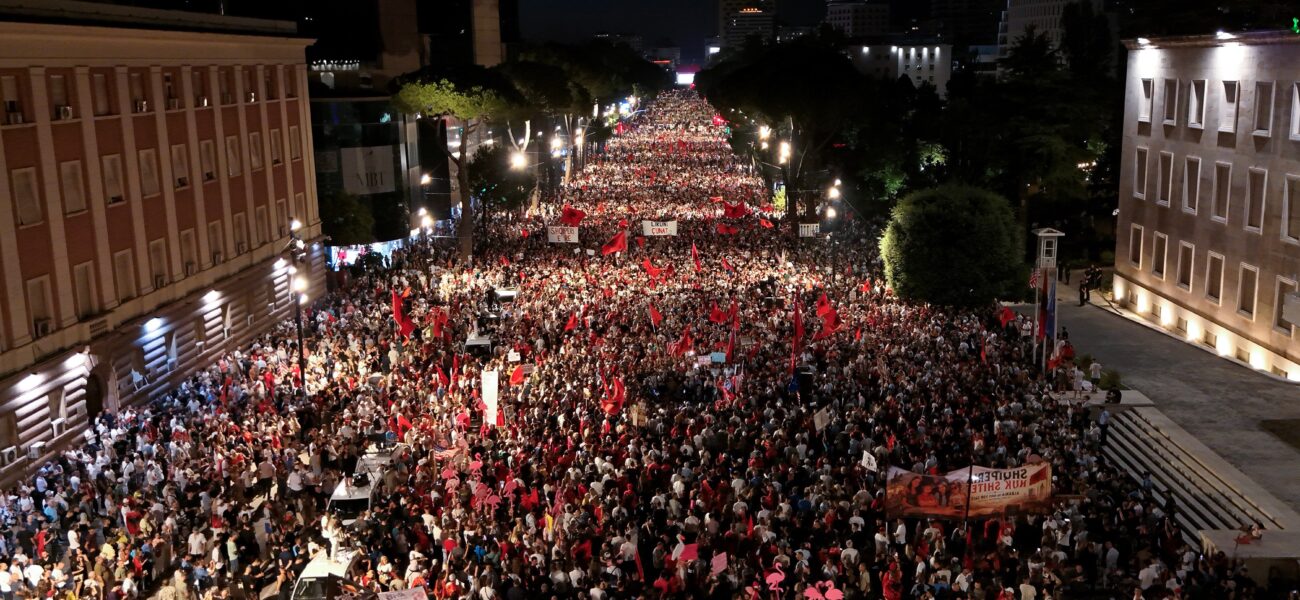
POLICY WIRE — Tirana, Albania — Thirty-five nights. Think about that for a second. More than a month of continuous public fury in the streets of Albania’s capital, Tirana, isn’t just a...

POLICY WIRE — Tirana, Albania — Thirty-five nights. Think about that for a second. More than a month of continuous public fury in the streets of Albania’s capital, Tirana, isn’t just a headline—it’s a grim declaration. It’s a stark reminder that even in Europe’s quiet corners, fundamental dissatisfaction, once uncorked, doesn’t just fade away with a news cycle. It festers, it calcifies, it demands a reckoning.
For weeks now, the usual routines of the city have been punctuated by the predictable rhythm of demonstrations, the thud of slogans repeated until hoarse. But it isn’t simply about this week’s complaint or last week’s misstep. Nope. What we’re witnessing here, playing out under the gaze of bewildered tourists and increasingly weary locals, feels more like an open wound that refuses to clot. It’s the tangible manifestation of grievances accumulated over years, perhaps decades.
Young people, a disproportionate segment of the populace, are often at the vanguard, their chants carrying a mix of defiance and exhaustion. They’re yelling about what they perceive as endemic graft, economic stagnation, and a political class that seems perpetually out of touch, or worse, deliberately unresponsive. One recurring sentiment from the crowds is [QUOTE_PLACEHOLDER], a phrase that neatly encapsulates the deep cynicism permeating society. It isn’t just a grievance against one specific policy; it’s a full-throated indictment of the system itself. And that’s a beast much harder to tame than a single issue.
The persistence of these protests in a nation often overlooked by the Western media machine begs for closer examination. But really, it’s not unique. Because similar expressions of deep, structural discontent have ripple-effected across diverse regions. From the Middle East to Southeast Asia, populations often feel disconnected from their governing elites, creating volatile environments ripe for such sustained public pushback. It’s this disconnect, this profound chasm, that unites people from Tirana to Tashkent.
Look, the government’s response, meanwhile, has been textbook and, frankly, underwhelming. Public statements from officials have done little to quell the palpable anger. One senior cabinet member reportedly told local media last week, [QUOTE_PLACEHOLDER]. Not exactly the kind of message that cools temperatures in a pressure cooker. It’s a deflection, really, and the street-level understanding is that they’re either unable or unwilling to grasp the core problem.
And let’s be frank: the stakes are higher than a simple change in leadership. There’s a fragility here, economically speaking, that can’t be ignored. Youth unemployment, for instance, has stubbornly hovered around 25%, according to the Albanian Institute of Statistics, fueling a sense of hopelessness that makes an ongoing, nightly protest feel less like a choice and more like an inevitability for many. Where else are they going to go? What else are they going to do? For many young Albanians, emigrating—leaving everything behind—often feels like the most promising career path available. They’re literally voting with their feet, a silent protest that sometimes shouts louder than any slogan.
But the nightly marches are far from silent. They’re a loud, visual clamor demanding recognition. The scene isn’t about tear gas — and dramatic clashes every evening, no. It’s more subtle, a slow burn of democratic defiance that keeps politicians on edge. The sheer staying power is what’s most unnerving to the establishment. They can dismiss a single day’s turnout. But a month? A month means something has taken root.
📄 POLICY WIRE WHITEPAPER PUBLISHED: PAKISTAN'S NATIONAL SECURITY POLICY PRIORITIES
👉 READ BY CLICKING HEREThe government’s tactics? Predictable, perhaps. Promises of future reforms. Calls for dialogue. They’ve done a bit of blame-shifting, too, which doesn’t seem to impress anyone who’s actually on the street. The protesters, it seems, aren’t looking for quick fixes or carefully worded official statements. They want tangible change, systemic reform. And after 35 nights, it’s pretty clear they aren’t going home until they feel they’ve achieved it, or they’re too exhausted to keep going. It’s a staring contest between the power brokers — and the people, and nobody’s blinking yet.
What This Means
The protracted unrest in Albania isn’t merely an internal affair; it’s a canary in the coal mine for democratic consolidation in nascent democracies and a case study in managing prolonged popular discontent. Economically, this ongoing instability acts like sand in the gears of foreign investment and tourism—two lifelines for the relatively small Balkan nation. Businesses won’t expand in uncertainty; holidaymakers won’t flock to a country with daily protests.
Politically, the continuous nature of these demonstrations chips away at the government’s legitimacy, regardless of the merits of their argument or the composition of the crowds. It provides a perpetual news cycle of negativity, which can easily be amplified by internal and external actors seeking to destabilize or influence the region. You might say it’s creating a kind of shadow game, with public opinion as the prize.
The parallels with countries across the Muslim world—many of which grapple with youth bulge demographics, high unemployment, and the specter of corruption—are uncanny. From Cairo to Karachi, the frustration of young, educated citizens seeing their opportunities curtailed by what they perceive as entrenched power structures fuels movements that challenge the status quo, often with unpredictable outcomes. Pakistan, for instance, has frequently witnessed similar large-scale, persistent public demonstrations stemming from deeply rooted economic grievances and calls for greater governmental accountability. This shared sense of thwarted aspirations is a potent, global political currency. Because at its heart, it’s about the feeling of being unheard, of being excluded from the promise of progress.