


Party Lines Blur: Fetterman’s Maverick Stance Exposes Deep Democratic Rifts
POLICY WIRE — Washington, D.C. — The comfortable big tent of the Democratic Party, once seen as broad enough to encompass everyone from pragmatic centrists to ardent progressives, seems to be...

POLICY WIRE — Washington, D.C. — The comfortable big tent of the Democratic Party, once seen as broad enough to encompass everyone from pragmatic centrists to ardent progressives, seems to be straining at its seams. Not with the usual legislative haggling, mind you, but with something far more existential: a gnawing question about its very soul. It’s an ideological skirmish, simmering beneath the surface for ages, now boiling over into public view, courtesy of a blunt observation from an unexpected corner of the caucus.
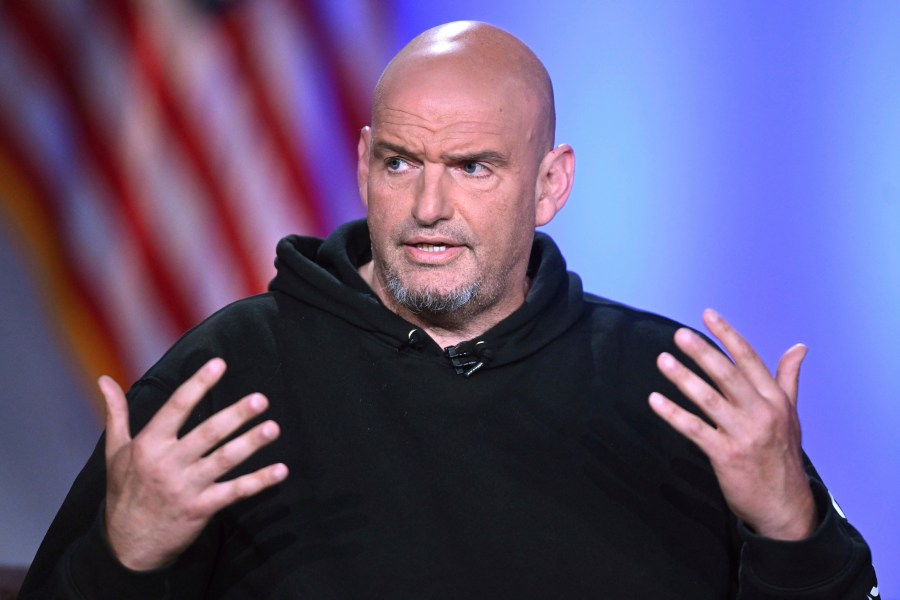
It’s no small thing when a sitting U.S. Senator—especially one who defied electoral expectations and holds a vital seat—points a finger inward. Senator John Fetterman, the imposing Pennsylvanian known for his hoodies — and direct language, didn’t mince words. He declared that a “significant part” of his own party is “getting taken over by extreme views.” Fetterman’s statement, coming from a man who identifies as a progressive, sends ripples far beyond the Beltway, signaling a serious fracture in the progressive movement’s internal consensus, particularly on foreign policy.
His candid assessment cuts through the polite political jargon usually reserved for such sensitive topics. He’s talking about something visceral: a perceived drift from traditional Democratic values, especially regarding allies abroad and the nuances of complex geopolitical landscapes. He isn’t wrong about the polarization. A recent Pew Research Center study, for example, found that ideological gaps within the Democratic base on foreign policy have widened by nearly 15 percentage points in the last decade alone, marking the sharpest internal division in either major party.
And it’s not just a back-bench whisper. The push and pull is palpable in countless congressional offices, think tanks, and increasingly, on social media feeds where party orthodoxy gets chewed up and spit out daily. Fetterman’s critique, though pointed, resonates with a segment of the party worried that an embrace of certain activist positions alienates mainstream voters and, frankly, seems to ignore global realities. It’s a pragmatic fear, undoubtedly.
But there are those who see the “extreme views” not as a perversion, but as a necessary moral evolution. Representative Pramila Jayapal, chair of the Congressional Progressive Caucus, has a different take. “Our party’s strength lies in its moral compass,” she recently remarked to reporters. “We can’t just stand for economic justice at home; we have to advocate for human dignity everywhere. Sometimes that means uncomfortable truths, but they’re still truths. It’s about conscience, not just conventional wisdom.”
That’s the rub, isn’t it? One side sees an essential realignment towards universal human rights, demanding accountability from all nations, while the other warns against losing sight of strategic alliances and the hard-won gains of decades of diplomacy. The Senator’s declaration highlights a simmering disagreement that threatens to define, and possibly divide, the party for years to come. It’s not just a policy debate; it’s a culture war within the party.
The stakes are high. The Democratic Party often relies on a broad coalition, including a substantial segment of Muslim American voters whose perspectives often influence debates on foreign policy, particularly concerning the Middle East and its broader impact on countries like Pakistan. The internal wrangling over issues like Gaza has, at times, led to intense internal debates, exposing cracks in what was once considered a united front on social justice, which has broader implications for how the U.S. is perceived in the Muslim world. For a country like Pakistan, which often views American policy through the lens of its relations with Muslim-majority nations, the signals from Washington are closely watched – a tightrope walking act that resonates across continents.
What This Means
This internal friction isn’t just academic; it has teeth. For one, it could deeply complicate President Biden’s reelection strategy, forcing him to walk an even finer line between progressive demands and centrist appeals. Because, let’s be real, a divided house struggles to campaign effectively. If segments of the party feel alienated, voter turnout—especially among younger, more ideologically driven voters—could suffer, presenting a significant headache for down-ballot races too. Economically, a less cohesive Democratic Party might struggle to pass ambitious legislative agendas, particularly on issues requiring broad consensus, like climate action or infrastructure. An inward-looking party also signals a lack of clarity in U.S. foreign policy, potentially destabilizing international partnerships — and giving adversaries leverage. Ultimately, Fetterman’s raw observation isn’t a prediction; it’s a diagnosis. And the treatment plan? Nobody seems to have one that doesn’t involve some serious pain.