


ABQ’s 250th: The Logistics of Patriotism
How does Albuquerque manage its 250th Independence Day celebration? Explore the massive logistical challenges of hosting 50,000+ for a patriotic spectacle.

POLICY WIRE — Albuquerque, N.M. — It’s a quarter-millennium for the American experiment, and Albuquerque—bless its high-desert heart—is getting ready to throw quite a bash. Never mind the burgeoning crowds or the inherent, if understandable, chaos of tens of thousands gathering for a fireworks spectacle. This Saturday, it’s not just another Independence Day celebration; it’s the big 2-5-0. It’s a milestone so round, so complete, that local officials are anticipating —or bracing for— unprecedented turnout. Think about that for a second. We’re not just lighting Roman candles; we’re, in essence, reenacting a highly choreographed, potentially unwieldy ritual of national identity. One that demands careful consideration, beyond just who’s headlining the stage. (It’s War, by the way, the band, not, you know, actual conflict. Though sometimes, a truly massive gathering can feel like one.)
Local luminaries—city officials and emergency service bigwigs—have been trying their darnedest to sound both enthusiastic and reassuring in the run-up to this colossal event. Diego Lucero, CABQ Arts & Culture Deputy Director, spoke to the entertainment. He mentioned, of course, the local acts. But the big draw, the star-spangled cherry on top of this bicentennial cake, is what he called: [QUOTE_PLACEHOLDER] A classic rock band from the 70s. For America’s 250th. There’s a certain cultural logic to it, isn’t there? An ode to a particular era, a nod to a version of America perhaps, or simply a decent booking.
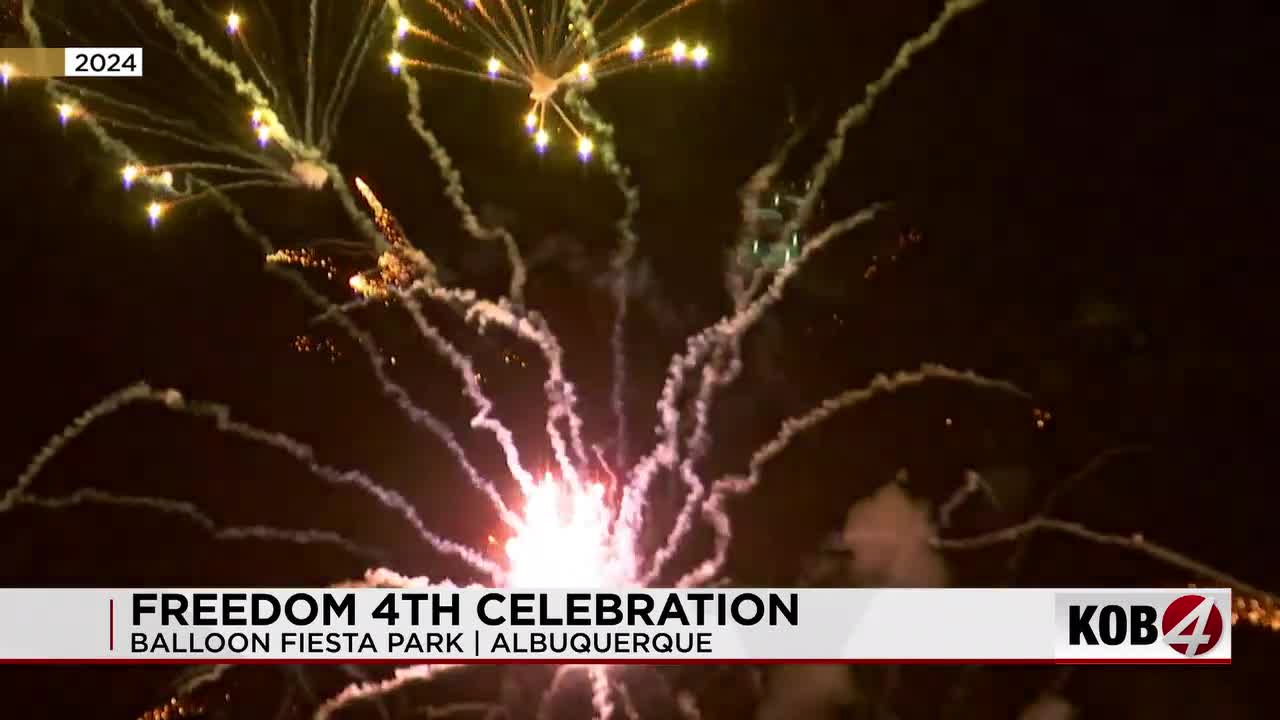
And yes, Balloon Fiesta Park, that vast expanse that usually hosts aerial acrobatics, will transmogrify. It’s currently an empty field, a tabula rasa awaiting the onslaught of vendors, attractions, — and humanity. But by Saturday, it’ll be a teeming, celebratory nexus. This sort of civic alchemy—turning open space into a temporary marketplace—is a peculiar American art form. Last year, 50,000 souls descended on Freedom Fourth, according to event organizers. City leaders expect that figure will be surpassed this year. An estimated crowd of well over 50,000 people will be clamoring for a view of the sky-high pyrotechnics. They’re even rolling out a history bus. So, families can learn something while they wait for their hot dogs.
But logistics. Always with the logistics. How do you manage a pop-up metropolis of that size? Especially one fueled by collective patriotic fervor and, let’s be honest, copious amounts of lukewarm soda and fried dough? Albuquerque Fire Rescue Chief Emily Jaramillo outlined the strategy with the dry certainty of someone who’s seen it all before, even if this particular one is a bit bigger than usual. “APD will be here, AFR, we provide EMS, we provide support for the fireworks as well, in case they’re, you know, obviously they have to come down somewhere, so we’re prepared for that in this area,” she noted, acknowledging the raw physics of falling incendiary devices. She also mentioned the park’s nominal 60,000-person capacity is often eclipsed during the actual Balloon Fiesta, implying they know a thing or two about crowd control. [QUOTE_PLACEHOLDER] One hopes these exits will be well-marked, — and perhaps even somewhat visible.
Parking, naturally, remains a distinct New Mexico nightmare. Dave Simon, CABQ Parks and Recreation Director, minced no words: [QUOTE_PLACEHOLDER] Shuttles run from a couple of far-flung spots, for a few hours. Parking at the park itself? Ten dollars. Cash or card, which is something, at least. But anyone who’s tried to leave a major American event knows that “park and ride” eventually devolves into [QUOTE_PLACEHOLDER] followed by [QUOTE_PLACEHOLDER]
And then there are the pets. Poor, anxious, sensitive creatures. While humans ooh — and aah, dogs and cats often huddle, traumatized. Carolyn Ortega, the Animal Welfare Director, offers counsel. [QUOTE_PLACEHOLDER] No pets are allowed at the event, save for service animals, which makes perfect sense. The lost pet services will be on standby—because they always are, it seems. A grim annual ritual of reunion — and recovery, parallel to the fireworks above. It’s a good, compassionate reminder of collateral damage, isn’t it?
What This Means
This immense convergence in Albuquerque, replicated in countless towns — and cities across the U.S. this weekend, isn’t merely a party. It’s a logistical exercise, a tacit agreement between populace — and municipality. It’s about how local governments—often underfunded and overstretched—manage enormous, temporary populations, funneling them, entertaining them, then dispersing them. Economically, this type of event provides a brief, intense injection for local businesses—food stalls, souvenir vendors, and transportation services all benefit from the surge. But the operational costs, the human capital required from law enforcement and emergency services, it’s all pretty staggering.
And yet, it persists. Because national holidays, even if their foundational meaning sometimes gets lost under the clamor of rock bands and exploding gunpowder, serve a purpose. They’re a pressure release valve. A collective assertion of identity. You see similar dynamics play out in places far removed from New Mexico. Take Eid celebrations in Pakistan, for example. Vast numbers of people, sometimes millions, gather for religious festivities, prayer, — and communal meals. The logistics of managing traffic, public safety, and waste in Karachi or Lahore during these events present monumental, familiar challenges for city planners and authorities. The crowd control, the sanitation, the security presence—these aren’t uniquely American problems; they’re human ones. Both the Fourth of July in Albuquerque and Eid in South Asia become immense tests of urban infrastructure and social cohesion. It forces authorities to innovate, adapt, or, in some unfortunate instances, simply brace for impact. It also highlights an economy of leisure — and shared experience. Regardless of cultural specifics, the mechanics of gathering, feasting, and watching the sky light up remain profoundly consistent across disparate geographies, cementing a sense of belonging for better or worse. But the resources to manage it aren’t always consistent.
Rio Rancho, Santa Fe, — and Los Lunas are also putting on their own displays. Santa Fe’s even got a drone show going. An intriguing sign of the times, blending old-school spectacle with new-school tech. But none of them will quite hit the numerical highs expected at Balloon Fiesta Park. Albuquerque, for its part, seems ready for the wave. Or as ready as anyone can be for 250 years of accumulated patriotism expressed through lowriders and a history bus, all ending with a bang.