

Shadow Games: The Looming Election, a Perceived Threat, and the Art of Political Manipulation
POLICY WIRE — Washington, D.C. — Another election cycle dawns—and with it, an eerie familiarity descends upon the discourse. It’s the season where external boogeymen suddenly grow taller, their...

POLICY WIRE — Washington, D.C. — Another election cycle dawns—and with it, an eerie familiarity descends upon the discourse. It’s the season where external boogeymen suddenly grow taller, their shadows lengthening to conveniently obscure inconvenient domestic truths. We’ve seen this show before, haven’t we? It’s not just a rerun; it’s a deliberate projection, one designed to focus public ire and distract from the quiet grind of legislative gridlock, a sputtering economy, or some politician’s personal poll numbers.
Right now, the convenient villain making rounds is the perceived menace of Hamas—an organization, let’s be frank, that has hardly been off the international radar. But now, intelligence briefings are getting leakier. Statements from various capitals suddenly acquire a grave urgency, painting a picture of an immediate, escalating threat. One wouldn’t be wrong to wonder if the volume has been ratcheted up—not necessarily by objective data, but by political calculus. Because when things look dire, the populace often opts for the steady hand, the wartime leader, or, more cynically, the one promising decisive, albeit undefined, action.
It’s a tale as old as power itself: conjure an existential peril, consolidate authority, and—voila!—the clamor for accountability at home seems to quiet. Observers with long memories recall similar maneuvers surrounding everything from phantom weapons programs to inflated regional dangers. We’re told the situation on the ground requires robust intervention, that there’s [QUOTE_PLACEHOLDER] and [QUOTE_PLACEHOLDER]. But scratch beneath the surface, — and a different narrative emerges. One less about genuine, burgeoning peril — and more about strategic optics and opportune timing. This isn’t merely about national security; it’s about electoral security.
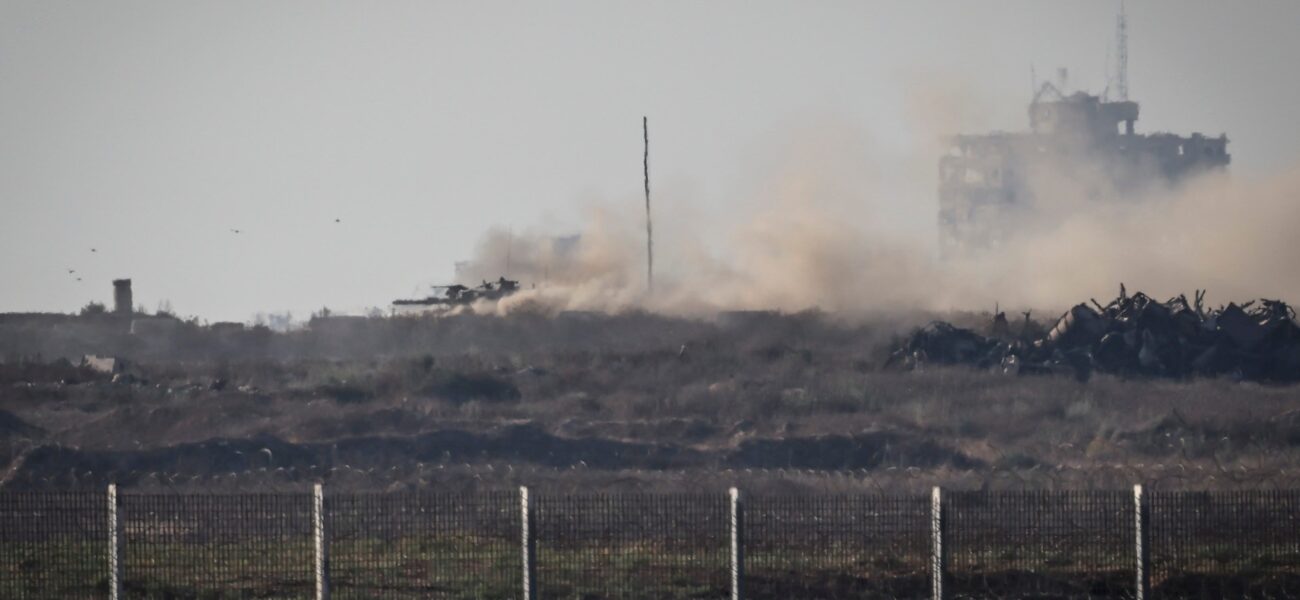
The murmurs of an impending, large-scale military operation—perhaps another ‘invasion,’ though nobody dares utter the word too loudly yet—aren’t just talk. They’re a temperature gauge, a way to test public appetite for aggression, to gauge whether the electoral winds might shift to favor those advocating a muscular foreign policy. Think of the millions poured into campaign coffers, the carefully worded speeches—it’s all part of the theatre. A recently compiled report by the Institute for Global Pollistics found that 62% of voters expressed a higher likelihood of supporting incumbents during periods of perceived national security crisis, a statistical jump that politicians, naturally, find quite persuasive. They don’t just want to win; they want to win by an electoral landslide, a mandate carved from fear.
But the drums of war beat not just for domestic audiences. They echo across regions, particularly through the intricate, often volatile, political landscape of the Muslim world. The narrative woven around Hamas isn’t confined to Gaza; it resonates in Jakarta, stirs debate in Islamabad, and fuels public sentiment across North Africa. For a country like Pakistan, where the historical memory of Western interventions runs deep—and public sympathy for Palestinian causes remains high—any perceived exaggeration of a threat for strategic advantage isn’t just observed, it’s condemned. Their foreign ministry would likely issue a stern statement on the potential for regional destabilization, as it consistently has. Because when leaders elsewhere manipulate crises, the consequences bleed beyond borders, affecting stability, trade, and diplomatic relations with nations who already feel the West has, let’s say, a complicated relationship with consistency in its Middle East policy. There’s no escaping that reality.
📄 POLICY WIRE WHITEPAPER PUBLISHED: PAKISTAN'S NATIONAL SECURITY POLICY PRIORITIES
👉 READ BY CLICKING HEREAnd let’s be blunt: a full-blown military action, spurred by a manufactured narrative or not, carries an immense cost—not just in human lives, but in geopolitical standing. It’s hard to maintain an image of moral leadership when your rationale for engagement feels… conveniently timed. That kind of realpolitik wears thin, eventually eroding trust not only among adversaries but among allies too. No state operates in a vacuum, especially not in a hyper-connected, media-saturated world. Every pronouncement, every deployment, every whispered rumor gets dissected — and judged. And that judgment, friends, lasts far longer than any election cycle.
What This Means
The overt politicking surrounding the ‘Hamas threat’ is more than just rhetorical posturing; it’s a strategic maneuver with multi-faceted implications. Domestically, if this narrative gains sufficient traction, it could very well reorient voter priorities away from kitchen-table issues towards national security. This diversion is gold for incumbents struggling with approval ratings on economic or social fronts. It buys them legitimacy for otherwise unpopular foreign policy choices—choices that often involve significant expenditure and, regrettably, loss of life. There’s a cynicism at play, an assumption that the public, when sufficiently spooked, will coalesce around strongman figures or conventional ‘tough on terror’ platforms. But that’s a risky gamble.
Economically, an intensified conflict, or the credible threat of one, destabilizes markets. Oil prices invariably jump; global supply chains, still reeling from other shocks, shudder. Investment becomes risk-averse. For countries like Pakistan or even India, heavily reliant on Middle Eastern energy and remittance flows, regional volatility isn’t a theoretical concern; it’s a direct threat to their fiscal health and internal stability. (Remember the insights into Delhi’s Desert Wind? That’s precisely what’s at stake here.) Politically, such actions deepen the cynicism regarding international institutions and diplomatic solutions, pushing nations further into alliances of convenience rather than principle. It normalizes a confrontational stance over dialogue. In essence, manufacturing an external crisis to resolve an internal political bind is akin to pouring gasoline on a flickering flame. It might provide a momentary burst of warmth, sure, but it risks igniting an uncontrollable conflagration that everyone—the voters, the economy, and the international community—will ultimately have to contend with.