

Market’s High-Wire Act: Bankers See Impending Fall from Speculative Heights
POLICY WIRE — Washington D.C., USA — Just when Main Street starts to get used to seeing stock portfolios, or retirement accounts anyway, behave like lottery tickets, Wall Street’s sober set—the folks...

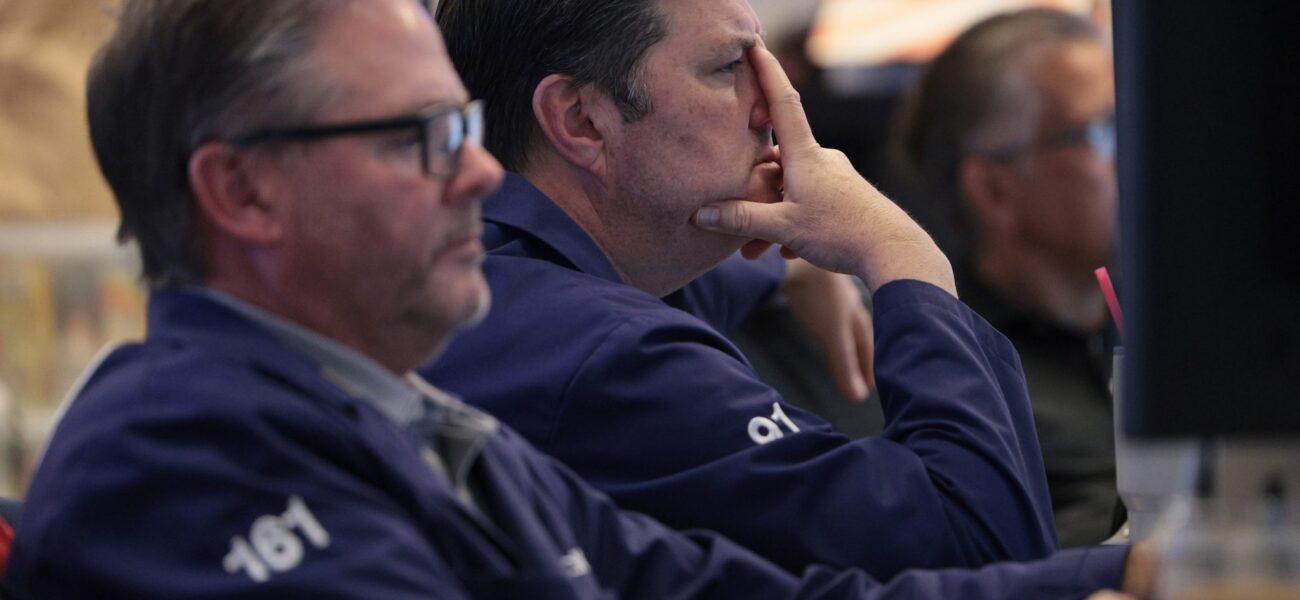
POLICY WIRE — Washington D.C., USA — Just when Main Street starts to get used to seeing stock portfolios, or retirement accounts anyway, behave like lottery tickets, Wall Street’s sober set—the folks who rarely whisper unless there’s blood on the floor—have apparently decided to clear their throats. It’s not a shout of exuberance this time. Rather, it’s a distinct murmur, suggesting that the recent dizzying ascent in equities might just be the financial equivalent of flying too close to the sun. Because, as everyone knows, what goes up, often has a rather unceremonious way of coming down.
An influential analysis, circulated among institutional heavyweights by analysts at a prominent financial institution (you know the one, Bank of America, they’re hardly new to the game), signals a rather brusque end to this year’s investment merriment. They’re projecting, with an almost clinical detachment, that the market’s current trajectory looks increasingly detached from… well, anything resembling ground-level economics. It’s got a lot of the hallmarks of irrational exuberance, that old devil. Think back to dot-coms, maybe, or housing in 2006. History, she’s a brutal teacher, isn’t she?
The contention is that the current investor sentiment is, to put it mildly, supercharged. You see it everywhere—meme stocks behaving like major market movers, retail investors piling into options with the fervor of professional gamblers, valuations straining credulity. The Street is riding a speculative wave right now, folks, and these bankers aren’t just observing it; they’re pointing at the swell and muttering about an imminent breaking point. They talk about a [QUOTE_PLACEHOLDER] for the stock market, warning it will lose much of this year’s gains. And the reason? Because [QUOTE_PLACEHOLDER], which really does say it all, doesn’t it?
It’s not just a hunch, either. Their proprietary indicators, these guys claim, are screaming red. We’re not talking about a subtle blush. We’re talking about full-on crimson. They’ve crunched numbers, peered into models that few outsiders fully grasp, — and the outcome isn’t exactly comforting. For example, the total value of speculative equity options traded by retail investors surged by 65% in the first quarter of this year compared to the five-year average, according to data compiled by Cboe Global Markets. And that’s just one piece of a much larger, potentially unstable, puzzle. These are the kinds of numbers that usually preface a rude awakening for a fair number of folks who thought they’d cracked the code.
But what does this sort of impending fiscal whiplash actually mean for people? For governments? It’s not just a Western problem, not by a long shot. Emerging economies, especially those with significant external financing needs or deep reliance on foreign direct investment, will feel the ripple effects keenly. Consider Pakistan, for instance, an economy often navigating a high-wire act of its own. Foreign currency reserves can look decent one day, then dwindle as global capital flows reverse faster than you can say ‘fiscal austerity.’ A major correction in developed markets tends to send investors scurrying for safe harbors, often pulling capital out of places perceived as riskier, even if those perceptions aren’t always fair. This sudden flight could seriously exacerbate existing balance-of-payments issues, creating intense pressure on the rupee and further straining a population already contending with considerable economic hardship. It’s not some abstract financial theory over there; it’s food on the table.
And when those major capital sources start drying up or getting significantly more expensive, countries like Pakistan might find themselves with fewer options. The political ramifications are enormous. Economic instability can quickly morph into social unrest. We’ve seen this script play out time — and again across the Global South. A hiccup on Wall Street often means a shudder in Lahore, Karachi, or Islamabad, triggering budget shortfalls and forcing governments to make even harder choices with less popular appeal.
📄 POLICY WIRE WHITEPAPER PUBLISHED: PAKISTAN'S NATIONAL SECURITY POLICY PRIORITIES
👉 READ BY CLICKING HEREWhat This Means
The pronouncements from a financial behemoth like Bank of America aren’t casual cocktail chatter; they’re market signals, however veiled. Should their prognosis materialize into a genuine [QUOTE_PLACEHOLDER] — an unceremonious deflating of equity values — it won’t be confined to investor accounts in New York or London. Because interconnectedness is the name of the global game now, isn’t it?
A significant downturn in the U.S. or European markets immediately constricts credit conditions globally. Access to capital for burgeoning enterprises — and even sovereign entities becomes pricier, if not outright unavailable. Think about the direct impact on trade flows, too. Reduced demand in affluent nations means fewer exports from countries supplying goods — and raw materials. It’s a cruel feedback loop.
And domestically, policy makers here in Washington — always walking a tightrope between stimulating growth and taming inflation — face a fresh quandary. Do they step in with supportive measures, risking accusations of bailing out irresponsible speculation, or do they allow the market to correct, potentially triggering broader economic pain? The Federal Reserve, after wrestling with inflation for so long, might find itself with an entirely new set of difficult decisions to make regarding interest rates. It’s a delicate dance, always. Meanwhile, politicians on Capitol Hill will be gearing up for a blame game of epic proportions, likely before any real solutions can be brokered. The global economy isn’t just watching, it’s holding its breath. One financial tremors here could shake the economic foundations far across the world, from Pakistan to even the shadow markets of Southeast Asia, as explored in Gucci on the Mekong: Washington Demands Authenticity from Vietnam’s Shadow Market. It’s rarely just about the ticker tape anymore; it’s about geopolitics, trade, — and ultimately, human livelihoods.