

Tremors of Despair: Venezuela’s Earthquake Exposes Deeper Fault Lines
POLICY WIRE — Caracas, Venezuela — The earth’s shudder was sudden. But for Venezuela, a nation long accustomed to instability, the aftermath of a catastrophic earthquake isn’t just about...

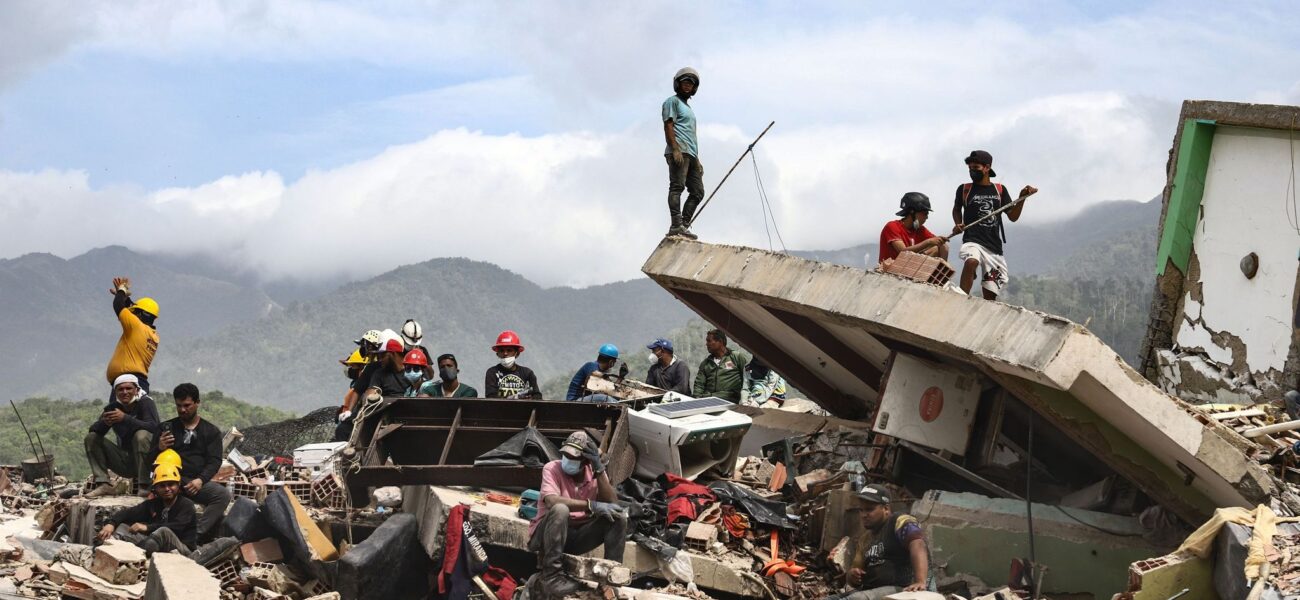
POLICY WIRE — Caracas, Venezuela — The earth’s shudder was sudden. But for Venezuela, a nation long accustomed to instability, the aftermath of a catastrophic earthquake isn’t just about cracked pavement and shattered windows. It’s about how deeply such a brute act of nature can reveal a country’s already fraying political and economic seams, making recovery not just an engineering feat but a brutal test of governance.
Initially obscured by the sheer scale of the humanitarian disaster, the rising death toll—now a grim 3,342 souls by official counts—barely scratches the surface of the upheaval. One might think a crisis of this magnitude would unify a fractured populace, prompt swift, uncomplicated international assistance. But this is Venezuela. Things are never that simple, are they? The rubble, it seems, has simply offered new contours for old grievances.
President Nicolás Maduro’s administration, already struggling with an economy that has shrunk by over 75% since 2014, finds itself facing a test far beyond its usual rhetoric. He’s projected an image of resolute leadership, of course. “We will rebuild, stronger than before,” asserted Information Minister Jorge Rodríguez, his voice unwavering during a televised address meant to calm the masses. “Our people’s spirit, hardened by adversity, won’t be broken by a natural event—it’s designed to overcome even greater challenges, those imposed by imperial aggression.”
Yet, for many, that official bravado rings hollow. Emergency services are stretched thinner than a politician’s patience. Aid organizations report logistical nightmares, from securing import permits to navigating a devastated infrastructure—much of it already dilapidated long before the earth decided to weigh in. And this isn’t just about moving supplies; it’s about trust, or the profound lack thereof, between government and an increasingly desperate citizenry. Citizens aren’t just looking for bread, they’re looking for answers. But who’s giving them?
From an international vantage point, the situation is even messier. Relief efforts, while ostensibly humanitarian, invariably become entangled in geopolitics. Consider, for a moment, how the world reacts to similar disasters. A devastating earthquake in, say, Pakistan, which has faced its own share of seismic trauma, often mobilizes a particular kind of response: an outpouring of solidarity, aid channeled through established international mechanisms, and less of the political haggling currently observed here. For countries in the Muslim world, empathy for communities displaced and grieving by natural disasters often transcends political divides, pushing aid relatively quickly to those affected.
But Venezuela’s peculiar standing—sanctions, contested leadership, allegations of human rights abuses—means even well-intentioned assistance often comes with strings, or at least a public squabble over distribution. “Our primary concern is reaching those in need, quickly and without political interference,” stated UN Under-Secretary-General for Humanitarian Affairs Martin Griffiths in a carefully worded diplomatic note, managing to critique without directly offending. “The modalities for this must be negotiated in good faith, prioritizing human lives above all else.” He knows, as everyone watching knows, what ‘negotiated in good faith’ often means when one party feels they’ve nothing left to give.
📄 POLICY WIRE WHITEPAPER PUBLISHED: PAKISTAN'S NATIONAL SECURITY POLICY PRIORITIES
👉 READ BY CLICKING HEREAnd because these complexities aren’t unique to Venezuela, the slow grind of international diplomacy through catastrophe often plays out elsewhere. Think of other resource-rich nations caught in political purgatory; they too face a distinct global hesitancy. The implicit question always hangs heavy in the air: can aid actually reach its intended recipients, or will it simply prop up a regime deemed problematic?
What This Means
The earthquake’s long-term fallout isn’t just a grim tally of the dead — and destroyed; it’s a profound destabilizer. Politically, President Maduro faces renewed pressure—from a population that expects action, from a struggling economy that can’t easily absorb reconstruction costs, and from an international community that’s likely to use aid as leverage. This event could deepen the humanitarian crisis, making a bad situation significantly worse, potentially driving further migration and internal displacement.
Economically, the country was already on its knees. Infrastructure damage, displacement of labor, and a likely reallocation of what little state resources remain towards immediate disaster relief mean that any hope for economic stabilization—let alone growth—is now pushed even further into the murky future. Investment, already shy, won’t exactly be flooding into a region deemed seismically unstable — and politically opaque. For citizens, it simply means more hardship, more uncertainty. It’s an acceleration of a decline they’ve witnessed for years. The fissures running through Venezuela aren’t just geological; they’re etched into the very fabric of its society and state, now more exposed than ever.