


Kathmandu’s Avian Alarm: Bird Flu Shutdown Sparks Old Fears in Himalayan Shadow
POLICY WIRE — Kathmandu, Nepal — First, it was just the zoo. Not a grand global stage, not a sudden collapse of industry, but the prosaic — albeit symbolically stark — closure of Kathmandu’s only...

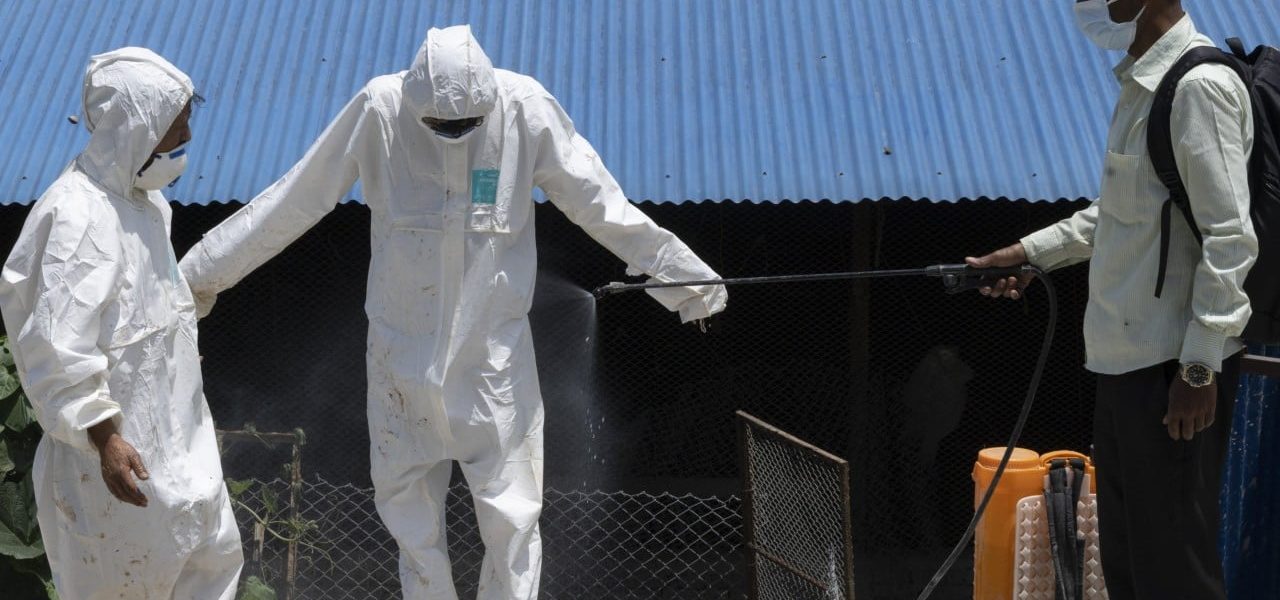
POLICY WIRE — Kathmandu, Nepal — First, it was just the zoo. Not a grand global stage, not a sudden collapse of industry, but the prosaic — albeit symbolically stark — closure of Kathmandu’s only zoo, quietly signalling a deeper, unsettling alarm across the tranquil valley. Behind the locked gates and hushed exhibits lies the relentless spread of an H5N1 bird flu outbreak, an escalating concern that’s now forcing Nepalese authorities into grim arithmetic, far removed from the capital’s usual tourist bustle. It’s a sobering reminder of how seemingly contained biological skirmishes can morph into larger geopolitical shadows, particularly in regions where dense populations and interconnected trade routes create fertile ground for viral opportunism.
More than 600,000 birds have been culled, official figures from Nepalese authorities confirm, their lives extinguished in an effort to contain a microscopic adversary that cares little for borders or economic stability. That’s a staggering figure, especially when you factor in the roughly 1 million eggs destroyed alongside them. It’s an intervention of last resort, a blunt instrument wielded against a pervasive threat. And it speaks volumes about the level of panic percolating through public health circles here.
The biological contagion didn’t arrive out of nowhere, of course. [QUOTE_PLACEHOLDER] – an eastern flicker, initially, that many hoped would stay geographically isolated. But it didn’t. By mid-June, the virus was [QUOTE_PLACEHOLDER] right into the heart of the capital, and that’s when the low-level hum of concern ratcheted up into something more urgent. [QUOTE_PLACEHOLDER] across the region have been affected, forcing farmers into economic ruin as their livelihoods are reduced to ashes and disinfectants.
This isn’t merely an economic headache for poultry farmers, nor just a sad story about culled chickens. It’s far more unsettling than that. Scientists and public health professionals worldwide are watching Nepal with bated breath, their primary dread articulated bluntly: the virus’ potential to mutate into a form transmissible between humans. It’s a phrase that triggers collective shivers, a memory not yet faded from the global consciousness. And yes, such a transformation [QUOTE_PLACEHOLDER] to unprecedented levels, making containment efforts—however drastic—appear painfully inadequate should the pathogen take that evolutionary leap. The implications, quite frankly, are terrifying.
Nepal, a country known more for its spiritual peaks than its public health crises, now finds itself on an epidemiologic knife-edge. The density of the Kathmandu Valley, its relatively close proximity to the animal farming operations that dot the South Asian landscape, creates a particularly vulnerable matrix. You can’t ignore the region’s interconnectedness either; India, a behemoth with its own population pressures and livestock challenges, looms large to the south. And, for that matter, China to the north. These aren’t isolated incidents anymore; they’re dots on a much larger map, sketching out potential pathways for pathogens to hitch a ride across continents. The shadow of previous pandemic scares, including H5N1 in other parts of Asia, hangs heavy. It’s why this small nation’s troubles reverberate beyond its immediate frontiers, tapping into a global collective unconscious about biological security.
What This Means
This avian flu surge in Nepal isn’t just about chickens or public health. Not at all. It carries with it potent economic — and political ripples, both regionally and potentially beyond. For Nepal, it’s a direct blow to its rural economy, disproportionately impacting the farmers and small-scale entrepreneurs who often operate on razor-thin margins. The destruction of millions of eggs and hundreds of thousands of birds translates directly into lost income, diminished food security, and an urgent demand on an already strained national budget for compensation and containment measures. This isn’t just culling livestock; it’s gutting family livelihoods. And those impacts, while local, can fuel instability.
📄 POLICY WIRE WHITEPAPER PUBLISHED: PAKISTAN'S NATIONAL SECURITY POLICY PRIORITIES
👉 READ BY CLICKING HEREPolitically, the handling of this crisis will test the Nepalese government’s capacity for rapid response and public trust. Bureaucratic inefficiency, delays in compensation, or perceived mismanagement could easily erode confidence. It’s also a sobering bellwether for wider South Asia, where similar agricultural practices and population densities exist. We’ve seen in the past how health crises become catalysts for diplomatic tension and economic protectionism—think border closures, trade restrictions, and increased surveillance. Should this H5N1 strain make that jump to humans, the economic consequences would quickly eclipse the current local poultry losses, plunging global markets into uncertainty, disrupting supply chains, and perhaps even affecting travel, as we’ve learned far too well from recent memory.
And yes, for the broader Muslim world, particularly in countries with significant poultry industries or migrant populations from South Asia, vigilance becomes key. Health agencies in nations like Pakistan or Bangladesh would undoubtedly elevate their monitoring, understanding that such viruses don’t respect religious or national boundaries, moving with people and goods. An interconnected world means a local disease can become a regional, or even global, crisis at frightening speed. This latest outbreak, centered around Kathmandu’s once-tranquil zoo, offers a stark, unflinching look at just how tenuous our collective biosecurity truly is. It’s a reminder we ignore at our peril, especially with how quickly these sorts of things can escalate. We just can’t afford to be complacent, can we? The virus, you see, isn’t waiting around for us to catch up.
For more on regional digital transformation, see Silent Screens, Loud Profits: How India’s Digital Embrace Remaps Global Finance. For another perspective on border issues and human stories, explore Texas Bureaucracy Baffles: Nun in Habit Intercepted by ICE on Church Walk.