

Concrete Cowboys: Bronx Rodeo Revelry Reveals Urban Grit, Shifting Sands of Spectacle
POLICY WIRE — New York City, USA — Not every stampede happens on Wall Street, and not every spectacle requires a Broadway marquee. Sometimes, it’s a bull, snorting and agitated, briefly asserting...

POLICY WIRE — New York City, USA — Not every stampede happens on Wall Street, and not every spectacle requires a Broadway marquee. Sometimes, it’s a bull, snorting and agitated, briefly asserting dominance over a surprisingly urban patch of ground, even if that ground happens to be in the Bronx. This ain’t some sepia-toned tableau from the Wild West, you see. It’s New York, and its relationship with raw, unvarnished entertainment keeps getting—well, let’s call it ‘complicated.’
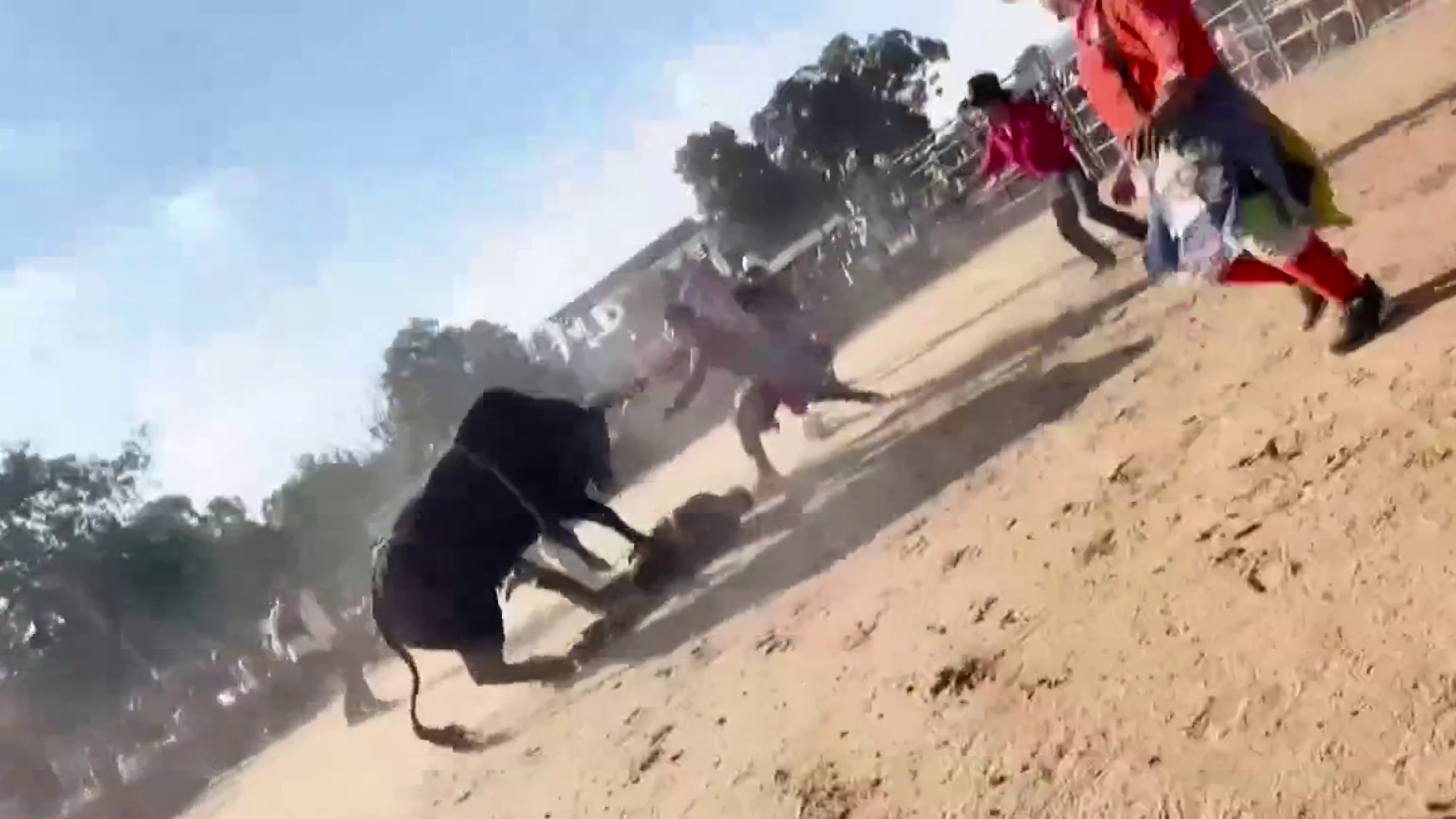
An event recently caught the city’s notoriously fickle attention: a bull rider, abruptly parted from his animal companion and then introduced to the unyielding earth—not gently—at a rodeo event tucked into the urban fabric of the Bronx. A rather vivid account, video shows bull rider tossed and trampled at Bronx rodeo. One moment you’ve got a man defying gravity, a blur of muscle — and bravado, and the next, he’s just part of the dirt. And this happens right in a borough where concrete rules, where skyscrapers blot out the horizons cowboys used to gaze upon. It’s a curious contrast, isn’t it? The sheer audacity of it, to bring an activity so deeply ingrained in America’s frontier mythology to a place that represents its hyper-modern, cosmopolitan antithesis. [QUOTE_PLACEHOLDER]
You’ve got to hand it to the organizers, though. They’ve managed to carve out a niche, attracting crowds hungry for something a bit rougher than a Yankee game, something with more raw, unpredictable energy than a concert at Orchard Beach. It’s a primal sort of pull, watching a human — and an animal engage in that ancient contest of wills. But there are lines, aren’t there? Lines between thrill — and unnecessary risk, between tradition and mere spectacle. The incident, predictably, fueled conversations. Not about agricultural policy or land rights—this is New York, after all—but about animal welfare and the sometimes-murky ethics of commercial entertainment.
It brings up a good point about cultural adaptations, how traditions bend, sometimes even break, under the pressure of new environments. Here, we’re witnessing a distinctly American rural tradition wrestling with the concrete jungle. Consider, for a moment, how different cultures interpret human-animal interactions for public consumption. In many parts of the Muslim world, particularly in South Asia, like Pakistan, certain annual events involve animal sacrifice—Eid al-Adha, for example—a profoundly spiritual, deeply ingrained practice, yet often misunderstood or even viewed with disdain by those outside the cultural context. But it’s generally not framed as pure entertainment in the same vein as a bull ride. Here, the element of calculated danger, the sheer bravado of the cowboy, transforms an agrarian skill into a full-blown gladiatorial show. And that distinction matters.
But how do these events even land in a borough like the Bronx? Economic opportunity, mostly. There’s a demographic there, certainly, that craves the kind of escapism these spectacles provide. It’s not just working-class urbanites; it’s families, it’s kids. It’s people looking for something loud, something real, something that makes you grip the edge of your seat. And, according to a recent survey by EventBrite, ‘regional cultural events’ like rodeos in non-traditional urban settings saw a 12% increase in attendance last year, suggesting a broader appetite for these kinds of raw, ‘authentic’ experiences. The financial implications for the organizers, for vendors, for the local businesses that benefit from the influx of attendees? They’re considerable, believe it or not.
These sorts of events also serve as a peculiar kind of cultural anchor for a population that sometimes feels adrift from the country’s broader narrative. Maybe they grew up with a different vision of America than what the city portrays. And perhaps it’s why these rough-and-tumble showcases find a surprisingly resilient foothold here. It’s a taste of a different life, an echo of simpler, if no less dangerous, times. It’s certainly not for everyone—but you don’t put on a rodeo for ‘everyone.’ You put it on for those who understand the language of the dust, the roar of the crowd, and the brief, breathtaking struggle between man and beast.
What This Means
The persistence and, frankly, the burgeoning popularity of events like a rodeo in the heart of the Bronx aren’t just about entertainment. They’re a telling symptom of broader cultural shifts — and economic realities. For one, it highlights the increasingly segmented nature of urban life, where subcultures thrive, carving out spaces for practices that might seem anomalous in their surroundings. It suggests a burgeoning demand for ‘authentic’ or ‘traditional’ experiences, a counter-narrative to the polished, digital-first world many city dwellers inhabit. You can’t just scroll past a 2,000-pound animal trying to unseat a cowboy, can you?
Economically, it points to savvy entrepreneurship identifying niche markets within dense urban populations. Organizers aren’t just selling tickets; they’re selling an identity, a brief foray into an imagined Americana, making money off a blend of nostalgia and genuine thrill-seeking. And we’re seeing more of this—concerts in abandoned warehouses, pop-up wrestling matches in unexpected locales. But there’s also a subtle political undercurrent. Such events often appeal to demographics that feel overlooked by elite cultural institutions, people looking for straightforward narratives rather than complex artistic interpretations. The directness of a man versus a bull offers clarity, perhaps even a visceral reassurance, in an increasingly muddled world. This isn’t a political rally, not overtly. But it’s about identity, — and where identities collide, there are always politics.
It’s not just an isolated incident; it’s a symptom. The fact is, in sprawling, polyglot cities like New York, every corner has its own pulse, its own desires. The bull, in its unintended display of defiance, merely underscored that reality. Whether this constitutes genuine cultural integration or simply profitable novelty, well, that’s still being sorted out in the arenas—both literal and figurative—of New York City. The concrete still watches, unimpressed, but the crowd keeps coming.