


Red Bull’s Aerial Antics: When High-Stakes Innovation Leaves a Champion Flailing
POLICY WIRE — Silverstone, UK — Max Verstappen, arguably the sport’s most fiercely talented wheelman, doesn’t often find himself musing about existential safety — not at 200 miles per hour,...

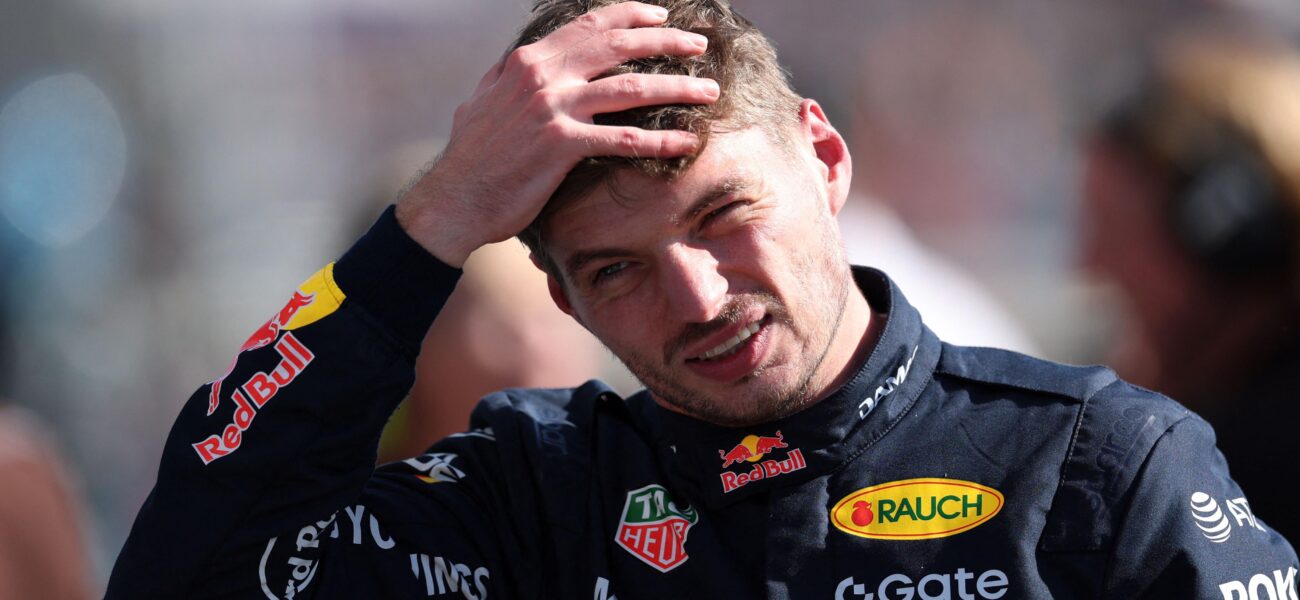
POLICY WIRE — Silverstone, UK — Max Verstappen, arguably the sport’s most fiercely talented wheelman, doesn’t often find himself musing about existential safety — not at 200 miles per hour, anyway. Yet, here we’re. He’s out there, wrestling with a recalcitrant machine that’s trying its level best to eject him into the scenery. Twice. Red Bull’s aggressive pursuit of aerodynamic supremacy, it seems, has developed a rather unfortunate habit of literally throwing its prize asset into a high-speed pirouette.
It’s not often a driver labels his own car, built by one of Formula One’s most celebrated engineering outfits, “super-dangerous.” But after a repeat performance of a rear wing failure – first in Austria, then spectacularly at Silverstone’s Stowe corner during the British Grand Prix – Verstappen didn’t mince words. This isn’t a flat tire or a blown engine. It’s an aerodynamic appendage designed for precise control, opting for an impromptu breakdance when he most needs it locked down. Just imagine. And it’s leaving him exasperated, understandably so.
“It’s super-dangerous because you can really hurt yourself two times,” Verstappen reportedly vented post-race, the kind of blunt honesty that rarely filters through the corporate sheen of F1 PR. “I was lucky in Austria, I was lucky here. That’s why you get really fed up with it.” His words aren’t just racer-speak; they’re a stark warning shot across the bow of what happens when the relentless quest for milliseconds shoves engineering safety into a grey area.
The core problem lies in Red Bull’s avant-garde approach to the drag reduction system (DRS). While most teams use a simpler, vertically opening flap, Red Bull—and Ferrari, though their iteration hasn’t proved quite so temperamental—designed a wing that rotates back and forth. The idea? More aggressive drag reduction, greater straight-line velocity. The execution, apparently, occasionally allows the wing to refuse to properly re-engage, shedding downforce faster than a politician sheds inconvenient promises. “Different fault but same outcome,” Verstappen observed, ever so drily, referring to the back-to-back mishaps. “While turning in, the rear wing is not fully attaching and you lose a lot of downforce and just spin off.” Simple physics. Brutal consequences.
Because let’s be real, a champion like Verstappen isn’t just battling rival teams; he’s fighting his own machinery. He finished a mere second in Austria, then the Silverstone drama. These aren’t the high-water marks for a man contracted to Red Bull through 2028, with contract clauses that reportedly allow him to bolt if things truly unravel. He currently languishes in seventh place in the championship, a stunning 103 points behind leader Kimi Antonelli of Mercedes after only nine races. That’s a gaping chasm, one fueled by the three retirements his car has forced upon him already this season, a statistical reality highlighted by official F1 records. It speaks volumes.
“I would be a very zen person to be optimistic at the moment with what happened again this weekend,” Verstappen deadpanned, dripping with irony. “I’m sorry, but it’s just like that. I mean, I need a few days, I think, to reset — and try again. Everyone is trying their best. I’m not blaming one person or whatever. It’s just painful for everyone, you know, that this has happened. I want to just finish races, first of all. That would be nice. At the moment, too many things go wrong. It’s as simple as that. Not even speaking about pace.” It’s a cri de cœur from a driver who just wants to drive.
📄 POLICY WIRE WHITEPAPER PUBLISHED: PAKISTAN'S NATIONAL SECURITY POLICY PRIORITIES
👉 READ BY CLICKING HERERed Bull team principal Laurent Mekies isn’t exactly dancing jigs either. He admits his star driver’s frustration is warranted. “He’s right not to be happy,” Mekies conceded. “It’s very unpleasant for drivers to be let down by the car in the high-speed corners in two consecutive races, let it be for two different reasons. And it’s in a much lower scale, also extremely unpleasant for us as a group to send our drivers to the gravel trap.” The corporate language doesn’t mask the grim reality. They’re betting on complex tech, — and that tech’s not always paying off. He promised fixes. We’ll see. You’ve got to, haven’t you?
What This Means
This technical fiasco isn’t just about lap times; it’s a policy case study in risk management, resource allocation, and the unforeseen political implications of chasing the technological edge. On one hand, Red Bull pushes boundaries—innovating is often celebrated as progress. But at what cost? When cutting-edge design compromises fundamental safety — and trust, you’ve got a problem. For F1, a sport whose global appeal rivals that of cricket in regions like Pakistan, this kind of visible technical breakdown erodes faith. Not just in a single team, but perhaps in the sport’s meticulous engineering image. When economic giants falter, as we’ve seen in other sectors, the echoes ripple globally.
Consider the broader metaphor for policy-makers in emerging economies, say across South Asia or the Muslim world, often keen to leapfrog development with ambitious, untested technological solutions. The allure of speed, efficiency, or competitive advantage often obscures the potential for catastrophic failure if proper testing, safeguards, and backup plans aren’t absolutely locked down. A nation’s critical infrastructure — from transportation to energy grids — built on similarly experimental foundations, could face far graver outcomes than a mere race retirement. And these incidents spotlight the increasing pressure on high-performing entities, be they race teams or nations, where even minor defects in highly integrated systems can derail grand strategies and lead to disproportionate political fallout. Verstappen’s contract clauses, his reported talks with Mercedes and McLaren, suggest that even a titan won’t stick around if the promised engineering brilliance keeps short-circuiting his own ambitions. It’s a reminder: innovation needs stability. Otherwise, it’s just a gamble, plain — and simple.