

Taliban’s Drone Claims: A Propaganda Play
Unpack the Taliban's drone claims, revealing a propaganda campaign to divert attention from terror sanctuaries. Discover how their false assertions damage credibility.

For some time now, the general public has been seeing that the Afghan Taliban have found different ways to stay in the media headlines. It seems they enjoy being in the spotlight. But simply making headlines does not matter. What really matters is your credibility and the reason why people are talking about you. Instead of protecting their reputation, the Taliban regime keeps bringing every issue into the media and only exposes its own poor judgment. In doing so, it is damaging its credibility and making itself look unreliable in front of the world.
A recent example came after the Karachi attack. When Pakistan responded by launching intelligence-based operations against the hideouts of Afghan terrorists, the Taliban came up with a new story to justify their failure.
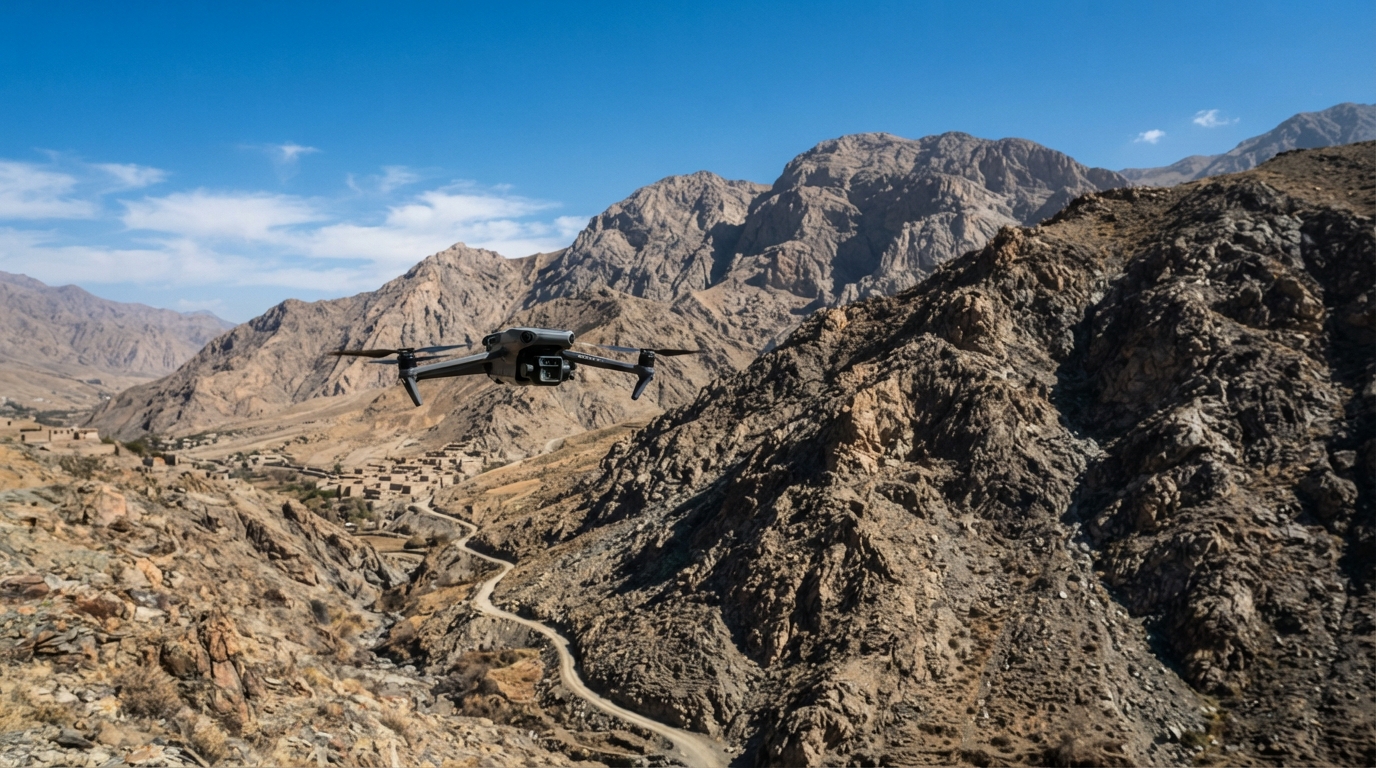
They tried to hide this failure with a false and highly unrealistic claim. They said that Afghanistan had used drones to target Daesh hideouts inside Pakistan in Balochistan and Khyber Pakhtunkhwa. On paper, this sounds dramatic and heroic. In reality, however, the Taliban regime has only made itself look less credible in the eyes of the international community.
The Taliban did not carry out any precision military operation. According to the official statement issued by the ISPR, the Taliban’s claims of launching attacks across the border are false. The Pakistani military said that the Taliban sent four basic drones which were intercepted and shot down at the border before they could cause any damage.
Based on Pakistan’s official statement released by ISPR, which I find credible, the Taliban did not carry out a carefully planned military strike. Instead, they staged a symbolic act that had a bigger impact on social media than on the battlefield. This difference is important because it separates military facts from propaganda.
Manufacturing the Appearance of Strength
For almost five years, the Taliban regime has been telling the world that Afghan territory has never been used to support terrorists and that Afghanistan does not pose a threat to any neighboring country. However, several international reports, including those by the UN Security Council’s Analytical Support and Sanctions Monitoring Team, have repeatedly stated that Fitna al Khawarij has hideouts inside Afghanistan. Pakistan has been raising this concern for years, and now international organizations are also acknowledging it.
These reports have repeatedly concluded that the FAK enjoys operational freedom, training facilities, and ideological support from the Afghan Taliban leadership. In addition, the recent surge of terror activities within Pakistan during the past two years has further exacerbated Islamabad’s worries.
In this context, the unexpected assertion made by the Taliban regarding its involvement in the attacks on Daesh in Pakistan using drones seems more like a propaganda campaign than anything else. Rather than addressing the long-standing questions of terror sanctuaries in Afghanistan, the Taliban diverted the attention to Pakistan.
A Familiar Information Strategy
In 2026, Pakistan chose a different course. It engaged the international community and launched intelligence-based cross-border operations against terrorists using Afghanistan as a base for their activities. The international community started looking into these issues, and now the question arises: Why are the internationally-designated terrorist organizations allowed to operate from Afghan soil? Why are these hideouts allowed? And why is the Taliban government refusing to act on these allegations instead of dealing with them?
This was the time when the Taliban should have acted to dispel these charges with facts. Instead, it seemed that it was adopting a policy of narrative shift. One of such incidents is the Taliban’s allegation about hideouts of terrorists in Pakistan.
When Pakistan accuses Afghanistan of having hideouts of terrorists, Afghanistan makes the same charge against Pakistan.
When Pakistan engages in military action against terrorists, Afghanistan makes the same allegations about Pakistan doing that. But the fact is that narrative symmetry doesn’t make two situations equally real.
There is also no independent proof of the claims made by the Taliban. The reports on the announcement made by the Taliban clearly indicated that the alleged attacks could not be independently verified. On the other hand, the officials in Pakistan found evidence of debris but no proof of attacks on terrorist bases. This is an important discrepancy between the claims and independently verifiable facts.
Performance Over Precision
As it is now understandable that modern conflicts are no longer fought only on the battlefield. They are also fought through information campaigns that are meant to influence public opinion as much as military opponents. That is exactly what appears to have happened in this case. The Taliban quickly claimed that it had carried out successful precision drone strikes. It said that terrorist hideouts had been destroyed without causing civilian casualties.
Pakistan’s military gave a very different account. According to the ISPR, the incident was an unsuccessful cross-border drone attempt. The four basic drones were intercepted and brought down at the border before they could cause any damage. These two competing versions show that this is not only a military issue but also a battle over public perception.
The Taliban cannot match Pakistan’s conventional military strength, and this is a fact. As a result, it has a strong incentive to project power through information campaigns. Claiming successful retaliatory operations will neither strengthen its image at home nor convince others that it is a capable military force. It will not even shift attention away from growing questions about Afghanistan’s security situation. However, media narratives cannot replace real military capability ultimately. This is the peak time Afghan Taliban should reconsider their strategy now. Instead of propaganda and media highlights seeking, Taliban should work on root problems first.
Author