


McMorrow’s Exit: Michigan Senate Race Throws Democrats a Curveball
POLICY WIRE — Lansing, United States — It’s often the quiet decisions, made behind closed doors with hushed conversations and the tapping of delete keys, that shake political landscapes with the most...

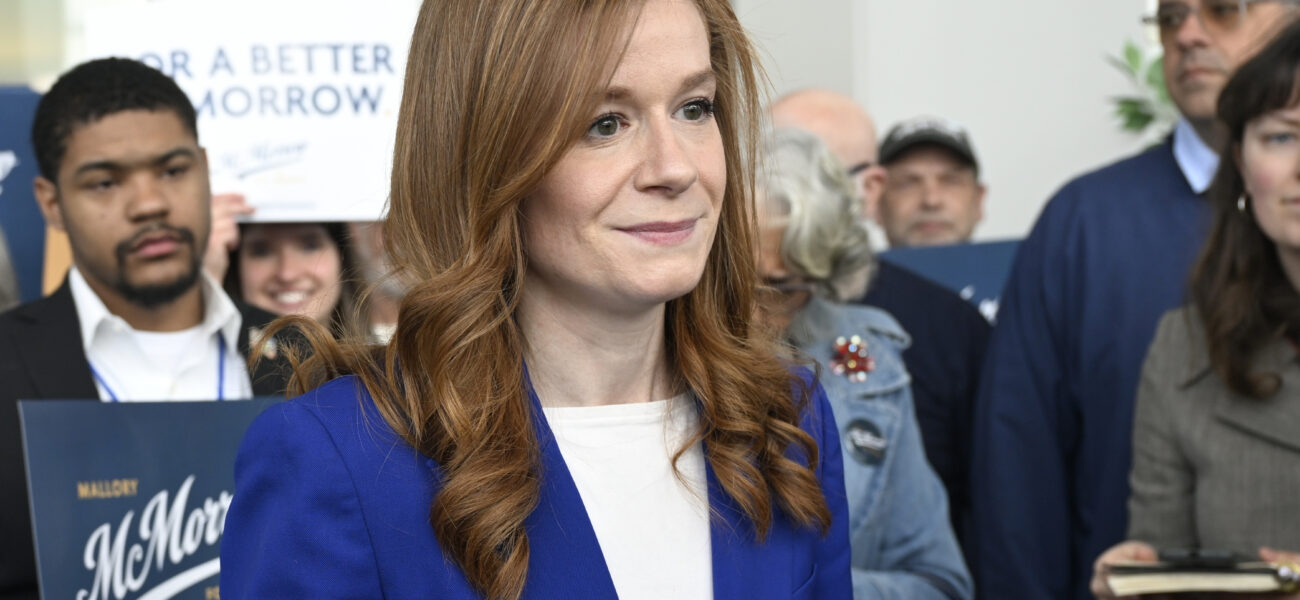
POLICY WIRE — Lansing, United States — It’s often the quiet decisions, made behind closed doors with hushed conversations and the tapping of delete keys, that shake political landscapes with the most unexpected force. This week, Michigan’s fiercely contested Senate race got precisely that kind of seismic jolt. No fiery debate, no dramatic rally — just an email, terse and definitive, announcing Democrat Mallory McMorrow’s abrupt suspension of her campaign. The race for Michigan’s open Senate seat, already a top-tier battleground, now feels like a freshly stirred pot of stew, ingredients still settling in unpredictable ways.
Her exit, for many insiders, wasn’t just a candidate dropping out. It’s a statement. McMorrow, the state senator whose 2022 viral floor speech on parental rights against Republican attacks propelled her into the national progressive spotlight, was seen by many as a formidable contender. Not just because of her social media reach—which is considerable—but because she represented a newer, more confrontational strain of Democratic politics. She wasn’t just fundraising; she was animating. Now, she’s gone. Poof. And the whole thing makes you wonder what, exactly, pushed such a high-profile figure off the field so early.
“This was a tough call, no doubt, but Mallory’s commitment to Michigan? It hasn’t wavered,” remarked Samuel Adams, Chair of the Michigan Democratic Party, in a statement designed to project calm amidst the chaos. “We’ll rally, because the stakes are just too high to do anything else.” It’s boilerplate, really, but the tremor underneath is palpable. They’ve just lost one of their most charismatic voices in a cycle that needs every decibel of energy it can muster.
Her statement cited personal reasons, a narrative that always gets scrutinized with an extra layer of cynicism in politics. But even if it’s entirely true (and who’s to say it isn’t?), the practical effect remains: a void where a well-recognized name, and more importantly, a well-funded campaign, used to be. The battle for the heartland just got a bit more complicated for a party already fighting uphill against a well-organized Republican machine. And Michigan, being Michigan—a bona fide swing state, mind you—is where presidential aspirations often live or die. A shift here, no matter how small, sends shivers up many spines in Washington, D.C.
But what does this signal for the wider political currents? Political science professor Dr. Evelyn Price, from Michigan State University, mused, “It certainly complicates the picture for the Democrats. You’ve got a rising star opting out. That creates a vacuum, — and history tells us vacuums don’t stay empty for long.” She’s got a point. Suddenly, the bench looks a little less deep, the path forward a little less clear. It also puts intense pressure on remaining candidates, forcing them to raise their game, or find themselves swamped.
Consider, too, the global resonance. In an increasingly interconnected world, where democracies grapple with populist waves and external influences (as explored in pieces like “Inside the Security Briefing on Kashmir and Regional Stability”), a stable, functional democracy in a place like the United States isn’t just good for Americans. It projects strength, — and provides a counter-narrative to those who would see liberal democracy fail. A seemingly internal campaign shuffle in Michigan might seem minor, but it’s part of a larger, messy picture. The kind of internal volatility McMorrow’s departure suggests can sometimes be read abroad as a lack of cohesive vision—not just in Michigan, but potentially higher up the chain.
📄 POLICY WIRE WHITEPAPER PUBLISHED: PAKISTAN'S NATIONAL SECURITY POLICY PRIORITIES
👉 READ BY CLICKING HEREAnd let’s not forget the demographics. Michigan has a sizable Arab and Muslim American population, concentrated heavily in places like Dearborn, whose votes often swing crucial elections. Their engagement, their perceived representation, it’s all tied to who’s on the ballot and how energized the campaign feels. Any perceived setback, any loss of momentum for a candidate who appeals to broader progressive ideals—even if not directly catering to these communities—can subtly depress turnout. A complex global chessboard means even local changes ripple.
Because ultimately, this isn’t just about one politician’s journey. It’s about the battle for narratives, for the very soul of the state. It’s about control. Michigan is one of just 20 states in the U.S. where one political party (in this case, Democrats) currently holds the governorship and both legislative chambers, according to Bridge Michigan. A Senate seat flips, — and that razor-thin majority at the federal level could wobble. Every piece matters. Every candidate, until they’re not, carries immense weight.
What This Means
McMorrow’s departure casts a long shadow. For Democrats, it means a potentially messy primary. Don’t think for a second the party will simply cede this open seat, but they’re now scrambling for a consensus candidate, or at least a strong one, without the clear runway McMorrow might have offered. It opens the door wider for a host of lesser-known or less-resourced contenders, injecting an element of unpredictable chaos that party strategists simply detest. That kind of open-field melee can drain resources, leave scars, and ultimately weaken the eventual nominee heading into the general election.
On the Republican side, this is—plain and simple—an opportunity. It’s a moment of weakness, a perceived stumble, that their campaigns will immediately exploit. They’ll redouble their efforts, sensing blood in the water. Economically, a change in federal representation from Michigan could influence everything from auto industry policy to trade agreements, given the state’s industrial heft. For Michigan voters, it’s a stark reminder of the often-personal toll of public service, and the relentless, grinding nature of modern campaigns. But it’s also a test: can the system adapt, re-energize, and find a new standard-bearer without losing sight of the broader fight? Only time, — and a whole lot of political arm-twisting, will tell.