


Boston’s Fickle Faith: Red Sox Sweep Offers Fleeting Hope, Deeper Questions
POLICY WIRE — Boston, USA — A baseball game, really, isn’t just a baseball game. Not when you’re talking about Fenway Park, not when you’re talking about a rivalry with the Yankees, and definitely...

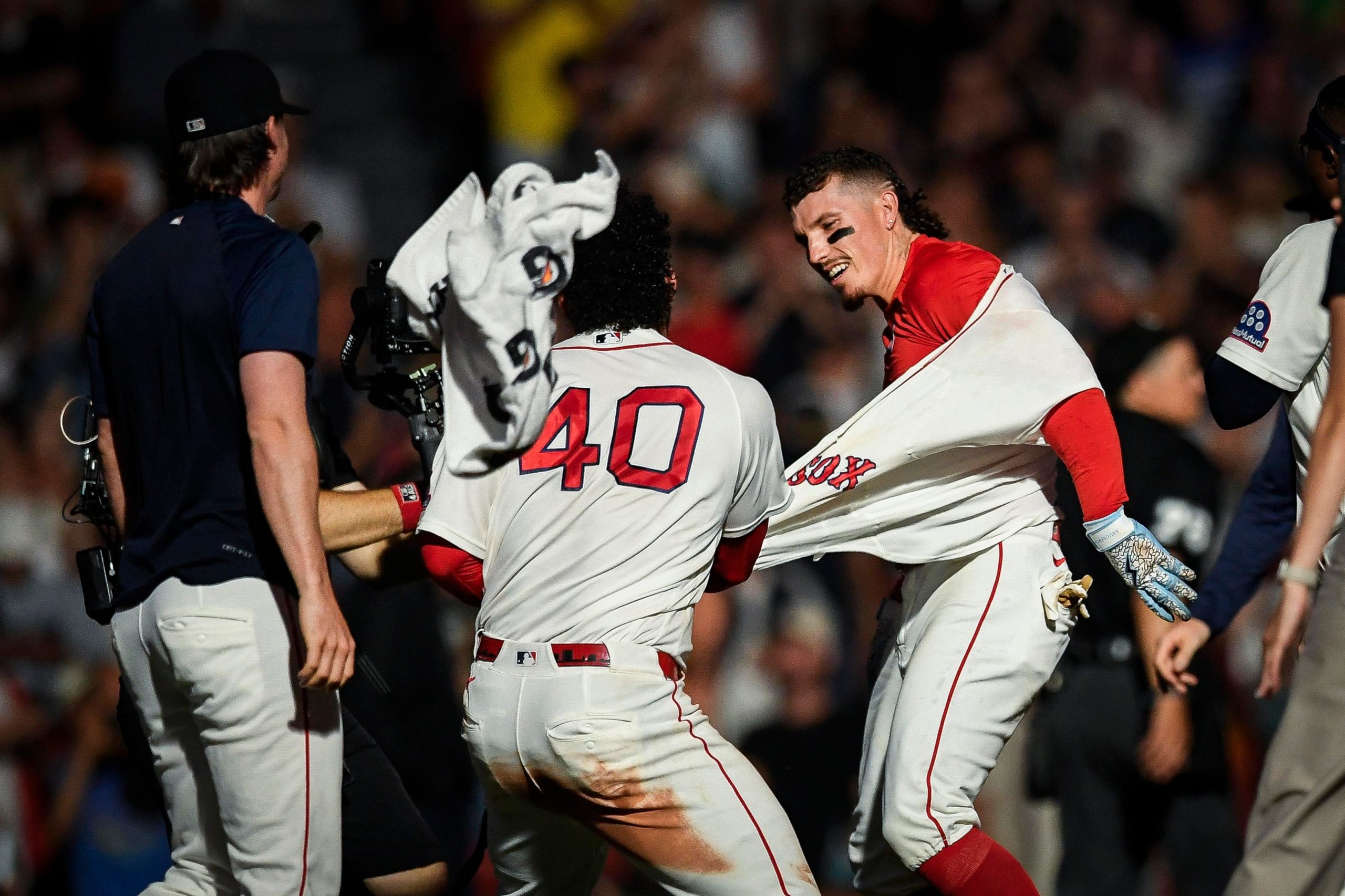
POLICY WIRE — Boston, USA — A baseball game, really, isn’t just a baseball game. Not when you’re talking about Fenway Park, not when you’re talking about a rivalry with the Yankees, and definitely not when you’re talking about Boston’s perpetually fluctuating civic psyche. For nearly four hours on a temperate Friday evening, the city collectively — and conveniently — forgot that its beloved Red Sox are, by objective metrics, still quite bad. But then, Jarren Duran hit a ball, Fenway erupted, and for a glorious, brief moment, none of that really mattered. They’d swept the Yankees. Again.
It was a madhouse, frankly. A fever dream of dropped balls, bullpen gambles, and one singularly ill-advised proposal for marriage in enemy territory (who does that, seriously?). Boston wasn’t just celebrating a win; they were, in that uniquely human way, celebrating their ability to forget the larger, grittier reality. The squad, despite the emotional high, still hovers ten games below the .500 mark, a statistic plainly etched into Major League Baseball records that no walk-off magic can erase long-term. But try telling that to anyone leaving the park.
And that’s the thing, isn’t it? The spectacle itself becomes the point. Sonny Gray, pitching for the visitors, came tantalizingly close to history, carrying a no-hitter into the eighth inning. You could practically taste the collective anxiety and then the disappointment from the Yankees’ dugout when it evaporated. His fastballs — and cutters were working, he had a crazy high strike rate, but fatigue, as it always does, set in. His demise opened the door to a chaotic bottom of the ninth that saw the Red Sox snatching back a game they had absolutely no business still being in, capped off by Tsung-Che Cheng’s career-defining RBI sac fly to tie things up. Caleb Durbin, by the way, continues his sneaky hot streak. Two more RBIs — and a couple of stolen bases. He’s earning his keep, it seems, belatedly.
Then came the extra innings, the kind of baseball that sends cardiac surgeons into an early retirement. Wilyer Abreu, God bless him, had an absolute horror show of a night in right field, missing a potential double play ball in the tenth after an equally ghastly play in the ninth that helped the Yankees score. But don’t look now: Duran’s dramatic hit made all of it, every single miscue — and anxious gasp, completely disappear. People cheered; they hugged. They high-fived total strangers. The primal human need for a shared victory, a simple, unambiguous good thing, got met.
“Moments like these—they transcend mere sport,” observed Massachusetts Governor Maura Healey, offering a characteristically measured statement post-game. “They remind us of the strength of community, of our resilience. Boston certainly needed that lift tonight, especially after such a demanding week on other fronts.” And she wasn’t wrong. Because in a world perpetually buzzing with urgent, existential threats—from economic fluctuations to regional instability far, far from these shores—there’s an enduring, if temporary, balm in baseball’s uncomplicated triumph.
But can we sustain this collective delusion? For some, this Red Sox resurgence (or lack thereof, if you consider the standings) feels like a microcosm of a nation grappling with its own competitive standing. “These sudden bursts of euphoria often mask deeper, structural issues,” noted Dr. Imran Hussain, a senior fellow at the Center for Global Studies, referencing parallels seen in unpredictable global markets. “They offer an escape, certainly. But it’s a delicate balance between escapism — and acknowledging realities.” Dr. Hussain also pointed to how global populations, like those across Pakistan and the broader South Asian diaspora, find similar unifying solace in their own beloved sports, be it cricket or local leagues, a crucial emotional anchor when global headlines frequently pull focus to dire, geopolitical affairs. The emotional investment in a game of bat and ball isn’t just an American phenomenon; it’s a human one, a consistent element across continents and cultures, demonstrating the subtle deployment of American cultural influence through sport.
What This Means
This isn’t just about baseball; it’s about optics — and economic energy. A Red Sox win, especially against the Yankees, pumps instant cash into the local economy – a rush of celebratory spending on concessions, merchandise, and post-game libations. That’s a tangible, albeit ephemeral, boost for the small businesses clinging to the periphery of Fenway. But beyond the cash registers, it’s also a powerful, if transient, anesthetic against anxieties. You’ve got to wonder how much that matters in maintaining public morale, particularly for a city like Boston, often a bellwether for regional sentiment. And yet, this particular iteration of a ‘dynasty’ – if you can call it that – seems to lack the sustained competitive bite necessary to avoid predictable narratives often found in competitive frameworks. Don’t dismiss the power of distraction. In an era saturated with grim news cycles, a thrilling win provides a much-needed narrative of unadulterated, uncomplicated joy. The question for Policy Wire, however, remains: how long before reality, both on the diamond and off, makes its unwelcome return?
They’re welcoming the Washington Nationals to town next. Here’s hoping for another clean slate. For Bostonians, for an hour or two, yesterday’s pain has already been conveniently shelved.