


Hollywood’s Midsummer Slump: Minions Outdraw George Washington as Box Office Trends Worry Analysts
LOS ANGELES, U.S. – So much for patriotic fervor, America. As the nation lit up with fireworks celebrating its 250th birthday, moviegoers chose the manic antics of tiny, yellow, babbling creatures...

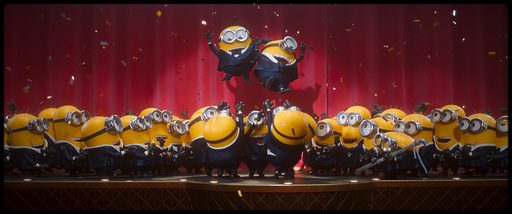
LOS ANGELES, U.S. – So much for patriotic fervor, America. As the nation lit up with fireworks celebrating its 250th birthday, moviegoers chose the manic antics of tiny, yellow, babbling creatures over powdered wigs and foundational myths. The Fourth of July holiday box office proved less a triumph of Americana and more a testament to Hollywood’s evolving, often bizarre, global appeal.
“Minions & Monsters,” the seventh installment in the surprisingly enduring ‘Despicable Me’ franchise, narrowly snatched the top spot, raking in an estimated $36.4 million over the extended holiday weekend. It just edged out Disney Pixar’s highly anticipated “Toy Story 5,” which still managed a respectable $31 million. But it wasn’t the runaway victory analysts had perhaps, optimistically, hoped for—or studio execs, who probably sweated through their silks awaiting the figures. And let’s be honest, it reflects a bigger mood than just popcorn preferences.
The numbers, straight from studio estimates, painted a portrait of a fractured cinematic landscape. The Minions’ latest escapade, sending the diminutive villains through Hollywood’s Golden Age (because why not?), actually bowed on Wednesday, collecting an impressive $61.4 million in its first five days. That global reach, mind you, isn’t lost on the big studios; “Minions & Monsters” has already pulled in a whopping $160 million worldwide since its debut. It speaks to a certain universal comedic language that transcends borders—something studios bank on, especially when domestic markets get temperamental.
Meanwhile, the aptly titled “Young Washington,” positioned as patriotic fare for the 250th anniversary crowd, settled for a distant third, pulling in just under $21 million. Focusing on George Washington’s often-overlooked service during the French and Indian War, it simply couldn’t compete with the animated titans. Superheroes fared even worse; “Supergirl” plummeted to fourth place with a paltry $9.6 million, suffering a crushing 74% drop from an already disappointing opening weekend. You just don’t expect the capes — and spandex to face such a beatdown, do you?
Because, despite individual successes, the larger picture remains rather grim. The holiday weekend’s total domestic box office was down a sobering 24% year-over-year, according to figures compiled by Rentrak. But look closely: this summer *is* actually up nearly 12% compared to 2025, thanks in no small part to some scrappy, low-budget Gen-Z darlings like “Obsession” and “Backrooms,” which quietly snagged the sixth and seventh spots. They were out-earning even the seasoned Spielberg, whose “Disclosure Day” managed $6 million.
“We’re seeing a significant shift,” remarked Janice Holloway, an entertainment economy analyst with Zenith Media. “It’s not just about content; it’s about accessibility — and perceived value. Global audiences, particularly in booming markets like Southeast Asia — and the Middle East, remain absolutely critical. You look at Pakistan, for example, with its burgeoning middle class—Hollywood knows that universal stories, often animated, can translate to massive earnings even with growing local film industries competing for those same wallets.”
📄 POLICY WIRE WHITEPAPER PUBLISHED: PAKISTAN'S NATIONAL SECURITY POLICY PRIORITIES
👉 READ BY CLICKING HEREDonnie Chen, Vice President of Global Distribution at Spectrum Pictures, offered a cautious, yet bullish, assessment. “You can’t just look at one weekend, one film, — and make grand pronouncements. Our strategy has always been diversified, leveraging familiar IPs like the Minions, because audiences know what they’re getting. And frankly, the global market cushions any fluctuations at home. We’re reaching demographics across countries, including vast swaths of the Muslim world, where these characters resonate regardless of language barriers. That’s why we invest so heavily there.”
What This Means
The July Fourth box office numbers offer a rather stark snapshot of cultural consumption in a hyper-globalized, digitally saturated world. The clear preference for escapist, animated fare over historical drama, even one coinciding with a major national anniversary, speaks volumes. It’s not necessarily a repudiation of patriotism, but perhaps a signal that blockbuster cinema has fully transitioned from a reflection of national identity to a purveyor of universal, digestible entertainment designed to play well from Los Angeles to Lahore.
Economically, Hollywood’s reliance on international markets has never been clearer. A domestic box office showing significant year-over-year decline for a major holiday weekend means studios must look further afield, particularly to emerging markets in Asia and the Middle East, where theatrical attendance can still be a cultural event rather than just one of many streaming options. The quiet success of lower-budget, internet-native films suggests that traditional models are fracturing, pushing studios to either double down on proven global franchises or pivot hard into agile, niche content that captures Gen-Z attention.
But the persistent slump in traditional superhero films, a genre once thought invincible, suggests that even the biggest IP can suffer from fatigue and an oversaturation of the market. What once guaranteed lines around the block now struggles against an entertainment ecosystem that demands novelty and authenticity, or at the very least, consistently fresh takes on tired formulas. This isn’t just about ticket sales; it’s about Hollywood’s ability to remain culturally relevant when every screen, everywhere, competes for precious attention.