


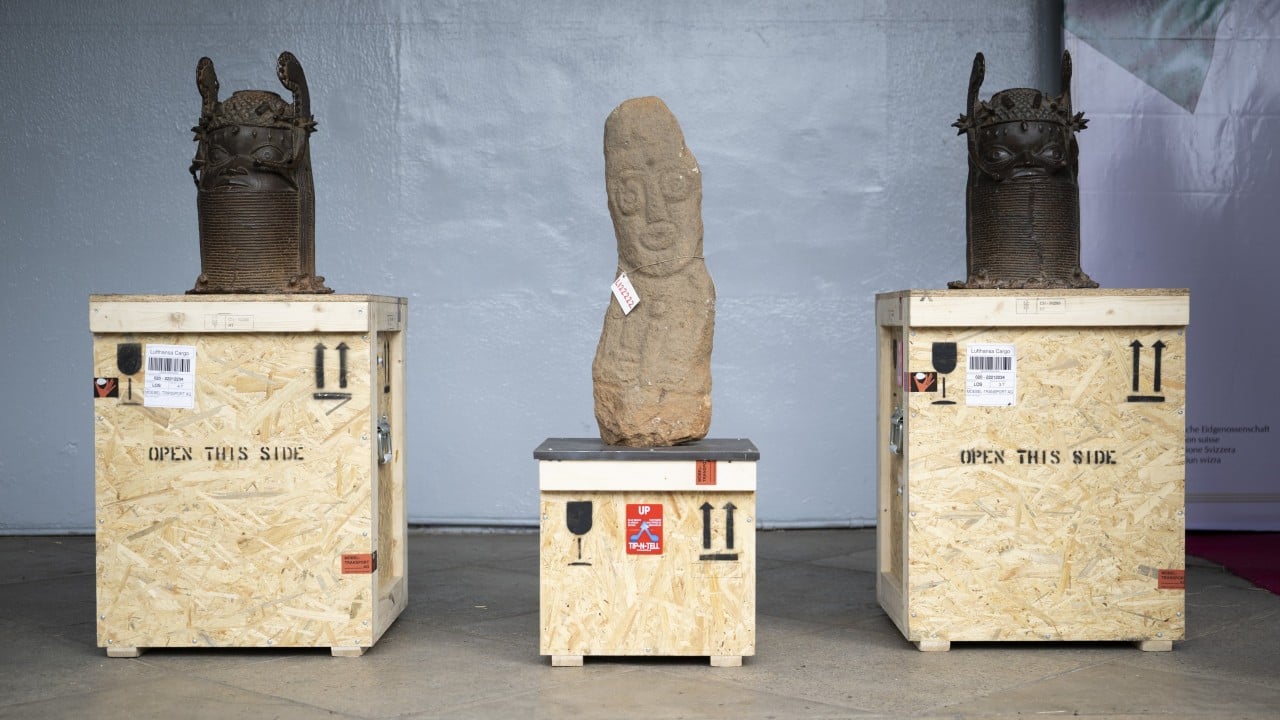
Switzerland Returns 18 Benin Bronzes, Bolstering Africa’s Call for Repatriation
POLICY WIRE — Lagos, Nigeria — Eighteen historically significant artifacts, globally renowned as the Benin Bronzes, officially made their journey ho...

POLICY WIRE — Lagos, Nigeria — Eighteen historically significant artifacts, globally renowned as the Benin Bronzes, officially made their journey home to Nigeria on Monday. Swiss authorities facilitated the restitution ceremony at the National Museum in Lagos, marking a noteworthy chapter in the broader narrative of cultural reclamation. This act represents the latest addition to Nigeria’s steadily growing collection of repatriated treasures, underscoring an increasingly assertive global push for the return of colonial-era heritage (Reporting based on Reuters).
The collection of meticulously crafted plaques, sculptures, and ceremonial objects, predominantly fashioned from brass and bronze, originates from the once-powerful Kingdom of Benin in West Africa. Flourishing from the 13th to the 19th centuries, the kingdom was a hub of sophisticated artistry and political organization. The dispersal of these cultural assets across the globe began with particular brutality in 1897, during a British punitive expedition. Thousands of these priceless works were plundered from the Royal Palace of Benin by British forces, who considered them “spoils of war.” Following the expedition, these artifacts were subsequently dispersed, finding their way into the collections of major European and American museums, as well as private art markets.
The recent handover from Switzerland isn’t an isolated diplomatic gesture; it’s a clear reflection of a powerful and escalating global trend. For years, nations across Africa have been intensifying their collective efforts for the comprehensive restitution of countless artefacts and artworks seized during the colonial period. Among these, the famed Benin Bronzes have emerged as an emblematic cause, serving as a focal point in deeper international discussions surrounding cultural heritage, the enduring legacies of colonialism, and the ethical responsibilities of institutions holding these objects in the Western world.
The argument for restitution hinges not merely on ownership but on cultural reconnection. For countries like Nigeria, these artifacts are not merely decorative items but hold profound spiritual, historical, and national significance. They’re central to understanding past governance, religious practices, — and social structures. Their removal represented a profound cultural dismemberment, a sentiment that fuels the sustained demands for their return from descendants and sovereign governments.
While the focus is often on the former colonial powers like Britain, Germany, and France, the Swiss contribution to repatriation highlights the widespread reach of these artifacts. Museums in neutral countries, and private collectors globally, also house pieces acquired through colonial exploitation. This particular return signifies a growing consensus among cultural institutions worldwide regarding the moral imperative of returning looted cultural property. Several major museums, including the Smithsonian in the United States and institutions in Germany and the Netherlands, have already begun processes to repatriate their Benin Bronze collections or have returned some pieces.
However, the journey toward full restitution is fraught with complexities. Legal frameworks vary widely across nations, and debates persist over provenance research, suitable conditions for return, and the financial implications for museums built around these collections. There are also logistical challenges in safeguarding and properly displaying large numbers of returned artifacts in their countries of origin, although significant investments are being made in modern museum infrastructure in Africa.
This latest return from Switzerland underscores the notion that these discussions are no longer fringe arguments but are becoming mainstream diplomatic and cultural policy objectives. It reinforces the precedent that colonial-era acquisitions are increasingly viewed through a lens of ethical justice rather than merely legal ownership, pressuring remaining institutions to reassess their holdings.
What This Means
The return of these 18 Benin Bronzes from Switzerland represents more than just a symbolic gesture; it marks another tangible success in a growing movement that’s steadily rebalancing the scales of cultural history. For Nigeria, each repatriation is a critical step in rebuilding a national cultural identity, one that has been fractured by centuries of colonial domination and the resultant dispersion of its artistic legacy. The presence of these objects on Nigerian soil allows for a deeper, more immediate connection between current generations and their ancestral heritage.
Globally, this event exerts continued pressure on other institutions and private collectors who still possess looted cultural property. The moral and ethical arguments for restitution are becoming increasingly difficult to ignore, pushing conversations that were once academic or niche into the realm of mainstream international relations and museum policy. As more countries and institutions choose to return artifacts, it sets a powerful precedent, shaping future standards for ethical acquisition and display of cultural heritage.
The momentum gathered by these repatriation efforts suggests a shifting paradigm in how the international community views historical injustices related to cultural property. It signals a move towards greater accountability for past actions and an acknowledgment that cultural patrimony fundamentally belongs to the communities from which it originated. While the process remains slow and often contentious, the Swiss handover is a reminder that the path toward restitution, once considered radical, is now a defined trajectory in global cultural diplomacy.