


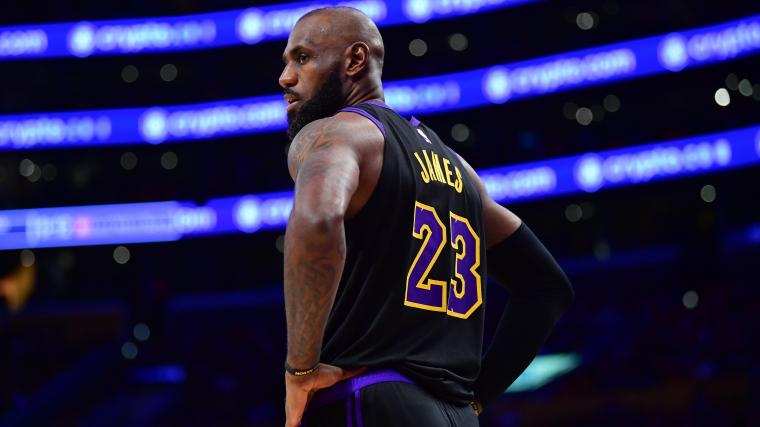
Golden State’s ‘Wine-and-Dine’ Pitch to James: A Mirage?
POLICY WIRE — San Francisco, California — Forget the blockbuster trade rumors and the meticulously crafted spreadsheets dissecting player efficiencies. Today’s high-stakes athlete recruitment often...

POLICY WIRE — San Francisco, California — Forget the blockbuster trade rumors and the meticulously crafted spreadsheets dissecting player efficiencies. Today’s high-stakes athlete recruitment often boils down to something far more… suburban. It’s less about Xs and Os, it’s increasingly about camaraderie, curated social calendars, and even vintage wine selections. And in the quest to land LeBron James—arguably basketball’s greatest living legend—the Golden State Warriors are apparently leaning into this surprisingly quaint strategy, a tactic that suggests a subtle reordering of power dynamics in professional sports, or perhaps just a remarkable underestimation of what drives an athlete of James’s stature.
It’s a peculiar twist, isn’t it? The same league that mints billionaires and fuels geopolitical soft power plays, now seemingly attempts to woo its most bankable star with promises of golf trips and convivial dinners. You’d think the Warriors, a franchise steeped in recent dynastic glory, would unfurl a dazzling basketball blueprint, a clear path to yet another championship. But no. The whispered strategy, per reports, centers around ‘happiness.’ As in, ‘Come play with your friends, Steph Curry and Draymond Green. Enjoy the Bay Area vibe. It’s a relaxing environment. Try to win some games.’ It sounds less like a desperate plea from a team trying to stay relevant and more like an invitation to a low-key retirement community.
Because that’s the rub, isn’t it? James, now 39, holds court at a career juncture where legacy isn’t built on another colossal paycheck, but on rings. He’s already played 21 seasons, dominated headlines for two decades, and carved out a global empire far exceeding the court. His every move sends ripples across vast markets, including a substantial following in places like Pakistan, where basketball’s growing fan base, particularly among younger, tech-savvy demographics, avidly follows American sports narratives and superstar sagas. Forbes estimated the NBA’s average team valuation at a staggering $3.85 billion in October 2023, showcasing the immense financial machinery propelled by these star athletes.
And now, facing potential free agency, James isn’t just looking for a roster spot; he’s evaluating a final strategic move in an unparalleled career. One wouldn’t approach a sovereign state offering a vital trade deal with proposals of pleasant evenings, would one? But that appears to be the core of the Warriors’ gambit. They’re hoping the lure of old friendships outweighs the stark arithmetic of a challenging roster rebuild and a necessary salary concession from James himself.
“Look, we’re talking about a multi-billion-dollar franchise trying to land arguably the greatest player ever. But sometimes, it’s not just about the numbers,” remarked a senior Warriors staffer, speaking off-the-record during a recent conference in Chicago. “It’s about environment. It’s about culture. And yes, about golf. That’s a selling point in the modern NBA, believe it or not.” He said it with a shrug that barely concealed the immense pressure.
This ‘happiness’ pitch is a fascinatingly flimsy edifice. It presumes that James would willingly take a significant pay cut—because the Warriors, facing cap constraints, can’t offer him much—to join a team that, outside of Curry and Green, features mostly developing talent, not ready-made championship contributors. It’s a stark reminder that even basketball titans must navigate the ruthless economics of contract years.
📄 POLICY WIRE WHITEPAPER PUBLISHED: PAKISTAN'S NATIONAL SECURITY POLICY PRIORITIES
👉 READ BY CLICKING HEREBut what if the appeal isn’t just sentimental? What if this understated pitch is a calculated gamble on a generational player’s late-career priorities? “You don’t sign LeBron James because he wants wine pairings and beach days,” retorted Anya Sharma, a veteran sports economist at Northwestern, during a recent sports business panel. “You sign him to sell tickets, merchandise, — and win. If that means taking a pay cut to play with friends, he’s earned that right, but no executive should mistake lifestyle for winning strategy. His brand still commands global attention—a phenomena often linked to broader conversations about national image, much like Mexico’s use of its national stadium for geopolitical signaling.”
What This Means
The Warriors’ approach to LeBron James’s potential recruitment speaks volumes about the shifting dynamics within elite professional sports. On one hand, it reflects an acknowledgment of player empowerment: stars, particularly those of James’s magnitude, hold unprecedented sway over their destinies, allowing personal considerations like camaraderie to factor prominently. They’re not just commodities; they’re walking franchises.
On the other, it might signal a desperation to keep a fading dynasty relevant on the cheap. This ‘lifestyle’ pitch could be a pragmatic response to financial limitations, attempting to compensate for a lack of hard cash and established talent with soft power — the allure of a ‘relaxing’ work environment and guaranteed friendships. Economically, securing James at a reduced rate would be a coup, enabling the team to rebuild around a future Hall of Famer while preserving precious cap space. Politically within the league, it reasserts a certain hierarchy, reminding younger teams that even older, established powers can still attract marquee names. But it’s a tightrope walk. If James buys into the friendship over firepower pitch, it redefines the very essence of late-career strategy for megastars. If he doesn’t, the Warriors risk appearing tone-deaf — and underprepared for the next era of NBA competitiveness.