


Azteca’s Flag Blitz: Sports as Geopolitical Statecraft
The Azteca stadium's 80,000 flags were more than fan support. Uncover how Mexico used engineered patriotism as a geopolitical play, showcasing statecraft on the global sports stage.

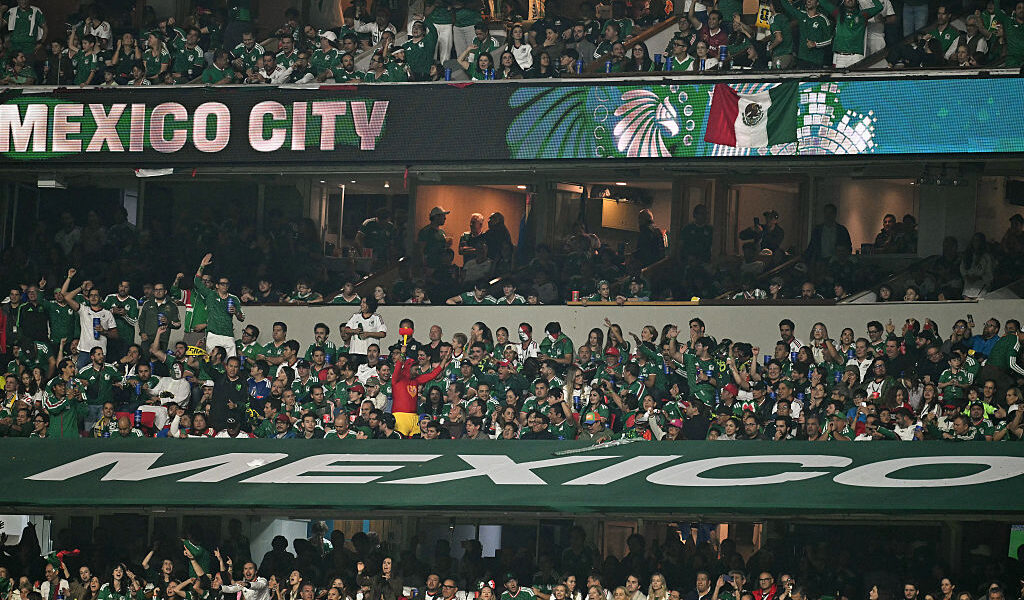
POLICY WIRE — Mexico City, Mexico — Long before the opening whistle at the storied Azteca, the ground zero of Mexican football, it wasn’t the pre-match tactical analyses buzzing through the stadium concourses. Nor was it the usual banter between rival fans. No, the prevailing chatter was about an industrial-scale operation designed to create a singular, suffocating sea of national fervor: 80,000 Mexican flags, distributed with military precision, to ensure every single person in that vast concrete bowl, even the hapless English supporters, felt the embrace—or rather, the squeeze—of the home side.
It’s a peculiar kind of psychological warfare, isn’t it? A premeditated blitzkrieg of fabric intended to overwhelm, to tell visiting teams, in no uncertain terms, that this isn’t just a game. This is an annexation of the senses. This isn’t spontaneous passion; it’s engineered patriotism, broadcast globally, designed to project an image of undeniable, overwhelming unity. And frankly, it’s brilliant in its brazenness.
The pictures from inside the arena surfaced quickly, an instant viral phenomenon. Row upon row of emerald, white, and red waiting for their custodians, not even bothering to discriminate against the tiny enclaves reserved for England’s traveling faithful. You’ve got to admire the commitment to the bit. It’s not just a flag on a seat; it’s a statement. A declaration of an unquestionable home advantage, so meticulously arranged it leaves little to chance. And who knows how many poor souls, perhaps just wanting to watch a good match, now feel obliged to wave their assigned national symbol?
For the Mexican Football Federation, this isn’t just about the three points. “We aim to make the Azteca not just a stadium, but a statement of Mexican unity and passion,” remarked Miguel López, a spokesperson for the Federation, in a surprisingly candid moment. “Every flag is a cheer, a symbol that echoes our pride to the world.” It’s a clever framing, isn’t it? Almost as if denying your nation’s flag in a national stadium during a globally televised match is somehow… unpatriotic.
The English contingent, predictably, met the news with that characteristic blend of polite consternation and mild disbelief. “We expected a vibrant atmosphere, naturally,” said Simon Clarke, Head of England’s Delegation, with a measured tone that suggested deep-seated annoyance. “But a degree of — let’s call it ‘enthusiastic hospitality’ — certainly makes for a unique match day. Our lads are focused on the pitch, not the props.” You could practically hear the unspoken thoughts about fair play and sporting integrity hanging in the air. But really, what’s more British than complaining about the local peculiarities while pretending not to?
But this isn’t just about sporting rivalries. It’s about a nation seizing a global stage. The host status of a World Cup offers a fleeting, potent moment to burnish national identity, attract tourism, and subtly wield soft power. Because when millions across the globe tune in, what they see isn’t just football; it’s a carefully curated narrative. And, in this instance, it’s one of unwavering, uniform Mexican might, visually asserting dominance even before a ball is kicked.
📄 POLICY WIRE WHITEPAPER PUBLISHED: PAKISTAN'S NATIONAL SECURITY POLICY PRIORITIES
👉 READ BY CLICKING HEREConsider the scale: 80,000 flags. That’s enough to blanket a small town. This kind of orchestrated national display isn’t unique to Mexico, of course. Nations across the developing world, especially those with deep, passionate fan bases, often utilize major sporting events as potent canvases for national self-expression, often blending political messaging with cultural spectacle. From the fervor surrounding cricket in Pakistan to football rivalries across North Africa and the Middle East, these arenas become sites where national identity is both celebrated and strategically reinforced for internal cohesion and external perception. Such events transform raw emotion into a tool of public diplomacy. The economics of glory are complex.
The global sporting events industry, fueled by spectacles like the FIFA World Cup, is projected to reach over $600 billion by 2026, according to a report by Grand View Research. This isn’t just about tickets and merchandising; it’s about broadcasting rights, tourism influx, and the immeasurable value of national branding. Mexico’s flag gambit, while seemingly a minor gesture, is a micro-lesson in leveraging that grand stage.
What This Means
This episode, seemingly minor, carries surprisingly hefty implications. On one hand, it’s a shrewd masterclass in home-field advantage engineering. Any sliver of doubt, any chink in a visiting team’s psychological armor, can be exploited. And in top-tier international sports, that margin is minuscule. But, it’s more than that, isn’t it? It signals a trend where hosts aren’t just facilitating a sporting contest; they’re actively shaping the narrative, manufacturing an image. This isn’t a natural eruption of fandom. It’s an exercise in statecraft dressed in football kits, a controlled explosion of national sentiment. It underscores how nations understand and utilize the soft power of sports to present a specific, powerful vision of themselves to a global audience. Whether England crashes the party in this meticulously prepared cauldron, the message of overwhelming Mexican presence has already been broadcast. This isn’t just about who scores more goals. It’s about who dictates the psychological terms of engagement. It’s a subtle shift from simply *hosting* to actively *orchestrating* the entire experience, from the pitch to the stands. Underdogs redefining sporting economies applies even to stadium atmosphere.