


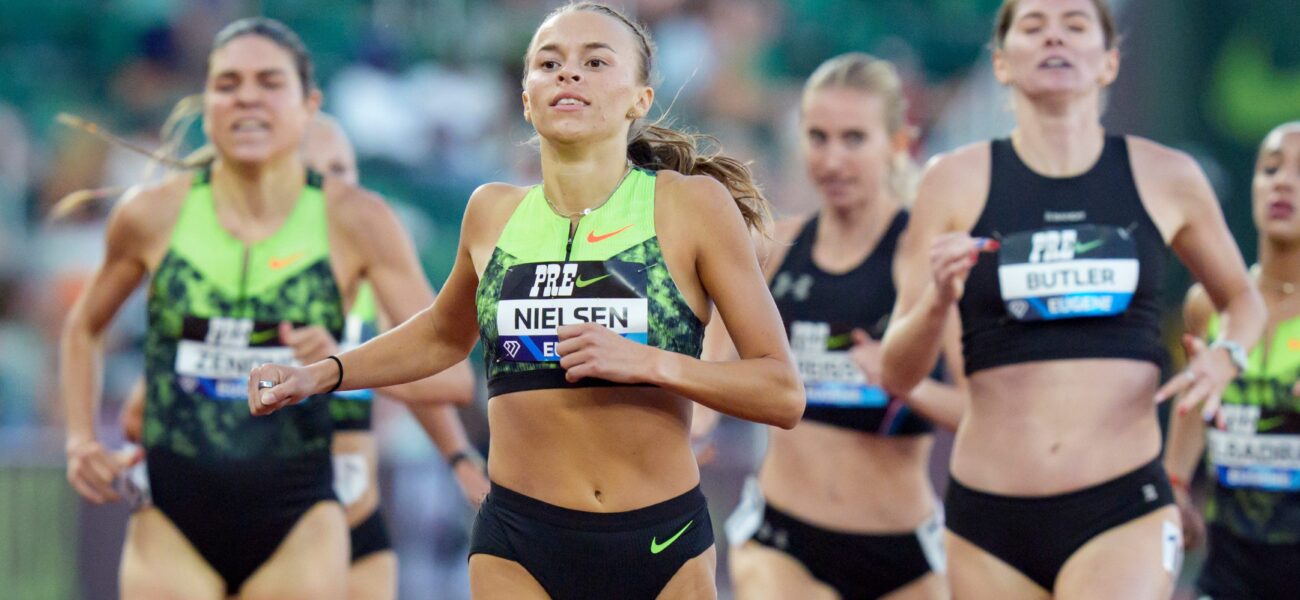
Nielsen’s Hayward Triumph: Pro Debut & Sports’ Big Business
Wilma Nielsen's electrifying pro debut win at Hayward Field unveils the hidden financial machinery, global sponsorships, and intense pressures defining elite track and field.

POLICY WIRE — Eugene, USA — The roar at Hayward Field can be deafening, a visceral demand for excellence from athletes often balanced precariously between raw talent and a career-defining payday. For Sweden’s Wilma Nielsen, this wasn’t just another track meet; it was a fiery initiation. Fresh off signing with Nike, the former Oregon star faced down a pack of seasoned pros, some with legacies, all with livelihoods on the line. And she won.
It’s never a simple run in elite athletics. Not when sponsorships loom larger than personal bests — and every stride is weighed against future endorsements. Nielsen’s victory in the 1,500 meters wasn’t just a physical triumph; it was a brutal test of nerve against an onslaught of expectations, amplified by a global audience. The narrative usually starts with who won. Not today. Today, we start with the grinding machine of professional sport itself.
Lucia Stafford, pushed by a fierce pace-setter, peeled away early, stretching her lead to nearly 20 meters. For a moment there, the young Swede, still battling the phantom limb sensations of international travel—she’d only arrived two days prior after flying home to Sweden then back again—must’ve felt the race slipping. “I was really nervous representing Nike,” Nielsen admitted post-race, a palpable mix of awe and relief in her voice. “It’s a big thing, it’s a dream.” You could almost hear the weight of that Nike check on her shoulders. Because these days, for many athletes, that’s what validates the dream.
But dreams, even jetlagged ones, have a way of kicking in. With a single lap remaining, Nielsen found an unlikely ally in Stanford’s Juliette Whittaker. Together, they devoured Stafford’s shrinking lead, a classic track drama unfolding as the crowd surged. Then, with the finish line in sight, Nielsen shifted gears. Surged. She clocked a remarkable 4 minutes, 5.6 seconds, pulling clear in her professional debut. What a way to introduce yourself. But the win? It’s not just for her; it’s for the brand, it’s for the visibility, it’s for keeping the global sports carousel turning.
Beyond the 1,500, Hayward hosted other battles. Dejanea Oakley, the collegiate record-holder, once again dominated the women’s 400 meters, reinforcing her formidable status. Two-time Olympic champion Valarie Sion effortlessly claimed her fifth consecutive Pre Classic discus title, a testament to relentless consistency. And Sandi Morris, the pole vault veteran, finally snatched her first Pre Classic victory, a comeback narrative for the ages. “Sport has so many ups — and downs,” Morris shared, raw emotion coloring her words. “Earlier this season I had three really bad performances in a row and it just feels really good to bounce back from that.” See? It’s never just about the jump.
📄 POLICY WIRE WHITEPAPER PUBLISHED: PAKISTAN'S NATIONAL SECURITY POLICY PRIORITIES
👉 READ BY CLICKING HEREThe Pre Classic is, at its heart, a marketplace of talent. It’s where collegiate stars morph into global commodities, where seasoned pros try to stay relevant, and where the financial machinery of sport is constantly recalibrated. One report suggests that the global sports sponsorship market was estimated at roughly $63.1 billion in 2023, according to a recent analysis by Statista, and elite track events like the Pre Classic are its engine, driving fan engagement and, consequently, advertising dollars.
Even a developing nation, say, Pakistan—where cricket might dominate the sporting conversation—has keen eyes on these events, perhaps looking for a glimpse of where the money flows, or how to cultivate their own champions from the ground up. This high-octane environment serves as a constant, flashing neon sign to aspirational athletes and sports federations across the world: excel here, and the global doors open wide. Just ask Nielsen.
What This Means
Wilma Nielsen’s electrifying win isn’t just a feel-good story; it’s a snapshot of the intense economic realities facing elite track and field athletes. A successful professional debut, especially one involving a prominent sponsor like Nike, is more than a trophy – it’s career insurance. It cements endorsement deals, opens doors to more lucrative meets, and buys crucial time for development in a sport where prize money alone rarely suffices for a comfortable living. We’re talking about a global enterprise. This event acts as a filter, sorting those who can handle the immense pressure of expectation from those who can’t, defining the top tier that earns the lion’s share of media attention and corporate investment. It also showcases the increasingly international nature of athletic talent—athletes from Sweden, Jamaica (as seen in the 400m field), and the US are all vying for the same sponsorships and glory. Global exposure here impacts the visibility of the sport even in places like the broader Muslim world or South Asia, inspiring emerging talents in Karachi or Cairo that this international stage is within reach. It’s a perpetual talent machine, ensuring a fresh crop of competitors for years to come, but also a stark reminder that professional sport isn’t for the faint of heart, or the financially unprepared. That’s for sure. And, for every Nielsen, there are a dozen others battling for fractions of seconds, — and fractions of the financial pie.