


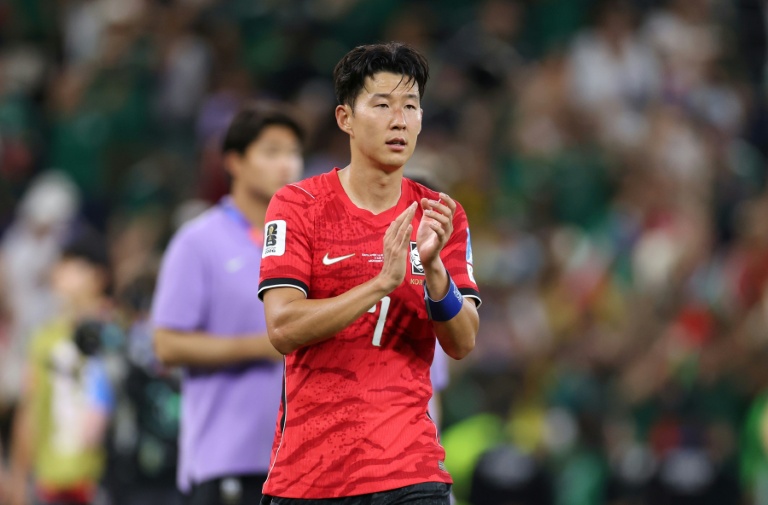
After World Cup Fizzle, Seoul Reckons With Fragile Athletic Pride
POLICY WIRE — Washington D.C., USA — It wasn’t the final whistle that echoed loudest, but the collective groan of a nation abruptly cut from its fantasy. Three anxious days, they were, South...

POLICY WIRE — Washington D.C., USA — It wasn’t the final whistle that echoed loudest, but the collective groan of a nation abruptly cut from its fantasy. Three anxious days, they were, South Korea waiting, hanging by a thread, hoping some obscure alignment of global football results would grant their squad passage beyond the group stage. That thread, it snapped. The team packed its bags, an exit described as nothing less than “dismal” by the Yonhap News Agency. But this isn’t just another story of a team falling short; it’s a sharper lens into the almost unbearable weight placed upon national athletic endeavors, especially in regions where sporting success doubles as geopolitical swagger.
The saga’s heart beats hardest around Son Heung-min, the attacker who now plays for Los Angeles FC, often shouldering the aspirations of millions. He’s hinted at bowing out from international play, a prospect many see as not just possible but probable. Because, let’s be honest, how much more can one man give? Sports Chosun, a local daily, flat-out expects [QUOTE_PLACEHOLDER] that to be it now for the player who has carried South Korea so often and scored 56 goals for his country, a truly remarkable achievement in a career filled with them. Son Heung-min’s final World Cup ends in heartbreak, screamed a headline – and that’s a bitter pill to swallow for someone turning 34 next month.
And so, the tournament ended, not with a bang, but with a bewildered shrug. Hong Myung-bo’s side had the last 32 within grasp only to suffer a shock 1-0 loss to lower-ranked South Africa on Wednesday. It was a tactical gamble that spectacularly backfired. Hong, the coach, decided to drop his main man, Son, to the bench against South Africa. A choice that will haunt him, you’d think, especially considering they’d also lost 1-0 to Mexico. They’d kicked off their World Cup campaign with a promising 2-1 win over the Czech Republic. But that, sadly, was as good as it got for the much-maligned Hong and the fading Son, as the media and public opinion were quick to remind them.
The heat back home has been brutal. And I mean brutal. Hong, the head coach, is firmly in the firing line, facing a torrent of criticism. Newsis captured the mood, saying [QUOTE_PLACEHOLDER] which really undersells the public disappointment. But hey, it wasn’t just on-field mishaps; the entire campaign felt like a bad reality TV show. There was a squabble between the squad — and local media. Plus, get this—a drone even buzzed a crucial training session before the Mexico defeat. One can only imagine the utter chaos of such a scenario. It’s almost theatrical, the confluence of internal strife, external pressure, — and plain old bad luck.
Contrast this with the almost sacred space national sport occupies in places like Pakistan, for instance, particularly cricket. There, a victory isn’t merely a game won; it’s often perceived as a profound affirmation of national strength, even a geopolitical statement against regional rivals. The pressure on a captain or star player in Lahore or Karachi can be every bit as intense, if not more so, than what Son Heung-min has endured. Their performance can feel like it reflects on national honor, on governmental effectiveness, and even on collective faith. For South Korea, the scrutiny on Son and the team reflects an almost perfectionist demand that their burgeoning soft power be reflected across all domains, even when competing in a truly globalized, ruthless arena like the World Cup. It’s an interesting intersection of sports, nationalism, — and global perception. We’re talking about an entire economic — and political narrative tied up in the bounce of a ball, after all. Find out more about how global sporting events reflect larger commercial trends here.
📄 POLICY WIRE WHITEPAPER PUBLISHED: PAKISTAN'S NATIONAL SECURITY POLICY PRIORITIES
👉 READ BY CLICKING HEREYonhap was unsparing, noting that the national team suffered the humiliation of a 2026 World Cup group-stage exit after three days of agonising hope. Because it truly felt like an agony, a collective suffering played out in agonizing slow motion. That sort of national heartbreak—it has ripple effects far beyond the stadium.
What This Means
This early exit isn’t just about a football tournament; it’s about the delicate balance of national pride, investment, and perception. For Seoul, whose diplomatic and economic influence often hinges on projecting a polished, technologically advanced, and successful image, a prominent athletic failure becomes more than a footnote. It raises questions about resource allocation for sports development versus other national priorities, particularly if public dissatisfaction lingers. A decline in enthusiasm could impact sponsorships, grassroots participation, and the overall commercial viability of professional sports within the country. It reflects a deeper policy challenge: how to sustain peak performance and manage immense public expectations in a globalized arena where success is fleeting and competition ferocious. And it’s not just South Korea. Countries everywhere, from America’s diverse sporting empire to nations across Asia that invest heavily in particular sports, face the same calculation: the ROI of national identity, wrapped in a uniform. You see similar political fallout and societal impact following unexpected sports outcomes globally, from Atlanta to Ashgabat – explore the dynamics in Kinshasa’s unexpected roar here.