


The Last Chapter: A Bookseller’s Silence Echoes Hong Kong’s Fading Freedom
POLICY WIRE — Hong Kong / Taipei — Another quietly defiant chapter in Hong Kong’s ongoing vanishing act just closed. Not with a bang, but with the quiet dignity of a well-worn book being set aside...

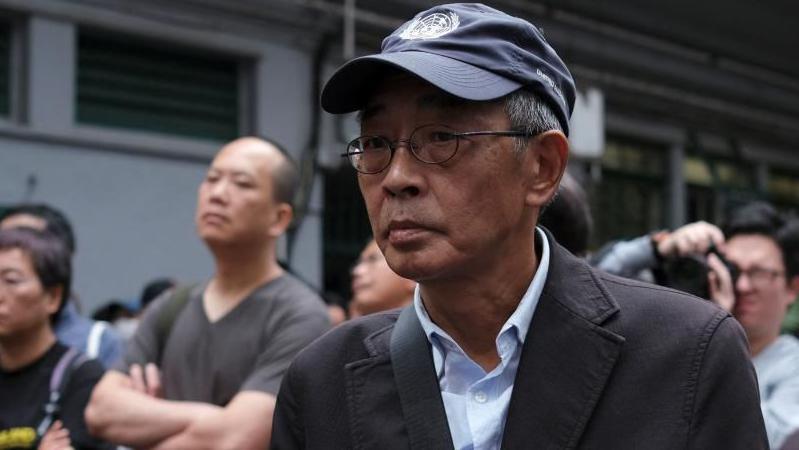
POLICY WIRE — Hong Kong / Taipei — Another quietly defiant chapter in Hong Kong’s ongoing vanishing act just closed. Not with a bang, but with the quiet dignity of a well-worn book being set aside for good. Lam Wing-kee, the former bookseller whose abduction by Chinese agents in 2015 sparked international uproar and a renewed sense of dread in the once-freewheeling city, has passed away at 70 in Taipei. He spent his final years a self-exile, running a modest bookstore, ostensibly a haven for forbidden texts, while living under a quiet, if pervasive, threat.
It’s easy to shrug. Just another elder dissident, you might think. But Lam’s story wasn’t just his; it was an uncomfortable harbinger. He was one of five booksellers linked to Mighty Current Media whose disappearance illuminated Beijing’s growing confidence—and ruthlessness—in extending its legal reach far beyond its nominal borders. They weren’t political firebrands; they sold steamy gossipsheets and unflattering tales about China’s elite, the kind of pulp fiction that Beijing simply couldn’t abide. Because sometimes, the smallest cracks in the façade are the most annoying ones.
Lam Wing-kee’s accounts of his 2015 disappearance—held incommunicado for eight months, coerced into confessing, threatened, monitored even after his release—painted a grim picture of what awaited Hong Kong. You don’t just kidnap citizens for selling books. You do it to send a message. A very loud, very clear message: Don’t even think about it. But Lam, against considerable pressure, decided to talk. He told his story. He wasn’t going to just sit quietly.
“The path of prosperity and stability for Hong Kong demands an adherence to law and order, not a revisiting of outdated grievances stirred by individuals acting beyond jurisdiction,” a spokesperson for the Hong Kong Liaison Office, Zhang Wu, offered with practiced composure this week, in what felt less like an official statement and more like a carefully crafted deflection. They’re really good at that, you know. Meanwhile, an anonymous US State Department official, speaking on background, wasn’t so sanguine. “His courage, his sheer defiance against a vast apparatus of control, won’t be forgotten. It’s a sobering reminder of what’s at stake, not just in Hong Kong, but everywhere personal liberty is challenged.” And it certainly is challenged.
The quiet passing of a bookseller on a distant island might seem far removed from the hustle of Islamabad or the simmering tensions in other parts of the Muslim world. But the underlying narrative? The fight for control over information, over history, over what people are allowed to read or even think—that thread runs deep, right through Karachi’s hushed secondhand bookstores to the censorship regimes blocking independent voices from Gaza to Xinjiang. They’re all about managing perception, really. Hong Kong simply offered a particularly stark, high-definition case study.
Remember when Hong Kong was supposed to be a bastion of freedom? It certainly feels like ancient history now. The National Security Law, imposed in 2020, has methodically dismantled civil liberties. It’s not just booksellers; it’s journalists, activists, even university professors. That old promise of “one country, two systems”? It feels increasingly like a cruel joke. Indeed, the city’s press freedom has cratered: Reporters Without Borders ranked Hong Kong 140th out of 180 countries in its 2023 World Press Freedom Index, a jarring descent from its 18th place ranking in 2002. That’s a pretty stark number, wouldn’t you say?
But the story doesn’t end with Lam’s death. Not really. Because people like Lam, by the simple act of existing, by merely refusing to disappear silently, force a choice. You either forget them, or you carry a piece of their defiance forward. The question now becomes: who’s still left to remember? Who’s still willing to carry those inconvenient truths, even at tremendous personal cost?
What This Means
Lam Wing-kee’s death isn’t just an obituary for an individual; it’s a symbolic burial of an era. An era when Hong Kong still retained a discernible measure of autonomy, when a vibrant publishing scene—even a sensationalist one—could poke Beijing’s soft underbelly. His demise, happening in exile, reinforces a chilling message: dissent will be tolerated only if it’s geographically distant and politically impotent. For Beijing, his story offers a convenient, natural conclusion—one less bothersome ghost of democratic aspirations to contend with.
Economically, this accelerating erosion of freedoms isn’t going unnoticed. While Hong Kong remains a major financial hub, the long-term impact on its desirability as a regional base for businesses valuing rule of law and unfettered information flow is undeniable. And there are plenty of other cities eager to pick up the slack. The global landscape is littered with political players making audacious gambles on state control versus individual liberty. This death merely serves as a punctuation mark in that ongoing, very complicated sentence.
Politically, his story leaves a deep, nagging question mark over international engagements with China. How can you engage meaningfully with a power that effectively disappears its own citizens, and then celebrates their silence? His death serves as a stark reminder of the limits of rhetorical condemnation without tangible action. It forces human rights advocates to double down, because there’s simply less to celebrate — and more to mourn. But don’t count out the residual effect; history shows that suppressing dissent often creates subterranean currents that eventually resurface, sometimes explosively. They really shouldn’t forget that.