


All-Star Snub Reignites Debate Over WNBA’s Priorities: Merit, Marketing, or Malpractice?
POLICY WIRE — Atlanta, GA — In professional sports, the line between athletic prowess and commercial spectacle often blurs. Sometimes, it vanishes entirely. This week, the WNBA’s...

POLICY WIRE — Atlanta, GA — In professional sports, the line between athletic prowess and commercial spectacle often blurs. Sometimes, it vanishes entirely. This week, the WNBA’s All-Star starter announcement offered a stark reminder of that precarious balance, particularly for a league navigating unprecedented mainstream attention. For all the glitter and growing viewership, its internal mechanisms — meant to honor its elite — appear about as robust as a pre-season scrimmage defense.
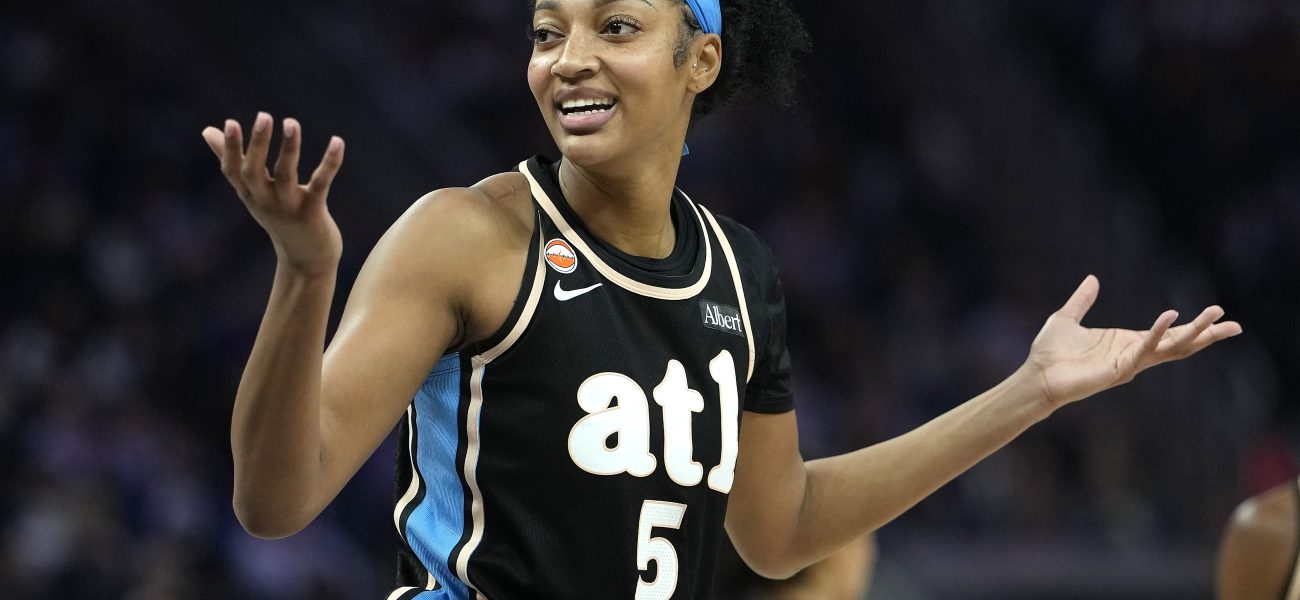
It wasn’t just a misstep; it was an organizational fumble, broadcasting to the world that even at its highest echelons, player recognition can feel like an afterthought. You see, the Atlanta Dream, a squad that posted a franchise-best win record last year and remains fiercely competitive this season, found its standout talents summarily ignored. Not one of their core trio — the tenacious rebounder Angel Reese, the sharpshooting Rhyne Howard, or the consistently strong Allisha Gray — secured a starting spot. None at all.
Because these weren’t marginal players. Reese, a rebounding savant, leads the entire league with 11.7 boards per game. Howard — and Gray, they’re top-12 scorers. They’re the engine. They’re the reason that Dream sits tied for a top-four record. And then, crickets. “Disrespectful,” Angel Reese flatly called it, per ESPN, an indictment delivered with the force of one of her signature put-backs. She reserved special scorn for the snub of her teammates. “For those two though, I think they work so hard — and they put a lot of work in,” she stated. “The reason why we’re where we’re is because of those two. For us not to have anyone was just a slap in the face.” She’s not wrong.
The alleged “process” behind these selections has quickly unraveled. It turns out that — prepare for a masterclass in operational ineptitude — only roughly 85 of the league’s 180 players actually managed to submit their ballots for All-Star starters. That’s right, less than half. The supposed voting integrity hinges on a system where some players (Los Angeles Sparks players, for example) reportedly didn’t even receive ballots, or were unaware they had them, until it was too late. “We’ll have a more robust process going forward,” a Sparks organization spokesperson conceded in a public statement to the outlets, an admission that rings with the faint echo of “oops, we dropped the ball,” and does little to mollify the sidelined. But it’s the league that owns the whole show, isn’t it?
The official word from the WNBA itself has been notably hushed regarding the actual mechanics of its faulty voting machine. When pressed on whether the league views player input as genuinely integral or merely ceremonial, a WNBA front office source, speaking on background, offered a classic non-answer: “Our commitment remains to a transparent and inclusive selection process that truly celebrates the best talent in our league while also growing the game. We’re always evaluating.” Translation: we’ll address it when the optics demand it.
Fan votes accounted for a whopping 50% of the overall weight, while players — and media each held a quarter share. It’s a recipe for populist outcomes, and an inevitable friction point when statistical performance clashes with a burgeoning celebrity industrial complex — one that often favors those with the most marketable personas, rather than merely the most effective game. But where does genuine athletic accomplishment fit into this, when it’s seemingly at odds with the marketing playbook? The evolving economics of athlete valuation are always in play.
What This Means
This All-Star debacle isn’t just about hurt feelings on the hard court; it’s a stark signal of organizational mispriorities that carries broader political and economic implications. On the political front, it exposes the inherent tension between democratic processes (player votes) and more centralized, often commercially driven, narratives. It suggests that even in a rapidly expanding league, internal governance can be shoddy, leading to questions about fairness and accountability. Are “superstars” cultivated by marketing departments taking precedence over the collective will of the athletes themselves?
Economically, snubbing statistically deserving players — especially those who embody grit and determination but perhaps lack the current “it factor” of others — risks undermining the league’s perceived integrity. Athlete compensation, brand endorsements, — and future career prospects are all tied to such recognition. If the system for honoring top talent feels rigged or, worse, incompetent, it corrodes trust. And that erodes long-term value, even if short-term ratings spikes from a select few may impress. But athletes, like any laborers, want fair representation, a universal cry echoing from European football leagues to even less formalized sports ecosystems.
Indeed, this particular episode in American professional basketball resonates globally. Consider burgeoning sports markets in South Asia, where systems for identifying and elevating talent are often nascent, vulnerable to local biases, political interference, or plain logistical bungling. A young footballer in Karachi, Pakistan, might possess unparalleled skill, but if the selection committee is poorly organized, if the voting (or talent identification) mechanism is opaque, or if celebrity-driven metrics override pure merit, that talent gets lost. It’s a challenge to fairness across many industries, this balancing act between established meritocracies and the popular zeitgeist. Here, a major league demonstrates that even with vast resources, the path to authentic recognition remains stubbornly complex, fraught with human error and sometimes, one suspects, strategic convenience.