

Europe’s Fiery Futures: Portugal’s Early Plea Exposes Regional Fragilities
POLICY WIRE — Lisbon, Portugal — The acrid scent of burning pine often marks late summer across swathes of Southern Europe. But this year, the alarms are ringing before the mercury truly soars,...

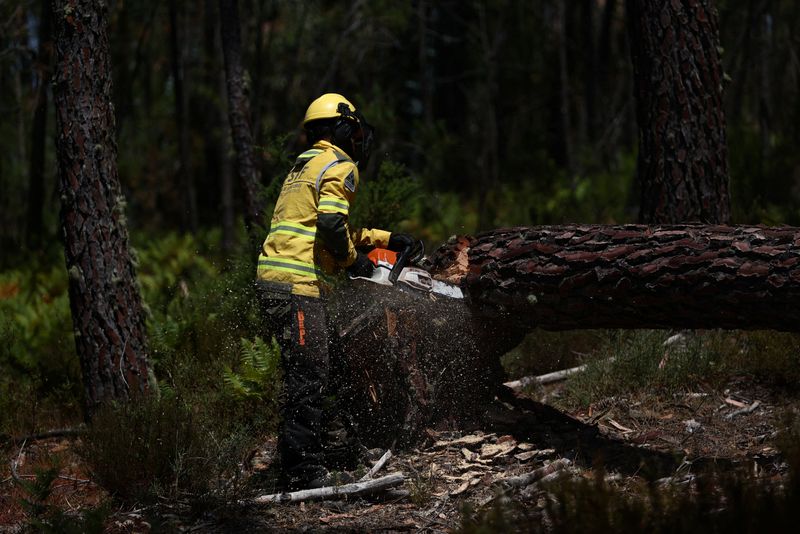
POLICY WIRE — Lisbon, Portugal — The acrid scent of burning pine often marks late summer across swathes of Southern Europe. But this year, the alarms are ringing before the mercury truly soars, painting a stark, if familiar, tableau of climate anxiety. It’s early yet, but Portugal isn’t waiting for the infernos to erupt; they’re already dialing neighbors and the bloc, seeking hands to steady their increasingly precarious defenses against a warming planet’s rage. Call it foresight, or call it weary pragmatism—they’ve seen this show before.
Lisbon’s environmental authorities have launched an appeal, a rather direct S.O.S to the European Union, Spain, and even Morocco, for pre-emptive support. They aren’t just talking about more water-bombing planes, either; we’re talking about logistics, coordination, and resources to head off a potential catastrophe that seems to grow year after year. It’s an uncomfortable confession for a sovereign nation, laying bare its vulnerabilities, but one Portugal’s government knows it must make. The forests don’t care about national pride.
“We can’t pretend we’re an island when the embers start flying,” remarked Ana Costa, Portugal’s Minister for the Environment and Climate Action, in a conversation this past week. “Our fires become Europe’s problem fast enough, — and honestly, we’re stretched. The sheer scale of risk demands a shared shield, not just shared condolences after the fact.” She isn’t wrong. Because climate change—and its ugly consequences—isn’t constrained by arbitrary lines on a map.
And Lisbon isn’t asking idly. Last year, Portugal lost over 240,000 hectares of forest to fires, according to EU disaster monitoring reports. That’s a staggering footprint, a scorched monument to what unchecked global warming can wreak upon a country’s natural heritage and economic well-being. But that data point—bleak as it’s—fails to capture the suffocating smoke, the displaced communities, the sheer, helpless dread that settles over regions year after year. It’s not just land; it’s livelihoods, homes, — and often, lives.
Spain, its neighbor to the east, knows this reality all too well, experiencing its own relentless bouts with wildfires. Morocco, across the Strait of Gibraltar, deals with its own unique set of climate pressures, though fire isn’t typically the primary menace. Still, the plea signals a broader understanding that the Mediterranean basin is becoming a singular front line in the climate battle. And for the EU, it’s yet another test of its much-touted solidarity mechanisms. Will they kick in before the crisis peaks, or will the usual bureaucratic wrangling slow things down?
“The European spirit means standing shoulder-to-shoulder, especially when our members face ecological threats,” a spokesperson for the European Commission, Klaus Richter, reportedly told Policy Wire through a slightly formal email exchange. “We’re actively coordinating to ensure all member states have the resources required for a robust defense.” High rhetoric. But deploying actual planes and personnel usually involves more paperwork and less spontaneity than Richter’s carefully crafted lines might suggest.
The call for international aid isn’t some uniquely European problem, mind you. Think about the intense heatwaves crippling Pakistan or the relentless flooding in other parts of South Asia—events that similarly demand international humanitarian or infrastructural assistance, often with even fewer local resources to manage the initial onslaught. Their struggles, while different in manifestation, are born of the same global shifts that are now driving Portugal’s preventative distress signal. It’s a collective burden, even if the distribution of aid, — and vulnerability, remains glaringly unequal.
These recurring environmental shocks, becoming alarmingly predictable in their intensity and scope, are shaping diplomatic conversations in unexpected ways. It forces alliances, exposes weaknesses, and quietly redefines what ‘national security’ truly means in the 21st century. It’s no longer just about armies and borders, but about resilient infrastructure, adequate water, and fire breaks—not to mention having enough firefighting apparatus. (Who’d have thought?).
What This Means
Portugal’s preemptive call for help paints a sobering picture of climate adaptation for Southern Europe, and by extension, much of the world. Economically, repeated fire seasons drain national budgets, divert funds from development, and damage critical tourism sectors that underpin regional economies. Imagine telling tourists, ‘Come enjoy our sun-drenched coast… if it’s not on fire.’ It’s not great marketing, is it?
Politically, it tests the limits of European solidarity. How much burden-sharing can Brussels truly manage when crises aren’t just external but intrinsic, recurring phenomena within its own borders? It could force more streamlined, perhaps even militarized, cross-border emergency response protocols. Beyond traditional defense, European nations face a rapidly evolving threat landscape. The reliance on Spain and Morocco, in particular, speaks to an inescapable geopolitical reality: climate change fosters micro-alliances dictated by shared physical vulnerability rather than purely political ideology. It’s a stark reminder that some challenges simply demand collaboration, no matter the flags flying.
And this early warning from Lisbon serves as a powerful indicator for regions globally that might believe their issues—say, water scarcity in the Middle East, or glacial melt in Central Asia—are insulated. They’re not. Portugal’s summer crisis is simply a concentrated microcosm of a planet on edge, pushing its limits. It makes you wonder how many such S.O.S. calls we’ll be hearing, — and whether anyone will be left with resources to answer. The question of global resource allocation in a world of cascading crises is becoming particularly acute.